Your cart is empty
 Short Rigid Couplings
 Controlflex Couplings
 Jaw Couplings
 Oldham Couplings
 Bearing Locknuts – TCN
 Double Wide Shaft Collars
 Heavy Duty Shaft Collars
 International Series Shaft Collars
 Keyed Shaft Collars
 Mountable Shaft Collars
 Quick Clamping Shaft Collars
 Set Screw Shaft Collars
 Thin Line Shaft Collars
 Threaded Shaft Collars – Pacific International Bearing Products
 Two-Piece Shaft Collars
 Friction Bearing Universal Joints
 Needle Bearing Universal Joints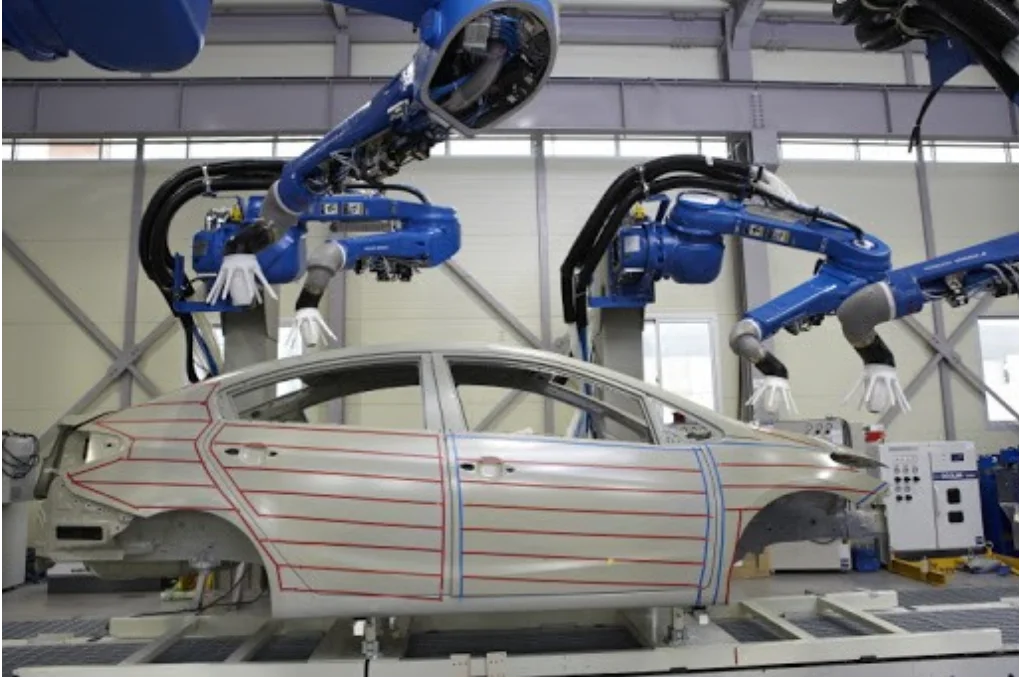
Bearings
Bearings Used in Painting Robots
16 April, 2026
8 min read
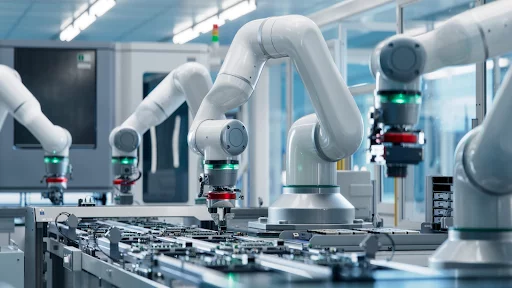
Painting robots rely on several types of bearings to deliver smooth, accurate motion during coating applications. In rotary joints, spherical bearings are often used where misalignment must be accommodated and where high radial and axial loads are present. Crossed roller bearings are also common in articulated robot joints because they provide high rigidity and stable performance under complex multi-axis loading in a compact design. Pacific International Bearing Sales (PIB) offers bearing solutions well-suited for these demanding robotic applications.
Key Takeaways
Multiple bearing types are used in painting robots.
Robot painting systems commonly use deep groove ball bearings, four-point contact bearings, crossed roller bearings, and spherical bearings. Spherical bearings help compensate for misalignment while supporting heavy loads, while crossed roller bearings provide excellent rigidity and positional stability in compact spaces.
Linear motion components are critical.
When a painting robot moves along rails or linear axes, profiled rail guides with recirculating ball carriages are typically used. These systems allow fast, smooth, and highly accurate motion, helping the robot move the spray head along precise coating paths.
Environmental protection matters.
Painting robots operate in aggressive conditions that may include paint overspray, solvents, dust, and abrasive particles. Bearings used in these systems often feature seals, specialty lubricants, corrosion-resistant materials, or protective coatings to reduce contamination and wear.
Proper bearing selection affects accuracy and service life.
The right bearing type, size, and precision class have a direct impact on robot performance. Evaluating rotational speed, joint loading, stiffness requirements, and operating conditions helps ensure the selected bearing can deliver long-term reliability and repeatable motion.
Bearings in Robot Joints
In painting robots, articulated joints depend on bearings to keep moving components operating smoothly and precisely. Shoulder, elbow, and wrist joints typically use ball or roller bearings to reduce friction and support applied loads. These bearings must be selected to match the available installation space as well as the forces acting on each joint.
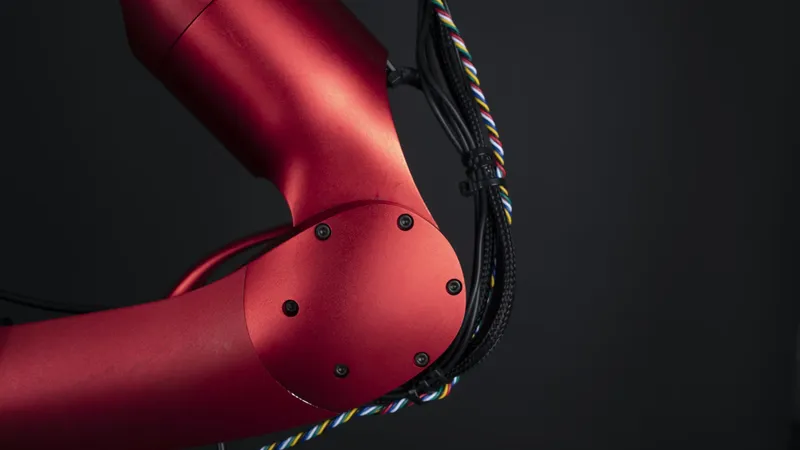
Because painting robots often operate in environments where overspray and contaminants are unavoidable, sealed bearings and bearings with protective surface treatments are especially important. These features help prevent paint, dust, and other debris from entering the bearing and shortening service life.
High-Precision Bearings for Rotary Motion
Rotating assemblies in industrial painting robots frequently use high-precision bearings with minimal internal clearance. High rigidity is essential in these applications because the robot’s end effector must remain stable throughout the painting cycle.
Crossed roller bearings are a strong choice for this type of motion control. For example, the IKO CRBH7013AUU bearing, sized at 70 x 100 x 13 mm, offers approximately 20.1 kN dynamic load capacity while maintaining a slim cross-section. This makes it useful in compact robotic joints where strength, rigidity, and accuracy all matter. Bearings of this type help reduce play, maintain stiffness, and support repeatable movement.
Linear Guides in Painting Robots
In addition to rotary joints, many painting robots use linear motion systems for travel along rails or guideways. These systems often incorporate profiled linear rails with ball-bearing carriages.
Linear guide assemblies function as precision linear bearings, allowing smooth travel with high load capacity and accurate positioning. This is especially important when coating large surfaces, where the spray head must maintain consistent movement and even coverage across the workpiece.
Materials and Bearing Protection
Bearings used in robotic painting equipment must be built for challenging environments. Hardened bearing steel is common, but in especially demanding or contamination-prone areas, stainless steel or ceramic components may also be used to improve corrosion resistance and durability.
Protective seals and specialized coatings help keep paint particles, dust, and moisture away from internal rolling elements. Rubber seals, PTFE-based sealing options, and corrosion-resistant finishes can all improve bearing life in coating applications. Proper lubrication and routine maintenance are equally important for achieving consistent performance over time.
Example Bearing Specifications
Below are two typical examples that illustrate the types of bearings often referenced in robotic applications:
| Bearing Model | Bore ID (mm) | OD (mm) | Width (mm) | Dynamic Load (kN) | Static Load (kN) | Typical Application |
| 6004-ZZ | 20 | 42 | 12 | 10.4 | 5.05 | General-purpose deep groove ball bearing for combined radial and axial loading |
| IKO CRBH7013AUU | 70 | 100 | 13 | 20.1 | 27.7 | Crossed roller bearing for robot shoulder or wrist joints |
These examples show how different bearing types serve different functions. Deep groove ball bearings are commonly used in general rotary applications, while crossed roller bearings are better suited for areas where compact size, rigidity, and motion accuracy are required.
How to Choose the Right Bearing
To choose the right bearing for a painting robot, start by reviewing the technical requirements of each axis or joint. Key factors include:
- Applied radial and axial loads
- Rotational speed
- Available installation space
- Required stiffness and positioning accuracy
- Exposure to paint, solvents, dust, and moisture
- Lubrication and maintenance requirements
Selecting the correct bearing for each motion point helps improve coating consistency, minimize vibration, reduce downtime, and extend the life of the robotic system.
FAQ
What types of bearings are commonly used in painting robots?
Painting robots often use deep groove ball bearings for standard rotary motion, crossed roller bearings for high-rigidity joints, four-point contact bearings for combined loading, and spherical bearings where misalignment must be accommodated.
Why is bearing selection important in robotic painting systems?
Proper bearing selection helps reduce friction, improve motion accuracy, limit vibration, and prevent unwanted play in the robot arm. This is essential for maintaining consistent spray patterns and reducing maintenance issues.
How can bearings be protected from paint and dust?
Use bearings with seals, protective coatings, and lubricants designed for contaminated or chemically aggressive environments. These features help block overspray and particles from entering the bearing assembly.
Do painting robots require special lubricants?
Yes. Bearings in painting systems often benefit from lubricants that provide good adhesion and resistance to moisture, chemicals, and contamination. Regular inspection of lubricant condition also helps extend service life.
Find Bearings for Painting Robots
Pacific International Bearing Sales offers a wide range of ball bearings, roller bearings, linear motion products, and specialty bearings for robotics and automation applications. Our online catalog includes products from leading manufacturers such as IKO, SKF, NMB, and others, making it easier to source components with the dimensions, load ratings, and performance characteristics your application requires. For assistance, contact PIB at (800) 228-8895 contact us through [email protected].