Your cart is empty
 Short Rigid Couplings
 Controlflex Couplings
 Jaw Couplings
 Oldham Couplings
 Bearing Locknuts – TCN
 Double Wide Shaft Collars
 Heavy Duty Shaft Collars
 International Series Shaft Collars
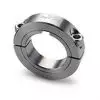 Keyed Shaft Collars
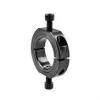 Mountable Shaft Collars
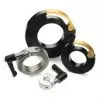 Quick Clamping Shaft Collars
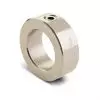 Set Screw Shaft Collars
 Thin Line Shaft Collars
 Threaded Shaft Collars – Pacific International Bearing Products
 Two-Piece Shaft Collars
 Friction Bearing Universal Joints
 Needle Bearing Universal Joints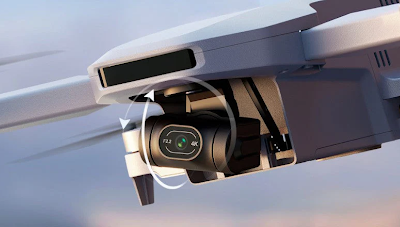
Bearings
Drone Camera Gimbal Bearings
22 April, 2026
11 min read
Drone camera gimbal bearings are precision components that deliver smooth, repeatable rotation under load without adding weight. Pacific International Bearing Sales (PIB) explains that thin-section small radial and miniature angular-contact bearings are often used in gimbals to support both radial and axial loads in a compact form.
Key Takeaways:
Gimbal bearings must balance low friction and high stiffness – a loose bearing may cause excessive movement while the right preload keeps motion smooth.
- Thin-section bearings for yaw axes: Kaydon and RBC slim bearings offer larger outer diameters with narrow cross-sections, ideal for 360° pan axes on camera turrets.
- NMB Miniature ball bearings for tight pivots: Small deep-groove bearings fit compact pitch/roll joints, offering low torque and easy integration in constrained spaces.
- PIB Angular contact pairs for axial loads: Tilt/roll axes carrying the camera weight often use preloaded angular-contact bearings to handle thrust and eliminate end-play.
- Right choice yields stable video: Proper bearing selection (preload, match to load) minimizes backlash and vibration, so the camera stays rock-steady under real flight conditions.
Why gimbal bearings matter
A well-designed gimbal bearing does more than spin with low friction. It supports the camera’s weight, keeps each axis aligned, and isolates vibration so the sensor points where it should. Even a tiny bit of looseness will show up as chatter or drift in the video feed. In practice, that means designers often use bearing pairs or preloads to remove any play. According to Pacific International Bearing Sales, the right bearing lets the gimbal hold a stable horizon without overworking the stabilizer. The diagram below highlights these key bearing functions in a drone:
Bearing functions in a gimbal
In a camera gimbal, each bearing must simultaneously:
- Support the rotating joint. It holds the camera assembly’s weight and any eccentric loads.
- Enable smooth motion. Bearings must turn freely with low friction and precise alignment so the camera tracks accurately.
- Maintain position. The joint must return to the exact same position every time (no slop). Preloading or zero-clearance bearings are often used so the camera doesn’t sag or drift.
When any of these roles slip, image quality suffers. For example, without enough preload, even a good bearing will let the camera droop or vibrate under torque, forcing the stabilization software to compensate. A high-performance gimbal needs bearings that are tight, stiff, and smooth at the same time.
Bearing types in camera gimbals
Drone gimbals commonly use three bearing styles:
- Thin-Section Ball Bearings: These have very slim cross-sections relative to their diameter. They let designers use a large, stiff bearing without adding much thickness or weight. A thin-section bearing is ideal on the yaw (pan) axis, where the camera housing rotates 360°. Its thin width keeps the gimbal low-profile, while the large diameter supports the cantilevered camera mass.
- Miniature Deep-Groove Ball Bearings: Miniature bearings are compact and low-friction, making them perfect for small pitch/roll joints where loads are light to moderate. PIB notes that precision miniature bearings in gimbals isolate the camera from motor vibration and ensure buttery-smooth motion. In consumer or prosumer drones, a tiny 5×11×4 mm deep-groove bearing (for example) can spin at 50,000+ RPM with minimal drag – ideal for agile tilt axes.
- Angular-Contact Ball Bearings: When an axis carries significant thrust (like the camera’s weight on the tilt axis), angular-contact bearings shine. A pair of preloaded angular-contact bearings (back-to-back) can handle combined radial and axial loads and remove all end-play. This means the camera won’t sag under its own weight, and there’s no “bump” when direction changes. In practice, high-end gimbals often use a thin-section bearing for yaw and an angular-contact pair for tilt, balancing compactness with high stiffness.
Each type is chosen to match the gimbal’s geometry and loads. For example, crossed-roller bearings (which use orthogonal cylindrical rollers) are sometimes used in elite gimbals demanding zero backlash; they provide extremely high rigidity in a thin profile. But for most camera gimbals, the combination above covers the needs: thin-section for space, miniature for simplicity, and angular-contact for strength.
Before-and-after: why bearing choice changes everything
| Before (wrong bearing) | After (right bearing) |
| Gimbal moves smoothly by hand but jitters under flight loads | Motion stays consistent under load |
| Slight play causes the camera to drift off-center | Preloaded or tighter bearing removes backlash, keeping camera stable |
| Control software fights drift and noise | Mechanical stability reduces control effort |
| Oversized standard bearings crowd the design | Thin-section/miniature bearings free up space and save weight |
| Gimbal needs replacement after heavy use | Proper load rating and material choice extends service life |
This before-and-after snapshot shows the story clearly: the right bearing choice turns a marginal design into a robust one. As PIB explains, bearings directly affect a gimbal’s backlash, vibration damping, and long-term reliability. In short, good bearings make the whole stabilization system work easier and last longer.
Quick selection table for gimbal bearings
| Requirement | Best-fit bearing type | Why it works |
| Large-diameter, low-profile yaw/pan axis | Thin-section ball bearing | Handles the camera’s moment load with minimal thickness |
| Compact, light-duty pitch/roll axis | Miniature deep-groove bearing | Small size and low friction fit tight pivot joints |
| High axial load or stiffness on tilt axis | Angular-contact bearing pair | Supports camera weight, can be preloaded for no play |
| Minimal backlash for professional footage | Preloaded angular pair or crossed roller | Eliminates internal clearance, ensures rock-steady pointing |
| Tight space with moderate loads | Thin-section or angular-contact (judged by geometry) | Thin-section saves space; angular-contact adds load support |
This table aligns with PIB’s guidance: use thin-section bearings for compact 360° rotation (e.g. pan axes) and angular-contact pairs for axes with thrust loads.
Key specifications that matter
Choosing the right gimbal bearing isn’t just picking any small bearing. Engineers look at:
| Specification | Why it matters in a gimbal |
| Outer/inner diameter | Determines footprint and support area; larger diameter can handle more moment from the camera |
| Width (cross-section) | Affects profile; thin bearings reduce stack height and weight, enabling a slim gimbal |
| Radial load capacity | Must support the camera’s mass and side loads without deformation |
| Axial load capacity | Critical on tilt axes to carry camera thrust or lift, preventing sag |
| Moment (angular) stiffness | Resists twisting from the cantilevered camera; higher stiffness keeps the camera aligned |
| Internal clearance/preload | Excess clearance causes play/jitter; proper preload removes all slack for precise motion |
| Running (friction) torque | Low friction torque means smoother motion and less strain on gimbal motors |
| Weight | Lighter bearings reduce UAV payload and inertia, improving flight time |
| Materials & coatings | Stainless or ceramic resists corrosion in rain, dust, or salt |
| Lubrication strategy | Affects low-temp performance and contamination resistance; proper lube extends life |
In practice, PIB’s engineers match these specs to the application. For example, they might specify ABEC-5 or better precision (for roundness and runout) and certain steel or ceramic materials for durability. The bearing’s thickness and preload will be chosen based on the gimbal’s geometry and required stiffness.
Common design pitfalls
- Picking purely by size: A bearing that fits the space but lacks axial capacity or stiffness will cause trouble. Don’t substitute a standard small ball bearing where an angular-contact type is needed to carry the camera’s thrust.
- Ignoring preload: Even a good bearing pair will exhibit play if not preloaded. PIB notes that high-end gimbals often preload angular-contact bearings to zero clearance, preventing any “soft” feel in the joint.
- Overlooking accuracy: Gimbal bearings should often be higher precision (ABEC-5/7 or ISO P5/P4) to minimize runout. Low-grade bearings may introduce backlash and lead to wobble or inconsistent movement.
- Neglecting lubrication: In small gimbals, use light grease or oil so that the bearing doesn’t seize in cold or dirty environments. PIB’s Aerospace-grade greases or ceramic hybrids are common picks for reliability.
FAQ
What bearings do most camera gimbals use?
It varies by design. Many use thin-section bearings on the yaw (pan) axis as they provide larger diameters in narrower profiles. The tilt and roll axes often use miniature ball bearings for general motion, with angular-contact pairs on heavy axes. High-end gimbals might even use crossed-roller bearings for zero backlash.
Why not just use one bearing type everywhere?
Each axis has different demands. A one-size-fits-all bearing can’t be optimal for all loads. For example, a standard deep-groove bearing might spin freely, but it won’t handle heavy axial loads or resist moment twisting. Using bearings tailored to each axis (thin-section for space, angular for load, etc.) ensures the gimbal is both compact and robust.
How do gimbal bearings affect image quality?
A worn or loose bearing lets the camera drift or vibrate slightly, causing blurring or jitter in video. Precision bearings (especially preloaded angular-contact types) keep the camera pointing exactly where intended. In effect, the right bearings give you sharper, steadier footage because the mechanical noise is minimized.
Can I find these bearings through PIB?
Pacific International Bearing Sales offers a wide range of miniature, thin-section, and angular-contact bearings suited for drone gimbals. Check the PIB online catalog (Categories > Bearing Types > Thin Section or Miniature Ball) for size and spec sheets, or use our search. If you need guidance, PIB’s engineers can help match a bearing to your gimbal’s loads and space constraints.
How tight should I preload a gimbal bearing?
That depends on the application. Too much preload increases friction; too little leaves play. For imaging gimbals, a small but definite preload (just enough to eliminate all internal clearance) is common. This way, the joint feels solid but still moves with moderate torque. Consulting with bearing specialists (like PIB’s engineering support) can help set the right preload for your specific gimbal.
Find the right gimbal bearings at PIB
Drone camera gimbals demand special bearings, and Pacific International Bearing Sales can help you select them. Explore the PIB online catalog for thin-section, miniature, and angular-contact bearings that fit your design. Our catalog provides dimensions, ratings, and easy ordering.
For personal guidance, contact PIB’s experts: call (800) 228-8895 to discuss your gimbal application. We’ll help you pick bearings that keep your camera steady and your project on track.