Your cart is empty
 Short Rigid Couplings
 Controlflex Couplings
 Jaw Couplings
 Oldham Couplings
 Bearing Locknuts – TCN
 Double Wide Shaft Collars
 Heavy Duty Shaft Collars
 International Series Shaft Collars
 Keyed Shaft Collars
 Mountable Shaft Collars
 Quick Clamping Shaft Collars
 Set Screw Shaft Collars
 Thin Line Shaft Collars
 Threaded Shaft Collars – Pacific International Bearing Products
 Two-Piece Shaft Collars
 Friction Bearing Universal Joints
 Needle Bearing Universal Joints
Bearings
Radial Shaft Seals
16 February, 2026
12 min read
If you’ve ever had a “minor” oil leak turn into downtime, cleanup, and a rushed parts order you know how important quality seals are needed.
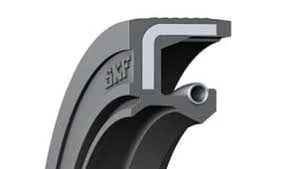
At Pacific International Bearing Sales, we see the same pattern over and over: the seal gets blamed, the seal gets replaced, and the leak returns, because the real issue was speed, pressure, surface finish, misalignment, or just the wrong lip/material for the job.
This guide is the practical version, what radial shaft seals do, what actually matters when selecting them, and the specs that separate “it fits” from “it lasts.
Key Takeaways
- What they do: Radial shaft seals (lip seals) sit between a rotating shaft and its stationary housing, keeping oil or grease in and dirt out. A spring-loaded elastomeric lip presses on the shaft to maintain a dynamic seal.
- Design strengths: Standard elastomer seals handle light pressure (≈0.07 MPa, about 10 psi at 1 000 ft/min) and speeds on the order of 3–5 m/s. Heavy-duty profiles (e.g. SKF’s CRW/CRWA series) boost that to ≈0.34 MPa (50 psi) at similar speeds; beyond that, specialty PTFE lip seals can handle >3.5 MPa (500 psi) differential pressure.
- Material vs. conditions: Common lip materials cover broad ranges: nitrile rubber seals (–40 °C to +100 °C), silicone (–60 °C to +200 °C), polyacrylate (–40 °C to +150 °C) and fluoroelastomer FKM (–40 °C to +200 °C). PTFE seals extend extremes (about –70 °C to +200 °C, up to +250 °C) with the highest chemical resistance.
- Performance tips: Advanced lip designs (like SKF’s Wave or Edge seals) actively pump lubricant back toward the bearing and run cooler, lowering friction and wear. Choosing the right case style (metal vs. rubber OD) and seal orientation further optimizes performance.
- Pacific International Bearing Sales (PIB) stocks SKF’s CR Seals line, including radial shaft seal profiles for standard and heavy-duty applications. Our engineers can help you match the seal design, lip geometry and material to your shaft speed, pressure and fluid conditions. Browse the PIB online catalog to find the right seal by size, series or application needs.
Understanding Radial Shaft Seals
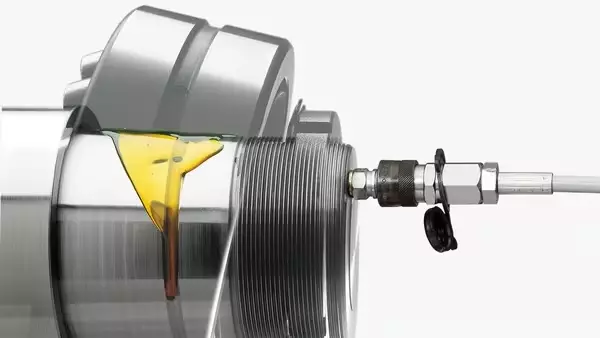
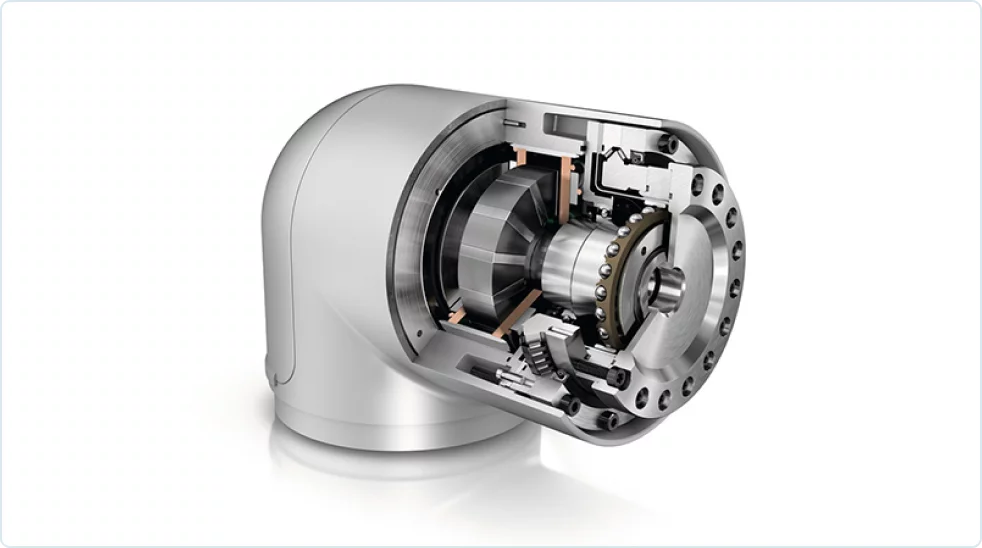
Radial shaft seals (often called rotary lip seals or simply lip seals) are the last line of defense around a rotating shaft. They “sit between rotating and stationary machine components” and have two main parts: a cylindrical outer case (steel or rubber) that fits into the housing bore, and an elastomeric (or PTFE) sealing lip that presses against the shaft. The lip’s thin edge is usually formed by molding or cutting and is held in firm contact with the shaft by a garter spring. The actual sealing happens at the lip/shaft interface – this is the most important functional area of the seal.
When properly selected and installed, a radial seal retains lubricant inside the bearing or gearbox while excluding dirt and moisture from entering. This directly protects the shaft and bearings, extending equipment life. For example, SKF CR Seals – an industry-standard family stocked by Pacific International Bearing Sales – are engineered with advanced lip geometries and materials to enhance bearing protection. Some profiles include secondary dust lips or PTFE inserts for extra contamination exclusion.
Unlike simple O-rings, radial seals must tolerate relative motion and a pressurized film of lubricant. That’s why most have a sprung lip and may include special features like hydrodynamic grooves or an auxiliary lip. In short, they are robust engineering components designed to keep your machine running, not leaking.
Seal Materials and Specifications
The material of the sealing lip strongly influences what conditions the seal can handle. Table below summarizes common radial-seal materials and their typical temperature, pressure and speed capabilities, plus where they shine:
| Material (Lip) | Temp Range | Pressure | Speed (shaft surface) | Best Applications |
| Nitrile (NBR) / HNBR | –40 °C to +100 °C (short-term +120 °C) | ~0.07 MPa (≈10 psi) standard | ~3–5 m/s typical | General-purpose oil/grease sealing; good wear resistance; cost-effective. |
| Fluoroelastomer (FKM) | –40 °C to +200 °C | ~0.07 MPa (≈10 psi) standard | ~3–5 m/s | Hot-oil and chemical environments; fuels and solvents; high-temp oils. |
| Silicone (VMQ) | –60 °C to +200 °C | ~0.07 MPa (≈10 psi) | ~3–7 m/s | Extreme cold or hot (–60 to +200 °C); non-oxidized lubricants; food, pharma. Not for high-pressure oil seal. |
| Polyacrylate (ACM) | –40 °C to +150 °C (to +175 °C in some oils) | ~0.07 MPa | ~3–5 m/s | High-temperature oil applications (e.g. automatic transmissions); ozone and aging resistance. |
| PTFE (Teflon®) | –70 °C to +200 °C (up to +250 °C) | >>0.34 MPa (special designs >3.5 MPa) | Moderate (≤5 m/s)* | Ultra-high temp/pressure/chemical service. Dry-running, contaminated or aggressive fluids. Offers lowest friction and best chemical inertness. Requires hardened counterface and careful fit. |
PTFE lip seals can handle higher surface speeds than rubber (thanks to lower friction), but sealing pressure drops at high speed. Heavy “wave” lip designs often aid PTFE and rubber seals at higher speeds.
Each material has trade-offs. For example, nitrile rubber is common for oil/grease sealing but maxes out near +100 °C. Fluoroelastomers (FKM) extend that to +200 °C and handle fuels better. Silicone excels at very low or very high temps, but it can swell in hydrocarbon oils. Polyacrylates (ACM) cover a middle high-temperature range and resist ozone. The table above consolidates these ranges along with rough pressure and speed limits.
In practice, most general industrial seals (called CR seals in SKF nomenclature) use premium nitrile or FKM compounds optimized for wear and oil compatibility. If you need more pressure tolerance, look to special profiles. For instance, standard CR radial seals are rated around 10 psi at normal running speeds, whereas SKF CRW5/CRWA5 (high-pressure profile seals) can handle ≈50 psi (0.34 MPa) at 5 m/s.
And if your shaft sees very high pressures or chemical attack, sealed PTFE lips (often with metal cases) push capability even further.
Seal Design Variants
Beyond material, geometry matters. Radial seals come in many designs: single-lip, double-lip, multi-lip (cassette or spring back-up), metal-cased or all-rubber cases, and more. For example:
- Standard (Single Lip) – One primary lip seals lubricant. A thin wiper lip may be added on the air side to block large contaminants.
- Auxiliary (Double Lip) – A second lip or dust lip protects the primary lip from dirt. A small grease film between the lips can further reduce wear.
- Wave/Edge Seals – These seals have a special undulating or multi-step lip (SKF Wave or Edge designs) that pumps lubricant back and reduces heat build-up. They achieve “up to 20% less friction and 30% lower temperatures” compared to flat-lip designs【11†L133-138】, enhancing service life.
- Heavy-duty (HS, HDS, CRW series) – Thicker lips, reinforced constructions, and spring covers let these seals take up to ~0.34 MPa pressure or higher. Split designs allow installation on large shafts (some HS seals operate up to 7.5–10 m/s at diameters >4 m). SKF even offers springless pressure seals and massive PTFE liners for extreme cases.
Housing bores may also be rubber-coated, steel, or metal with Bore Tite coating (SKF’s acrylic sealant) to improve static sealing. The right case style ensures a tight fit in the bore and stable lip pressure on the shaft, even if the housing runs hot or is split.
Ultimately, choosing a seal means balancing pressure, speed, temperature, and the fluid/contaminant environment. Pacific International Bearing Sales (PIB) partners with SKF to guide that choice. We can cross-reference your old seal or use SKF’s Seal Select tools and the extensive CR Seals catalog to pick a profile and material that meets your needs.
FAQs
Q: What exactly is a radial shaft seal?
A: It’s a rotating lip-type seal. Think of it as a “curtain” around the shaft: a metal (or rubber) shell fits the housing bore, and an elastomer (or PTFE) lip is spring-loaded against the shaft. Together they confine lubricant and keep dust out. SKF describes them as having “a cylindrical outer covering…that seals…against the housing bore” and “a sealing lip…that seals…against the shaft”.
Q: How do I choose the right seal material?
A: Start with the operating environment. For oil-lubricated shafts at room temperature, nitrile (NBR) is common. If your oil is hot or there are chemicals, fluoro (FKM) or polyacrylate (ACM) may be better (higher temp ratings, chemical compatibility). For very cold or extreme heat, silicone can work. If you have extremely high pressure or aggressive fluids, PTFE lips (or PTFE-on-metal seals) are the go-to (they handle higher pressures – up to 3.5 MPa – and have unmatched chemical resistance). Always check that the seal material is compatible with your lubricant or media (SKF’s tables of compatibility and temperature ranges are useful references).
Q: What is the pressure and speed limit of a radial seal?
A: Typical elastomer radial seals are designed for low to moderate pressure. As a rule of thumb, standard industrial lip seals are rated around 0.07 MPa (~10 psi) at typical running speeds (a few meters per second). Heavy-duty series (with reinforced lips or springs) can handle ~0.34 MPa (~50 psi) at those speeds. If you exceed that, look at specialty profiles (SKF’s high-pressure CRW/CRWA series, or PTFE seals) which extend capability up to 3.5 MPa+. For speed, most seals are happy up to ~5 m/s. Some split industrial seals can go to 7–10 m/s. Remember that pressure and speed have a trade-off: higher pressure (or larger diameters) often means lower allowable speed.
Q: Why use a fancy Wave or Edge lip seal?
A: Simple seals work, but advanced lip profiles add performance. SKF’s Wave and Edge designs, for example, pump a bit of lubricant back towards the bearing, which reduces under-lip heat. The result is lower friction and cooler operation – up to ~30% temperature reduction versus a plain lip. This can be critical in high-speed or high-temperature service. These designs also often act as their own secondary seal, so they can eliminate the need for an extra dust lip in some cases. In short, Wave/Edge seals trade a bit more complexity (and cost) for longer life and reliability in tough applications.
Q: How do I fit a radial seal properly?
A: Ensure the housing bore is clean and, for metal-case seals, toleranced to ISO standards. Lubricate the lip slightly and press the seal straight in. AXIAL retention: If there’s an internal pressure, the seal should be backed by a counterbore or lip on the shaft collar (so it doesn’t push out). Always avoid twisting the spring out of place. For split or cassette seals, follow the manufacturer’s instructions; they typically snap together in a recess.
Q: Are radial seals standardized by size?
A: Yes, most seals follow ISO or DIN dimensions (ISO 6194-1, DIN 3760 etc.) for shaft and bore diameters. That means you can often cross-reference replacement seals by dimension. However, check whether the seal is marked “R” (rubber O.D. – a press-in seal) or “V” (metal case, spring-insert), since these have different tolerance fits. Pacific International Bearing Sales can help cross-list CR seal part numbers or find equivalents.
Q: Why choose SKF CR Seals from PIB?
A: The CR Seals line (originating from Chicago Rawhide) covers virtually all industrial needs: single/double lip, PTFE, grease purge, heavy industrial, you name it. As an SKF-authorized distributor, PIB carries these in stock and our team knows the CR naming (HMS, CRW, HDS, etc.) and which one solves each problem. We offer application engineering support — picking the best material and profile — plus quick shipment from our inventory. For any radially sealed shaft, we have a solution ready to plug in and keep it running longer.
Browse the PIB Catalog
Ready to find your next radial shaft seal? Browse the PIB online catalog to explore SKF’s full range of CR radial seals (and related seals) by size, series or application. Our catalog search lets you filter by shaft diameter, material, lip style, and more. Whether you need a simple NBR seal for a pump or a heavy-duty PTFE seal for a pressurized shaft, Pacific International Bearing Sales has you covered with genuine, in-stock solutions. Check the catalog to select the right seal and keep your machines leak-free and reliable.