Your cart is empty
 Short Rigid Couplings
 Controlflex Couplings
 Jaw Couplings
 Oldham Couplings
 Bearing Locknuts – TCN
 Double Wide Shaft Collars
 Heavy Duty Shaft Collars
 International Series Shaft Collars
 Keyed Shaft Collars
 Mountable Shaft Collars
 Quick Clamping Shaft Collars
 Set Screw Shaft Collars
 Thin Line Shaft Collars
 Threaded Shaft Collars – Pacific International Bearing Products
 Two-Piece Shaft Collars
 Friction Bearing Universal Joints
 Needle Bearing Universal Joints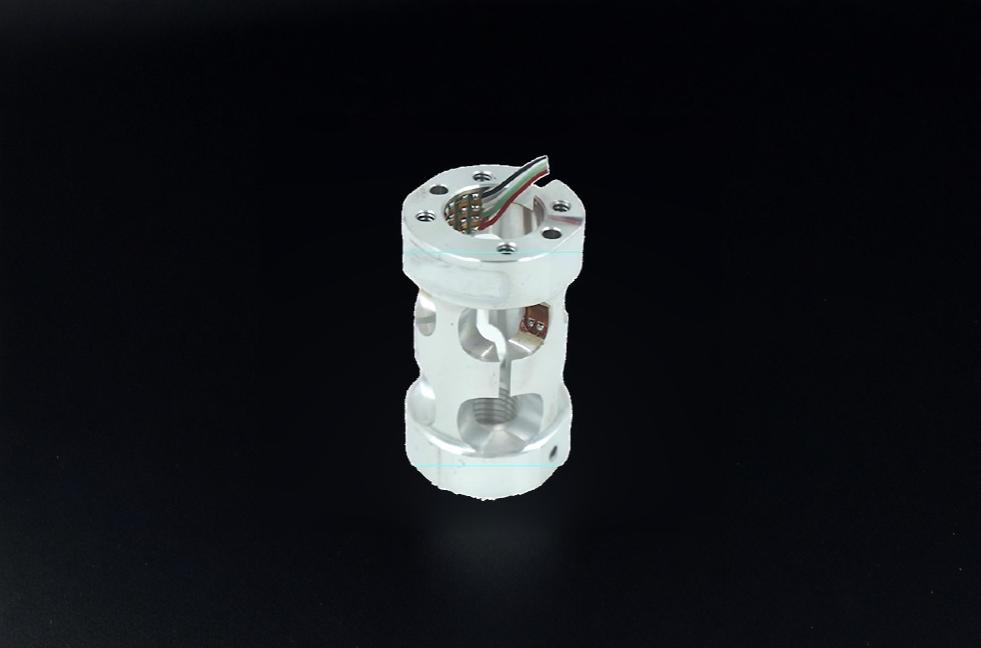
Bearings
TQ903S Micro Torque Sensor: Compact Precision for Small Torque Measurements
09 January, 2026
16 min read
The TQ903S Micro Torque Sensor is a compact reaction torque transducer designed for precise measurement of low-level torques. Pacific International Bearing Sales (PIB) offers this sensor as a reliable solution for various industrial and research applications.
Measuring tiny twisting forces accurately can be challenging, but the TQ903S Micro Torque Sensor makes it straightforward. This sensor is a static (reaction) torque sensor, meaning it measures torque without needing to rotate. It is ideal for capturing non-continuous or slowly varying torque on a fixed or non-rotating component. In practical terms, if you need to know how much twisting force is being applied to a bolt, a tool, or a small machine part, the TQ903S can provide that measurement with high precision.
As the name “micro torque” implies, the TQ903S is built to measure very small torque values – the kind of subtle forces often encountered in delicate assemblies, precision instruments, and fine-tuned mechanical systems. Pacific International Bearing Sales (PIB) is proud to bring this advanced sensor to engineers and manufacturers who require dependable torque measurements at lower ranges. Once introduced, we’ll refer to Pacific International Bearing Sales simply as PIB.
Key Features of the TQ903S Micro Torque Sensor
The TQ903S comes with several features that make it stand out for measuring small torques. Below are its key characteristics and why they matter:
- Static Reaction Design: The TQ903S is a static torque sensor, meaning it measures torque when the sensor itself remains stationary. This design is perfect for capturing reaction torque or torque in a non-rotating shaft. In other words, you can bolt the sensor to a structure and apply a twist to it – the sensor will accurately measure the torque without needing to spin. (For continuously spinning shafts, a different type called a rotary torque sensor is used.)
- Compact & Easy to Install: Designed with a compact structure, the TQ903S can fit into tight spaces within machinery or test setups. Its small form factor and light weight make it easy to integrate into an existing system. The sensor features convenient mounting points (like threaded holes and flanges), so engineers can install it without hassle. This simplicity is crucial when retrofitting equipment or designing portable test rigs.
- High Precision and Stability: When dealing with small torques, accuracy is paramount. The TQ903S offers excellent precision – its measurement error (non-linearity, hysteresis, repeatability) is around 0.2% of full scale or better. This means you get a very faithful reading of the actual torque applied. Additionally, the sensor’s output remains stable over time (minimal drift, with creep rated around 0.2% over 30 minutes) which is important for long tests. Such high accuracy and stability give confidence that every tiny twist is captured correctly.
- Wide Measurement Range (Micro Torque Levels): This sensor model comes in multiple range options, covering torques from as low as 0.1 N·m up to 12 N·m. (For reference, 0.1 N·m is a very small torque – roughly equivalent to the twist from gently turning a small screwdriver. 12 N·m is about the torque of a moderately tightened screw.) These range options allow users to select a version of TQ903S that best fits their application, ensuring optimal accuracy whether they are measuring extremely delicate forces or the higher end of the “micro” torque spectrum.
- Strain Gauge Technology (mV/V Output): Inside the TQ903S is a set of precision strain gauges configured in a Wheatstone bridge. When torque is applied, the bridge outputs a low-level electrical signal proportional to the force – specifically in the order of millivolts per volt (mV/V) of excitation. For example, at full load the output might be around 0.8 to 1.8 mV/V (depending on the model’s range). This standard strain-gauge output means the TQ903S can be easily connected to common instrumentation amplifiers, signal conditioners, or digital indicators. You simply provide a stable excitation voltage (between 5 V and 12 V DC is recommended, with 15 V max), and measure the mV signal to know the torque. The sensor’s zero balance (initial offset) is within ±3% of full scale, which is easily tared out when you set up your measurement system.
- Robust Build & IP65 Protection: Despite its small size, the TQ903S is built for industrial environments. It carries an IP65 protection rating, which means the sensor is dust-tight and protected against low-pressure water jets. In practical terms, it can handle dusty workshops, the occasional splashes of coolant or water, and generally rough conditions without damage. The construction is durable (made from high-strength materials like alloy steel or anodized aluminum), and the sensor can safely withstand overloads up to 120% of its rated capacity. It even has a margin up to 150% of full scale before risk of permanent damage (though you should avoid pushing any sensor to failure!). This overload tolerance provides peace of mind that little accidental over-torques or bumps won’t immediately ruin the device.
- Temperature Compensation: The TQ903S is engineered to maintain accuracy across changing temperatures. It has a compensated temperature range from -10°C to +60°C, meaning within that span its zero and sensitivity are actively compensated to reduce drift. It remains operational from -20°C up to +80°C, so even in unheated garages in winter or warm factory floors, the sensor will function. The temperature coefficients are low (around 0.05% of full scale per 10°C), ensuring minimal error introduced by temperature changes. This reliability is crucial if you’re using the sensor in environments where temperatures fluctuate or if you need consistent readings in both lab and field conditions.
Each of these features contributes to making the TQ903S Micro Torque Sensor a versatile and trustworthy component for precise torque measurement. Whether you’re an engineer fine-tuning a robotic joint or a technician testing delicate medical devices, these characteristics ensure the sensor will perform reliably and accurately.
Applications of the TQ903S Micro Torque Sensor
One of the best aspects of the TQ903S is how broadly it can be applied. Because it measures small torques accurately, it finds use in many industries and scenarios, including:
- Automotive Assembly & Testing: In automobile manufacturing, there are many small torque requirements – for instance, when tightening screws, bolts, or components in engines and electronics. The TQ903S can be used in torque tools or test rigs to ensure each fastener is tightened to the correct specification. Its precision helps maintain quality and safety standards (no under-tightened or over-tightened bolts).
- Automation and Robotics: Modern robotics and automation systems often need to sense torque, especially in robotic joints or end-effectors (grippers, screwdrivers, etc.). The TQ903S, being compact, can be integrated into a robot’s joint or a tool flange to provide feedback on how much force the robot is applying. For example, a robotic arm assembling a device might use a TQ903S to monitor torque when inserting or twisting parts, enabling delicate handling and collision detection.
- Electronics & 3C Product Manufacturing: The term “3C” refers to computer, communication, and consumer electronics – think smartphones, laptops, appliances, etc. In these industries, assembly often involves tiny screws and components where precise torque is critical (to avoid damage by over-tightening, or to ensure a good contact). The TQ903S is well-suited for electronics assembly equipment and testing rigs, verifying that torque applied during assembly is within the required range.
New Energy and Green Tech: Industries like renewable energy or electric vehicles also have applications for micro torque sensing. For instance, assembling battery packs for EVs or tightening small screws in solar panel electronics can require precise torque control. The TQ903S sensor can be incorporated into assembly machines or quality inspection stations in these new energy product manufacturing lines to improve consistency and reliability. - Medical Devices and Laboratory Equipment: In the medical field, devices often have moving parts or connectors that need careful torque application – for example, calibration of prosthetic joint resistance, or secure fastening of lab equipment components. Because of its accuracy and small range, the TQ903S is valuable for medical testing equipment where measuring or controlling small torques ensures equipment functions correctly and safely. Its clean output and high precision suit the stringent requirements of medical device development.
- Precision Manufacturing & Mold Assembly: When assembling molds or precision machined parts, applying the correct torque can affect alignment and product quality. The TQ903S can be used to monitor the torque when tightening clamps or mold components in mold assembly, preventing damage to costly molds and ensuring proper fit. Similarly, any precision manufacturing scenario that involves tightening or twisting can benefit from this sensor to verify the forces involved.
- Research and Development: Beyond industry, the TQ903S is a great tool in R&D labs. Engineers designing new products or conducting experiments often need to measure small torques – for instance, friction in a new bearing design, or the twist on a specimen in a materials test. The sensor’s ease of use and accuracy make it a convenient choice for experimental setups and prototypes. It allows researchers to capture torque data reliably without building custom sensors from scratch.
In summary, any situation requiring precise measurement of low torque can leverage the TQ903S. From factory automation to research labs, this micro torque sensor helps ensure that even the smallest forces are measured and controlled with confidence.
Technical Specifications of the TQ903S
To better understand the capabilities of the TQ903S, below is a summary of its key specifications. These values show the performance and limits of the sensor:
| Specification | Value |
| Rated Range Options | 0.1, 0.3, 1.5, 3, 6, 10, 12 N·m (various models) |
| Output Sensitivity | 0.8 to 1.8 mV/V (depending on range) |
| Excitation Voltage | 5–12 V DC (15 V max) |
| Zero Balance (Offset) | ±3% of Full Scale |
| Non-linearity | 0.2% of Full Scale |
| Hysteresis (Lag) | 0.2% of Full Scale |
| Repeatability | 0.2% of Full Scale |
| Creep (30 minutes) | 0.2% of Full Scale |
| Input Resistance | 1000 ± 20 Ω |
| Output Resistance | 1000 ± 10 Ω |
| Insulation Resistance | ≥ 5000 MΩ @ 100 VDC |
| Safe Overload | 120% of Full Scale |
| Ultimate Overload | 150% of Full Scale |
| Compensated Temp Range | -10 °C to +60 °C |
| Operating Temp Range | -20 °C to +80 °C |
| Temp Coefficient (Zero) | 0.05% FS per 10 °C |
| Temp Coefficient (Sensitivity) | 0.05% FS per 10 °C |
| Protection | IP65 (dust-tight, water spray resistant) |
A few notes on these specifications: The rated range options show that the sensor can be purchased in different capacity versions – for instance, one model maxes out at 0.1 N·m, another at 0.3 N·m, and so on, up to 12 N·m. Choosing the right range is important for getting the best accuracy (you generally want your expected torque to be well within the sensor’s capacity, not at the extreme top). The output sensitivity tells us how much electrical signal the sensor produces at full load; e.g., 1.0 mV/V means if you supply 10 V excitation, you get 10 mV output at full torque. All the accuracy specs (non-linearity, hysteresis, repeatability, etc.) being 0.2% or better indicates a high precision instrument. The IP65 protection ensures the device’s longevity in industrial settings, as it won’t be harmed by dust or incidental water exposure. Overall, these specs confirm that the TQ903S is not only precise but also built to perform consistently in real-world conditions.
Frequently Asked Questions
Q: What is a “micro” torque sensor?
A: A micro torque sensor is simply a torque sensor designed to measure very small torque values. “Micro” in this context refers to the low magnitude of torque (not the physical size, though these sensors are often compact too). The TQ903S is a micro torque sensor because it can measure tiny torques starting from just 0.1 N·m. These kinds of sensors are crucial when you need to capture subtle twisting forces that regular larger-range sensors would not resolve accurately.
Q: Is the TQ903S a rotary sensor? Can it measure torque on a spinning shaft?
A: The TQ903S is a static (reaction) torque sensor, not a rotary transformer-style sensor. This means it’s intended to measure torque without rotating freely. In practice, the sensor is bolted or coupled to something that twists slightly under load. It can handle slow or limited rotation (for example, measuring the tightening of a screw or the torque on a stationary axle), but it’s not meant for continuously spinning shafts. If you need to measure torque on a shaft that rotates 360° indefinitely at speed (like an engine crank or motor output), you would use a rotary torque sensor with slip-rings or wireless telemetry. The TQ903S, by contrast, shines in applications where the torque is applied and held or applied in a limited angle—such as a reaction torque from a bolted joint or a tool.
Q: What torque range can the TQ903S measure?
A: Depending on the version of the TQ903S, it can measure full-scale torque ranges from as low as 0.1 N·m up to 12 N·m. In one sensor family, multiple models cover different sub-ranges. For example, if you choose the 0.1 N·m model, it is optimized for extremely small torques, whereas the 12 N·m model covers higher (but still relatively small) torque values. All versions maintain high accuracy. To put those numbers in perspective: 0.1 N·m is roughly 0.88 lbf·in (pound-force inches), and 12 N·m is about 106 lbf·in. So the TQ903S series spans from measuring the torque it takes to turn a tiny screw with your fingertips, up to the torque for a medium-sized bolt or component.
Q: How do I get readings from the TQ903S?
A: The TQ903S outputs an analog electrical signal proportional to the torque applied. Specifically, it’s a strain gauge sensor that gives a low-level voltage output (in mV/V). To use it, you will need a stable excitation voltage supply (typically 5 to 10 volts DC) and a measuring device like a strain gauge amplifier or a signal conditioner. Many industrial data acquisition systems or dedicated torque meters can interface with this type of sensor. You’ll connect the sensor’s wires to the amplifier: two wires provide the excitation voltage to the sensor, and two wires output the signal (plus a shield wire for grounding). The amplifier will then convert the mV signal into a usable reading in engineering units (N·m, lbf·in, etc.) that you can see on a display or feed into a control system. PIB can help recommend suitable amplifiers or instrumentation if needed. Once set up and calibrated (typically by performing a known torque reference or using the sensor’s calibration data), you’ll get real-time torque readings from the TQ903S as you apply force.
Q: What does the IP65 rating of the TQ903S mean in practice?
A: An IP65 rating is an international standard indicating the sensor’s level of protection against environmental factors. The two digits in “IP65” have specific meanings: the 6 means it’s completely protected against dust ingress (dust-tight), and the 5 means it’s protected against water jets from any direction (essentially, splashing water or low-pressure jets won’t harm it). In practice, this means the TQ903S can be used in a factory setting where there might be dust, tiny particles, or water spray (like near cooling fluids or outdoors in light rain), and the internal electronics will remain safe. However, IP65 is not fully waterproof for submersion – you wouldn’t drop the sensor into water or expose it to high-pressure washing and expect it to survive. But for everyday industrial conditions, the sensor’s sealing is more than adequate, enhancing its durability.
Q: Can the TQ903S handle occasional overloads or shock?
A: Yes, within limits. The TQ903S is built to withstand overloads up to 120% of its rated torque without suffering permanent damage. This is often called the safe overload limit. For example, if you have a 10 N·m rated sensor, it can likely take up to 12 N·m momentarily and still be fine. The ultimate overload (around 150% of rated) is the point beyond which the sensor might yield or break. It’s not a hard cutoff like a fuse, but exceeding 150% of full scale risks deforming the internal strain gauges or structure. The sensor also handles small shock loads well – it’s a metal transducer with strain gauges, so it’s physically rugged. But as with any precision instrument, it’s wise to avoid sudden extreme forces. In summary, everyday bumps or slightly exceeding the range won’t instantly kill it (which is reassuring), but designing your application to normally stay within the rated range is important for longevity and accuracy.
Q: Where can I purchase the TQ903S or get more information and support?
A: You can acquire the TQ903S Micro Torque Sensor through Pacific International Bearing Sales (PIB). We offer this sensor directly via our online catalog and sales channels. For more information, you can visit the PIB online catalog on our website, where the TQ903S and related torque sensor models are listed with details. The catalog allows you to see specifications, request a quote, or even purchase if available in the online store. Additionally, the experts at PIB are ready to assist with any questions – whether it’s choosing the right model, providing datasheets, or offering technical support for integration. Don’t hesitate to contact PIB for personalized guidance on using the TQ903S in your project.
Explore the PIB Online Catalog
The TQ903S Micro Torque Sensor offers a dependable way to measure small torques with high accuracy, making it a valuable addition to any precision engineering toolkit. If you’re ready to enhance your project or production line with accurate torque sensing, now is a great time to take action. Visit the PIB online catalog to find the TQ903S Micro Torque Sensor, along with a wide range of other sensing and bearing solutions offered by Pacific International Bearing Sales. With our user-friendly catalog and dedicated support at [email protected] , PIB will help you select and implement the perfect components for your needs. Get started today and ensure your torque measurements are in expert hands with PIB’s quality products.