Your cart is empty
 Short Rigid Couplings
 Controlflex Couplings
 Jaw Couplings
 Oldham Couplings
 Bearing Locknuts – TCN
 Double Wide Shaft Collars
 Heavy Duty Shaft Collars
 International Series Shaft Collars
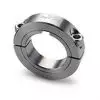 Keyed Shaft Collars
 Mountable Shaft Collars
 Quick Clamping Shaft Collars
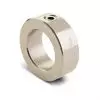 Set Screw Shaft Collars
 Thin Line Shaft Collars
 Threaded Shaft Collars – Pacific International Bearing Products
 Two-Piece Shaft Collars
 Friction Bearing Universal Joints
 Needle Bearing Universal Joints
Bearings
Wear sleeves
03 March, 2026
13 min read
Wear sleeves are thin, press‑fit sleeves that restore a smooth, round sealing surface on a worn shaft so a radial shaft seal can work again — often without tearing down the machine. Pacific International Bearing Sales supplies SKF wear sleeves and helps match them with compatible seals and bearing protection strategies.
Key Takeaways
- A radial shaft seal is only as good as the shaft “counterface” it runs on; wear sleeves rebuild that running surface fast.
- SKF Speedi‑Sleeve is designed as a thin‑wall solution (about 0.28 mm) with a seal-running finish typically in the Ra 0.25–0.5 µm range—often better than what’s practical to achieve on a field-worn shaft.
- The “Gold” wear sleeve option adds a thin metallic coating aimed at abrasive contamination (think dust, grit, slurry).
- Correct measuring and installation matters: measure the unworn diameter in multiple planes, seat the sleeve on full diameter (not the chamfer), and don’t pre-heat the sleeve for installation.
- PIB supports wear sleeve selection as part of the larger sealing system (seals + bearings + operating conditions), not as a one-off part swap.
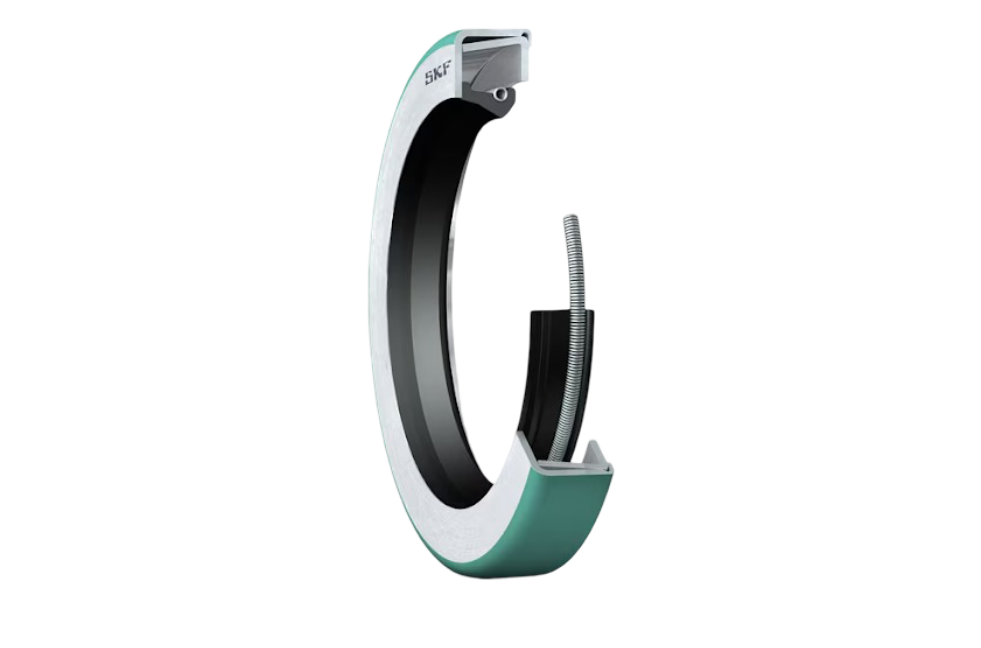
A brand‑new seal won’t stay leak‑free on a scored shaft. SKF explains that radial shaft seals must run on a smooth, round counterface; once that surface becomes worn or scored, sealing performance drops and the seal can no longer reliably retain lubricant and exclude contaminants.
SKF’s wear sleeve families address this problem two ways: SKF Speedi‑Sleeve (standard range typically covering ~12 to ~203 mm shaft sizes, designed to mount quickly with an included tool), and large‑diameter wear sleeves for heavy industrial applications (e.g., LDSLV4) for much larger shafts — roughly 211 mm up to 1,143 mm — often in severe contamination environments.
PIB’s sales staff can help identify the right sleeve size range, confirm seal compatibility, and correct sleeve fit.
What Wear Sleeves Are and Why They Exist
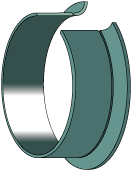
A wear sleeve (sometimes called a shaft repair sleeve) is a precision sleeve that installs over the shaft area where the seal lip runs. The goal is simple: give the seal a new counterface without rebuilding the entire shaft, replacing the shaft, or machining a repair on-site. SKF describes wear sleeves as a solution when the counterface is worn — because efficient sealing depends on a smooth, round running surface.
Where do wear grooves come from? SKF notes a common mechanism: contaminants can get trapped under the sealing lip and abrade a track as the shaft rotates. Over time, that groove becomes a leak path (and a contaminant pathway), which is why “replace the seal” often turns into “repeat the failure sooner.”
Two clarifications that prevent bad outcomes:
- Wear sleeves are designed to create a counterface optimized for radial shaft seals—they specifically solve the “seal running surface” problem.
- If the shaft damage is elsewhere (e.g., under a bearing seat, keyway area, or a geometry that deforms the sleeve), treat that as a different repair decision and bring it to [CATEGORY_URL]/oem-services/engineering-support. SKF explicitly warns against installing Speedi‑Sleeve over keyways, cross holes, splines, or threads because it can deform the sleeve and compromise sealing.
Design, Materials, and What “Good” Looks Like
Most maintenance teams care about three sleeve design features which are wall thickness, surface quality, and installability.
SKF Speedi‑Sleeve (standard / Gold): SKF describes Speedi‑Sleeve as thin‑walled (commonly cited at about 0.28 mm / 0.011 in) and made from stainless steel, giving you a new wear-resistant seal-running surface without changing the seal size in most cases.
The seal-running surface finish is a big deal. SKF states Speedi‑Sleeve is manufactured to minimize directionality and provides a finish in the Ra 0.25–0.5 µm (10–20 µin) range. That matters because sealing lips are sensitive to micro-grooves and directional machining marks (they can “pump” oil).
Speedi‑Sleeve Gold: For abrasive environments, SKF’s Gold version adds a thin metallic coating over the stainless steel that increases durability; SKF positions it for “highly abrasive applications” and suggests it is particularly effective where abrasive contaminants are present.
Large diameter heavy industrial wear sleeves (LDSLV4): For large shafts, SKF’s LDSLV4 wear sleeves cover approximately 211.15 to 1,143 mm shaft diameters and are aimed at severe industrial conditions where solid contaminants reach the seal (rolling mills, primary metals, chemical/mineral plants). SKF notes these sleeves are made of SAE 1008 chromium‑plated carbon steel with a precision ground outside diameter for the seal counterface.
Performance Advantages and Common Applications
The advantages that actually show up in your maintenance logs
You avoid shaft disassembly and machining. SKF repeatedly positions Speedi‑Sleeve as a solution that can prevent costly shaft treatments such as machining, grinding, and disassembly, because the sleeve mounts over the worn area and provides the new surface.
You usually keep the original seal size. SKF states that because the sleeve is thin-walled, the original seal size can still be used (you don’t need to jump to an oversized seal and re-stock everything).
You increase sealing system durability predictably. SKF’s published testing compares a previous vs. new generation Speedi‑Sleeve and reports reduced wear/abrasion performance. In the same publication, SKF reports that in a 2,000‑hour life test using Speedi‑Sleeve and SKF radial shaft seals (made from SKF fluoro rubber “Duralife”), the new generation reduced sealing lip wear by ~30% versus the previous generation and outperformed a chromium‑plated surface by a factor of 2 (test conditions apply).
Where wear sleeves are typically used
SKF notes Speedi‑Sleeve can be applied broadly wherever there is a radial shaft seal — examples shown in SKF literature include industrial gearboxes, electric motors, reducers, pumps, fans, and heavy equipment.
For large industrial shafts (mill duty, contaminated process areas), SKF’s LDSLV4 wear sleeves are explicitly positioned for difficult conditions where solid contamination can reach the seals.
Selection and Installation Tips That Prevent Repeat Work
This is where most “it leaked again” stories are born: wrong diameter range, wrong location on the shaft, or an installation detail that cuts the seal lip on day one.
SKF’s guidance supports the key steps above: clean and measure carefully, measure in multiple planes and use the mean value for selection, install without heating, and seat the sleeve on the full shaft diameter — not in the chamfer — to avoid cutting the sealing lip.
Installation details that matter more than they look
Measure correctly (this avoids a loose sleeve). SKF instructs measuring an undamaged section of the counterface in at least three different planes and using the arithmetic mean to select the sleeve; if the mean is within the permissible shaft range, the sleeve will have an adequate tight fit and typically won’t require adhesive.
Don’t heat the sleeve to install it. SKF explicitly states Speedi‑Sleeve should never be heated prior to installation because it may not contract back to its original size, risking a loose fit.
Seat it correctly (protect the new seal). SKF warns the sleeve should be installed so the outside edge sits on the full shaft diameter; if it rests in or outside the chamfer, the sharp edge can cut the seal lip during seal installation.
Flange: keep it unless it creates a problem. SKF explains the flange can often be left intact, but should be removed if it interferes with components, could cause friction heat/wear debris, or reduces lubricant supply to the seal (raising under‑lip temperature and accelerating seal aging).
Where PIB adds value: If the sleeve choice is tied to broader reliability (contamination control, lubricant selection, seal lip material, and bearing exposure), PIB can help engineer the system as a whole via [CATEGORY_URL]/seals and [CATEGORY_URL]/bearings, with hands‑on application support through [CATEGORY_URL]/oem-services/engineering-support.
Maintenance, Troubleshooting, and When “It Still Leaks”
Wear sleeves are a precision surface. If you install one and the system still leaks, treat it as a structured diagnosis.
Fast troubleshooting checklist
If leakage appears immediately after repair, start here:
Check sleeve position: If the sleeve edge is seated in the chamfer zone, the seal lip may have been cut during assembly (common, avoidable). SKF’s guidance is explicit about seating on full diameter.
Check burrs and sharp edges: SKF emphasizes deburring/filing rough spots and re-checking for burrs that could damage the seal before final assembly.
Check flange decisions: In tight spaces, leaving the flange can cause interference or unwanted contact; in some circulating-lube setups, leaving the flange can reduce lubricant supply to the lip. SKF lists both as reasons to remove it.
Check the root cause: A sleeve fixes the counterface, but it doesn’t fix misalignment, chronic contamination ingestion, or incorrect seal type. SKF frames wear sleeves as part of the sealing system — counterface + seal + environment.
Removal and rework
SKF notes Speedi‑Sleeve is not reusable and outlines removal methods. Importantly, SKF says you should not use heat to install the sleeve — but heat can be used for removal (e.g., an electric heat blower to expand the sleeve enough to slide it off), or mechanical removal methods can be used while avoiding shaft damage.
For large-diameter heavy industrial sleeves, SKF recommends verifying the lead-in chamfer for damage after installation and provides shaft preparation roughness guidance for the sleeve seat; they also recommend installing wear sleeves at the outset when damage is expected so future maintenance can reuse original sizes without shaft rework.
Specifications Table
Representative wear sleeve specifications (SKF examples)
The table below is representative — intended to help maintenance and engineering teams compare size ranges, materials, and installation “fit windows.” Always confirm the exact part details and operating context with PIB before ordering, especially for abrasive environments where “Gold” or heavy‑industrial sleeve families may be the right call.
| SKF example part number | Sleeve family / type | Nominal shaft size | Allowable shaft diameter range (tolerance window) | Typical wall thickness | Material / coating | Seal-running surface finish (typical) |
| 99049 | Speedi‑Sleeve (standard) | 12.00 mm | 11.91–12.01 mm | ~0.28 mm | Stainless steel | Ra 0.25–0.5 µm (10–20 µin), low directionality |
| 99153 | Speedi‑Sleeve (standard) | 40.00 mm | 39.85–40.01 mm | ~0.28 mm | Stainless steel | Ra 0.25–0.5 µm (10–20 µin), low directionality |
| 99210 | Speedi‑Sleeve (standard) | 53.98 mm | 53.92–54.08 mm | ~0.28 mm | Stainless steel | Ra 0.25–0.5 µm (10–20 µin), low directionality |
| 99289 | Speedi‑Sleeve (standard) | 75.01 mm | 74.93–75.08 mm | ~0.28 mm | Stainless steel | Ra 0.25–0.5 µm (10–20 µin), low directionality |
| 99300 | Speedi‑Sleeve (standard) | 76.28 mm | 76.20–76.38 mm | ~0.28 mm | Stainless steel | Ra 0.25–0.5 µm (10–20 µin), low directionality |
| 99848 | Speedi‑Sleeve Gold | 76.20 mm | 76.20–76.35 mm | ~0.28 mm | Stainless steel + thin metallic coating (Gold) | Ra 0.25–0.5 µm (10–20 µin), low directionality |
| 90785 | Heavy industrial sleeve (LDSLV4 example) | 355.2 mm | (application-specific / made-to-order ranges) | (heavier-wall design) | SAE 1008 chromium‑plated carbon steel, precision ground OD | Precision ground OD for seal counterface (spec varies by design) |
FAQ
Do wear sleeves change the seal size I need?
Usually not for thin-wall repair sleeves like SKF Speedi‑Sleeve. SKF states the original seal size can still be used because the sleeve is thin‑walled (commonly cited around 0.28 mm).
When should I consider a “Gold” wear sleeve?
When abrasive contamination is part of the job (dust, grit, slurry). SKF describes Speedi‑Sleeve Gold as designed for highly abrasive applications and notes it uses a thin metallic coating that significantly increases durability.
What’s the most common installation mistake?
Two classics: selecting the wrong shaft diameter range (loose fit), and seating the sleeve so its edge rests in the chamfer area—where it can cut the seal lip. SKF explicitly warns against chamfer seating and recommends measuring the diameter in multiple planes and using the mean for selection.
Should I remove the flange?
Only when it creates a real problem: interference, friction heat/wear debris risk, or reduced lubricant supply to the sealing lip. SKF notes the flange can often be left intact but lists those specific removal triggers.
If you’re seeing repeat seal leaks, grooved shafts, or “we replaced the seal twice and it’s still wet,” it’s time to treat the counterface as part of the sealing system—not a detail. PIB can help you select the right wear sleeve and align it with the right seal and bearing protection strategy When you’re ready to source the part, use the PIB online catalog or contact us at [email protected]