Your cart is empty
 Short Rigid Couplings
 Controlflex Couplings
 Jaw Couplings
 Oldham Couplings
 Bearing Locknuts – TCN
 Double Wide Shaft Collars
 Heavy Duty Shaft Collars
 International Series Shaft Collars
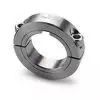 Keyed Shaft Collars
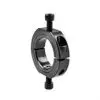 Mountable Shaft Collars
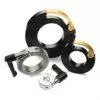 Quick Clamping Shaft Collars
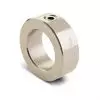 Set Screw Shaft Collars
 Thin Line Shaft Collars
 Threaded Shaft Collars – Pacific International Bearing Products
 Two-Piece Shaft Collars
 Friction Bearing Universal Joints
 Needle Bearing Universal Joints
Bearings
Thin Section Bearings applications and characteristics
22 February, 2023
10 min read
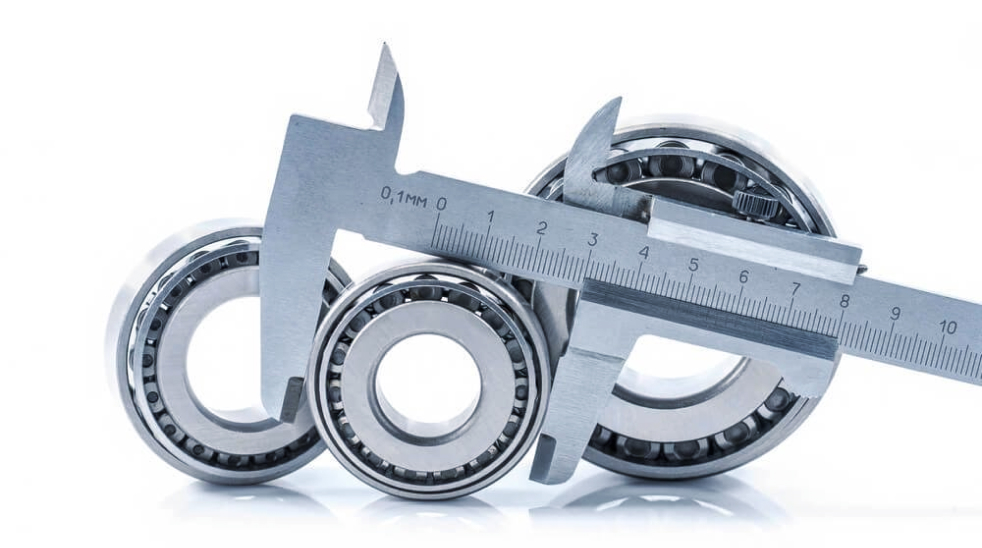
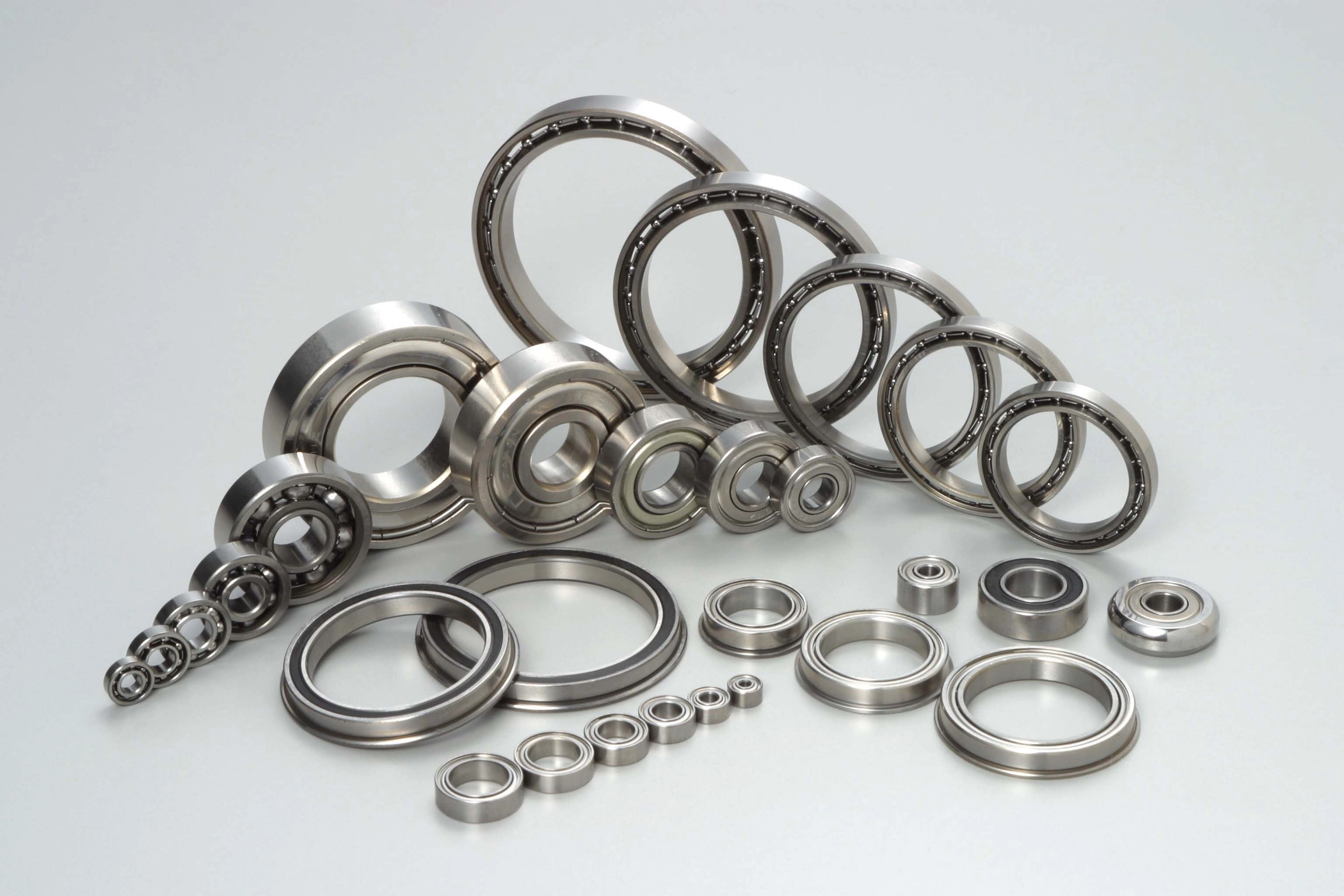
What are thin or slim section bearings? Simply, these are bearings whose width dimension is narrower than a standard bearing. Why would one use a narrow width bearing instead of a standard bearing? Narrow or thin section bearings are used where space limitations exist.
Key Takeaways
Thin section bearings are used when the design needs a relatively large bearing diameter without the cross-section and weight of a conventional bearing series.
Thin-section radial, angular-contact, and four-point-contact designs solve different load problems; the correct choice depends on the balance of radial, axial, and moment load in the assembly.
Reali-Slim bearings keep the same cross-section as bore diameter increases within a series, which gives designers more freedom to increase diameter without increasing the bearing envelope at the same rate.
Because the rings are thin, shaft and housing geometry have a stronger influence on the installed bearing than they do with many conventional bearings.
Precision class, internal clearance or preload, lubrication, sealing, material, and corrosion resistance should be selected from the actual speed, stiffness, environment, and accuracy requirements of the machine
Thin Section Bearings types and characteristics
In the world of bearings we can identify the 61700, 61800, and 61900 standard series radial ball bearings as true thin cross section bearings as compared to standard 6000 and 6200 series radial ball bearings. We also identify the 71800 and 71900 series angular contact ball bearings as thin section versions of the more common 7200 series angular contact bearing.
In addition, there is another series of thin section bearings with much larger diameters offered through Kaydon bearing company, who developed the thin section bearing standard in 1954 based on inch sizes. Kaydon series bearings are offered in inch series as standard but also have a metric offering. The Reali-Slim line of bearings is the industry standard for both quality and assortment of sizes offered.
The same series of bearings are offered as angular contact bearings identified as 71800 and 71900 series bearings. PIB offers this series from SKF, TPI, and FAG bearing manufacturing companies.
How Do Radial, Angular Contact, and Four-Point Contact Thin Section Bearings Differ?
Thin section bearings are not one load-carrying design in a narrow package. The contact geometry determines what the bearing is best suited to do. For Reali-Slim-style bearings, the three common configurations are radial contact, angular contact, and four-point contact.
Radial contact (Type C) bearings are intended primarily for radial load. They can accommodate some thrust load in either direction, but applications with meaningful axial load often call for a different arrangement.
Angular contact (Type A) bearings provide higher thrust capacity in one direction. They are commonly used in opposed pairs when the assembly must support reversing axial load, control axial position, or establish preload.
Four-point contact (Type X) bearings can carry radial, axial, and moment load in a single bearing. In the right application, that can simplify an arrangement that would otherwise require two bearings, but stiffness, torque, accuracy, and load distribution still have to be checked for the actual machine.
This distinction matters because two thin section bearings with similar dimensions can behave very differently once the load direction changes. Selecting by envelope size alone can leave the bearing arrangement too flexible, create unnecessary friction, or push axial and moment loads into a contact geometry that was not chosen for them.
Reali-Slim® bearings
The Reali-Slim inch-standard bearing is the most widely specified thin section bearing in the world.
Applications include but are not limited to:
- Aerospace and defense
- Astronomy instrumentation
- Fixturing and Workholding equipment
- Food processing equipment
- Glass working equipment
- Index and rotary tables
- Packaging equipment
- Machine tools
- Medical systems and medical devices
- Optical scanning equipment
- Tire making equipment
- Radar, satellite, and communications equipment
- Robotics
- Textile machinery
- Tube and pipe cutting machines
- Semiconductor manufacturing equipment
- Sorting equipment
The use of narrow bearings is increasing due to advancements in technology and the increasing development of the type of equipment needing narrower and smaller, more precise bearings. Kaydon Reali-Slim bearings can be specified in very high precision up to ABEC 9 where required.
Reali-Slim bearings save weight, create space, reduce friction, increase design flexibility, and provide excellent running accuracy.
Ultra-Slim® bearings
Kaydon provides the largest range of thin section bearings. Kaydon Reali-Slim®, also known as Ultra-Slim® bearings, are available in various materials, and offers many retainers and or separator and cross-section options. Through PIB Kaydon Ultra-Slim® bearings offer bore sizes from 3/4 inch to 40 inches (19 mm to 1 m) and many internal fit up choices, lubricants, corrosion resistance options, and contact angles.
Thin section bearings, like standard bearings, can be made from AISI52100, 440C Stainless, Cronoduir, M50, or other bearing materials. Thin section bearings can also be manufactured with or without separators and many high-speed applications use ceramic balls.
Why Mounting Accuracy Matters More With Thin Section Bearings
A thin bearing ring has less cross-sectional stiffness than a conventional bearing of the same diameter. Once installed, it is more sensitive to the roundness of the shaft and housing, the flatness of the bearing seats, and the way clamping force is applied. If those supporting surfaces distort the rings, the bearing can lose the running accuracy that the thin-section design was selected to provide.
Mounting force matters for the same reason. If an interference fit is required, force should be applied to the ring being fitted rather than transmitted through the rolling elements. Pressing across the races can damage the bearing before it ever enters service.
Preload also needs to be deliberate. More preload can increase stiffness and reduce deflection, which is useful in precision positioning systems, but it also increases friction torque. The correct setting is therefore a system decision, not simply a “tighter is better” adjustment.
Frequently Asked Questions
What are thin section bearings used for?
Thin section bearings are used when a machine needs a relatively large bearing diameter but has limited room or weight available for the bearing cross-section. Common applications include robotics, medical equipment, semiconductor machinery, optical systems, aerospace mechanisms, rotary tables, and other equipment where compact packaging and running accuracy matter.
What is the difference between Type A, Type C, and Type X thin section bearings?
Type C is a radial-contact design used primarily for radial load. Type A is an angular-contact design with stronger thrust capability in one direction and is often used in opposed arrangements. Type X uses four-point contact geometry so a single bearing can carry radial, axial, and moment load when the application is suitable.
Can one four-point contact thin section bearing replace two bearings?
Sometimes. A four-point contact bearing can carry radial, axial, and moment load in one bearing, which can simplify an assembly that would otherwise need two bearings. That does not make it a universal replacement. Required stiffness, friction torque, load distribution, precision, and mounting conditions still need to be evaluated for the specific mechanism.
Why are thin section bearings sensitive to mounting?
Their rings are thin relative to their diameter, so the installed bearing is more affected by shaft and housing geometry. Out-of-round supports, uneven seats, excessive interference, or non-uniform clamping can distort the rings and change running accuracy, clearance, and torque. Good mounting practice is therefore part of the bearing selection process, not a separate afterthought.
Should a thin section bearing be open, shielded, or sealed?
That depends on the environment and speed. Open bearings minimize closure-related drag but rely on the surrounding machine for contamination control. Shields provide non-contact protection with relatively low added torque. Contact seals give stronger exclusion and lubricant retention, but the contact adds friction and heat, which can reduce the practical speed range of the arrangement.
Contact Pacific International Bearing company for assistance in selecting slim or thin section bearings.