Your cart is empty
 Short Rigid Couplings
 Controlflex Couplings
 Jaw Couplings
 Oldham Couplings
 Bearing Locknuts – TCN
 Double Wide Shaft Collars
 Heavy Duty Shaft Collars
 International Series Shaft Collars
 Keyed Shaft Collars
 Mountable Shaft Collars
 Quick Clamping Shaft Collars
 Set Screw Shaft Collars
 Thin Line Shaft Collars
 Threaded Shaft Collars – Pacific International Bearing Products
 Two-Piece Shaft Collars
 Friction Bearing Universal Joints
 Needle Bearing Universal Joints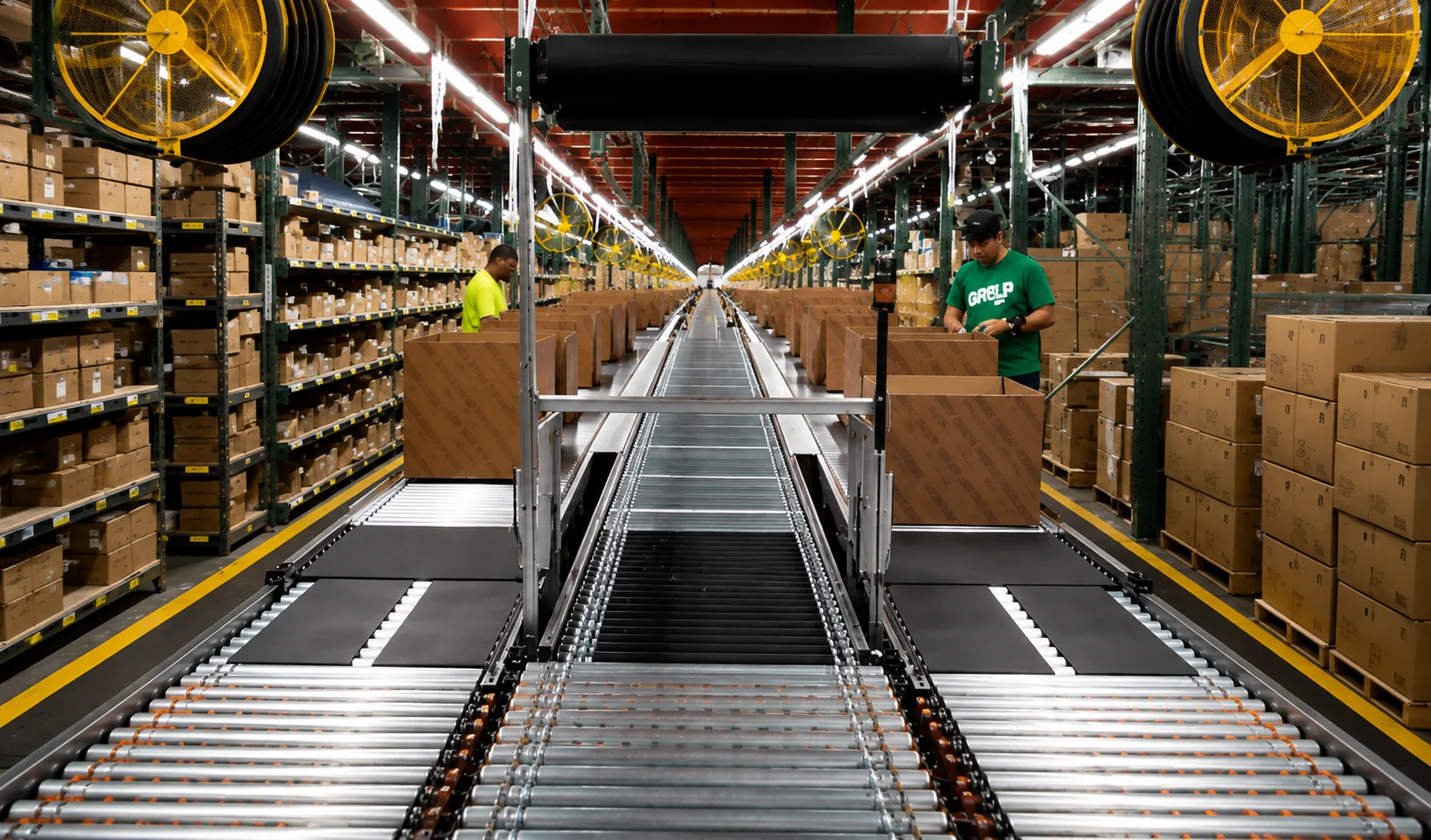
Bearings
Bearings Used in Warehouse Picking, Sorting, and Palletizing Systems
17 August, 2026
32 min read
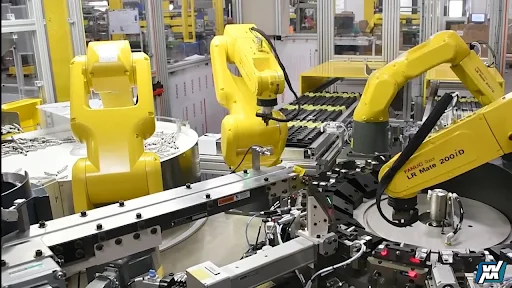
Warehouse automation depends on repeatable motion. Conveyors must move cartons without creating jams. Sorters must divert products at the correct point. Picking systems have to reach, grip, and place items accurately, while palletizers repeat loaded movements for thousands of cycles.
Bearings support nearly every one of those actions. They guide conveyor rollers, carry pulley loads, control robot joints, support ball screws, and keep linear axes aligned. When the bearing arrangement is correct, the equipment moves with consistent resistance and maintains its position under load. When it is not, the first signs may be noise, heat, rising motor current, poor repeatability, or recurring downtime.
Pacific International Bearing Sales supports robotics and automation applications in which bearing performance directly affects throughput, maintenance requirements, and equipment availability. PIB reviews the bearing position, load, movement, speed, contamination exposure, and supporting structure rather than treating an automated warehouse as one uniform application.
Where Bearings Work in an Automated Warehouse
A modern warehouse may combine several different motion systems within one material flow.
Cartons can enter on belt or roller conveyors, move through scanning and weighing stations, pass through high-speed sorters, and transfer into storage, picking, packing, or palletizing areas. Autonomous mobile robots may carry shelves or totes, while Cartesian systems and articulated robots handle individual products or completed cases.
Bearings may be used in:
- Conveyor rollers and pulleys
- Motor and gearbox shafts
- Belt tensioners and idlers
- Sorter tracks and diverter arms
- Pop-up transfer modules
- Turntables and lifts
- Shuttle wheels and guide rollers
- Gantry and telescoping axes
- Ball-screw supports
- Robot bases, elbows, and wrists
- Grippers and end effectors
- Palletizer rotary joints
- Automated storage and retrieval systems
These positions do not operate under the same conditions.
A conveyor roller may run continuously under moderate radial load. A diverter arm may reverse rapidly and absorb product impact. A palletizer base bearing may carry a large overturning moment, while a gripper bearing makes short, precise movements under a much smaller load.
Reliable warehouse automation bearings must be matched to the specific mechanism and duty cycle.
Conveyor Roller, Pulley, and Drive Bearings
Conveyors contain a large number of bearing positions, which makes consistency important. One failed roller may seem minor, but a seized or misaligned roller can damage a belt, stop product flow, or create a jam that affects several upstream systems.
Conveyor roller bearings
Conveyor rollers commonly use compact radial ball bearings because they provide low friction and can support radial load while accommodating a limited amount of axial load.
The bearing is often pressed into an end cap or roller tube, with a fixed or spring-loaded shaft passing through the center.
The apparent load on one roller may be modest, but the bearing also experiences:
- Product impact
- Belt or carton misalignment
- Roller-tube deflection
- Frame distortion
- Contamination
- Repeated starts and stops
- Axial force from poor tracking
A roller bearing with excessive drag can increase the load on the conveyor drive. Across hundreds of rollers, small increases in resistance can raise motor current and operating temperature.
Drive and tail pulley bearings
Drive pulleys transmit torque into the conveyor belt. Their bearings support the pulley shaft and carry the radial force created by belt tension.
The bearing load is influenced by more than the weight of conveyed products. Belt tension, pulley diameter, wrap angle, acceleration, and misalignment all contribute.
Excessive belt tension is sometimes used to address visible belt movement or slipping. That approach may temporarily stabilize the belt while increasing the load on:
- Pulley bearings
- Motor bearings
- Gearbox bearings
- Shafts
- Conveyor frames
Before correction, an over-tensioned system may run hot, consume more power, and experience repeated bearing replacement. Once tension and pulley alignment are corrected, the bearings can operate under a more stable load and belt tracking becomes easier to maintain.
Idlers and tensioning systems
Idler pulleys redirect or support the belt. Tensioning pulleys maintain enough belt force for controlled motion.
Their bearings may operate under constant radial load even when no product is moving. If the tensioner is misaligned, the bearing may also experience axial force and uneven loading.
Bearing selection should account for the applied tension, shaft support, pulley width, contamination level, and expected adjustment range.
Motor and gearbox bearings
Warehouse conveyors may use direct drives, gearmotors, belt drives, or chain-driven arrangements.
Motor bearings support the rotor and help maintain the motor air gap. Gearbox bearings maintain gear alignment while carrying radial and axial forces created by the gear mesh.
A hot drive bearing does not automatically indicate that the bearing itself was undersized. Possible causes include excessive belt tension, shaft misalignment, poor lubrication, incorrect fits, gearbox loading, or surrounding heat.
Bearings in Sorting and Diverting Mechanisms
Sorting equipment must move products out of the main flow without damaging them or creating a bottleneck.
Depending on the design, the sorter may use pivoting arms, sliding shoes, pop-up rollers, swivel wheels, cross belts, tilting trays, or powered diverters.
The movement is often short, fast, and repetitive. Bearings in these positions experience frequent acceleration, deceleration, reversal, and impact.
Cam followers and track rollers
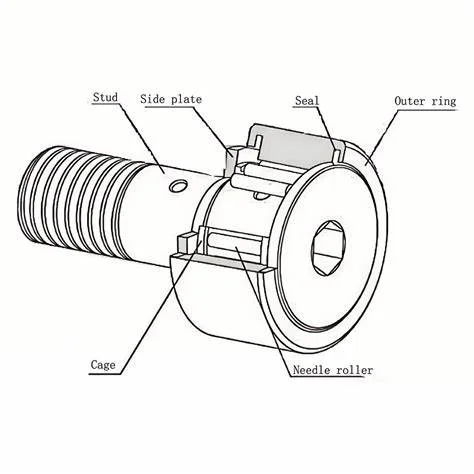
Typical stud-type cam follower construction used for track-guided motion in sorter, diverter, lift, and transfer mechanisms.
Cam followers and yoke rollers are used where a mechanism follows a shaped track or transfers load through rolling contact.
Common warehouse positions include:
- Sorter tracks
- Diverter cams
- Lifting mechanisms
- Guided transfer units
- Telescoping assemblies
- Door and gate mechanisms
- Vertical lifts
A cam follower carries concentrated load at the contact between the roller and track. Track hardness, finish, alignment, edge loading, and lubrication all affect service life.
A roller that repeatedly contacts the edge of a track can develop localized stress even when the average load appears acceptable.
Diverter pivot bearings
Pivot bearings support arms, paddles, or gates that redirect cartons and totes.
These positions may use radial ball bearings, plain bearings, needle bearings, or compact housed units depending on the load and movement.
A diverter rarely operates under a smooth, continuous load. It may accelerate rapidly, strike a stop, hold position, and reverse as the next package arrives.
Clearance and stiffness influence how accurately the mechanism reaches the intended divert position. Excessive play can change timing, while excessive preload can increase actuator load and heat.
Pop-up transfers
Pop-up transfers raise rollers, belts, chains, or wheels through a conveyor surface to move products sideways.
Bearings may be used in the lifting pivot, drive shafts, rollers, and guide tracks.
The lifting mechanism often carries product weight while changing direction. If the frame flexes or the lift rises unevenly, bearing loads become concentrated on one side.
Turntables
Turntables rotate products, pallets, or complete conveyor sections.
Depending on size and load, the bearing system may include radial bearings, angular contact bearings, crossed-roller bearings, track rollers, or a large slewing-style arrangement.
The key requirement is not only vertical load capacity. The bearing must also resist moment load when the center of gravity is offset from the rotation axis.
Bearings in Robotic Picking Systems
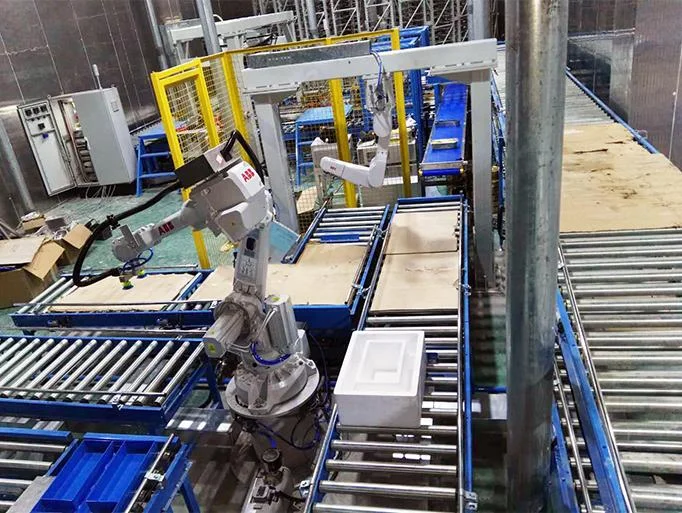
Automated warehouse conveyors and sortation lanes rely on bearings in rollers, pulleys, drives, diverters, and transfer mechanisms.
Picking systems range from compact delta robots handling individual products to articulated arms moving cartons and Cartesian machines traveling across large storage areas.
Each robot axis has different bearing requirements.
Robot base and primary joints
The base axis supports the mass of the arm, payload, and tooling while resisting overturning moment during acceleration.
Larger joints may use crossed-roller, thin-section, angular contact, or other combined-load bearing arrangements. These bearings help control radial movement, axial movement, and tilt within a compact joint.
Stiffness matters because movement at the robot base is multiplied at the end effector. A small amount of joint deflection can produce a larger positioning error at the gripper.
Elbow and wrist joints
Elbow joints carry varying combined loads as the arm extends and retracts. Wrist joints are usually smaller, but they may need low friction and tight rotational control.
Angular contact ball bearings may be used where axial stiffness and combined-load capacity are required. Miniature radial bearings may support compact wrist or gripper mechanisms.
Thin-section and crossed-roller bearings can be useful where the joint needs a large bore and small radial envelope.
No single bearing family fits every robot axis. The correct arrangement depends on joint torque, speed, moment load, allowable deflection, gearbox design, and installation space.
End effectors and grippers
Grippers may use miniature bearings, linear bushings, cam followers, pivots, guide rollers, or small linear rails.
Loads are usually lower than in the main robot joints, but accuracy can be critical. Uneven bearing resistance can prevent fingers from closing symmetrically or change the force applied to the product.
Contamination also matters. Packaging dust, labels, adhesive, and broken film can collect near the gripper because it operates directly around the product.
Mobile robots and shuttles
Autonomous mobile robots and warehouse shuttles use bearings in drive wheels, casters, steering mechanisms, guide rollers, lifts, and internal transfer conveyors.
Wheel bearings experience shock from floor joints, debris, uneven surfaces, and repeated acceleration. Guide rollers in rail-based shuttles carry side loads created by alignment error and cornering.
A bearing selected only for the static vehicle weight may not account for dynamic wheel loads, braking, impact, or uneven load distribution.
Linear Motion in Gantries, Shuttles, and Telescoping Axes
Many picking and storage systems use linear rather than articulated motion.
Cartesian robots, gantries, transfer units, and storage shuttles may travel along one, two, or three controlled axes. The drive creates movement, while the bearing system guides and supports the load.
That distinction is important. A belt, rack, or ball screw should not be expected to correct poor guidance.
Profiled linear guides
Linear guides and carriages provide compact, rigid support for gantries, shuttles, and Cartesian picking axes.
Recirculating ball or roller carriages move along hardened profile rails. Depending on the design and arrangement, they can support radial, axial, and moment loads.
Ball guides provide a practical balance of speed, friction, load capacity, and accuracy. Roller guides generally offer higher stiffness and load capacity but require more accurate mounting surfaces.
Round-shaft linear bearings
Round-shaft linear ball bearings may be used in lighter transfer and picking modules.
They can simplify installation and tolerate some mounting variation, but shaft deflection may limit performance over long travel or under overhung loads.
A high-capacity linear bearing cannot prevent an unsupported shaft from bending.
Ball-screw support bearings
Ball screws are used when the system requires controlled linear force and accurate positioning.
The screw shaft requires rotary support bearings. The fixed end often uses a paired angular contact arrangement to resist axial force and establish shaft position.
If the support bearings permit excessive axial movement, the control system may command a reversal before the carriage responds. This creates lost motion even when the screw and encoder are functioning correctly.
Telescoping axes
Telescoping mechanisms extend into racks or storage positions while keeping the base structure compact.
They may use linear guides, rollers, cam followers, chains, belts, and nested sections.
As the axis extends, the payload creates a larger moment. Bearing and roller loads can rise sharply even when the payload weight remains unchanged.
Guide spacing, rail stiffness, section deflection, and load position must be considered together.
Palletizer and Depalletizer Bearing Loads
Palletizing systems move larger payloads and usually operate through wide, repetitive motion.
The bearing arrangement must support the robot structure, tooling, product, and acceleration forces while maintaining placement accuracy.
Base-axis loading
The palletizer base may carry substantial axial, radial, and overturning moment loads.
A large bearing arrangement or combined-load bearing supports rotation while keeping the robot column stable. Housing and foundation stiffness are important because a flexible base changes the alignment of the complete machine.
Arm and wrist loading
As the arm extends, the payload creates a larger moment at the joints. Rapid reversal adds inertial load, especially when the robot is carrying a full case or layer.
Bearings in these joints may need:
- Controlled preload
- High stiffness
- Low rotational variation
- Combined-load capacity
- Stable lubrication
- Resistance to repeated reversal
End-of-arm tooling
Palletizer tooling may use vacuum heads, clamps, forks, layer-handling devices, or mechanical grippers.
Bearings support pivots, adjustment slides, rollers, and compliance mechanisms. These positions may be exposed to carton dust, damaged packaging, stretch film, and adhesive residue.
Stiffness affects placement repeatability. Before correction, joint clearance or tool-bearing wear may allow cases to shift during movement. With the correct bearing arrangement and controlled preload, the gripper can maintain a more stable relationship to the pallet position.
Duty Cycle, Speed, and Reversing Motion
Warehouse equipment is often described as high cycle, but total operating hours do not fully define the bearing duty.
A sorter may operate continuously while each diverter moves only when selected. A palletizer joint may reverse on nearly every cycle. A picking carriage may make repeated short strokes over the same section of rail.
These patterns affect bearings differently.
Repeated acceleration and deceleration create alternating inertial forces. Short-stroke operation may prevent lubricant from redistributing across the full raceway. Frequent reversal changes the loaded contact zone and may increase heat.
Important duty-cycle factors include:
- Starts per hour
- Reversals per cycle
- Stroke length
- Peak acceleration
- Dwell time
- Payload variation
- Continuous operating time
- Emergency stops
- Thermal buildup
A bearing that performs well at constant speed may not provide the same results under rapid, repeated reversal.
Contamination and Lubrication
Warehouses are cleaner than many industrial environments, but bearing contamination remains a common problem.
Typical contaminants include:
- Cardboard and paper dust
- Plastic-film fragments
- Labels and adhesive
- Fibers
- Pallet debris
- Floor dust
- Broken packaging
- Washdown water
- Cleaning chemicals
Conveyor rollers close to the floor and grippers near packaging are especially exposed.
Shields and seals
Metal shields reduce the entry of larger particles while creating relatively little friction. Contact seals provide stronger exclusion but add torque and heat.
The closure should match the contamination level and speed. A low-friction shield may be appropriate inside a protected drive, while a contacting seal may be more useful near exposed packaging debris.
Grease selection and quantity
Grease must provide a stable lubricant film throughout the operating temperature and duty cycle.
Too little grease can result in wear, noise, corrosion, and premature fatigue. Too much grease increases churning, drag, and heat.
In a high-speed conveyor roller or compact robot joint, excess grease can create noticeable running resistance.
Relubrication
Linear guides, cam followers, open bearings, and large robot joints may require periodic relubrication.
The interval should reflect actual travel, load, temperature, contamination, and operating hours rather than relying only on a calendar.
Centralized lubrication can improve consistency in large systems, but lines, metering units, and fittings still need inspection. A blocked lubrication line can leave one carriage dry while the rest of the system appears to be serviced.
Alignment, Fits, and Structural Deflection
Bearings follow the geometry of the equipment around them.
A conveyor frame that is twisted can force pulley shafts and rollers out of alignment. A gantry rail mounted on an uneven beam can bind. A robot base that deflects can change joint and gearbox alignment.
Conveyor-frame alignment
Misaligned roller shafts create additional axial and radial loading. Pulley misalignment can also cause poor belt tracking and uneven bearing load.
Linear rail alignment
Parallel rails must be mounted on accurate surfaces and aligned through the full travel.
Highly preloaded guides are particularly sensitive to mounting error. If the structure is inaccurate, increasing preload may create binding rather than useful stiffness.
Bearing fits
A rotating ring generally needs enough fit to prevent movement on its seat. A loose ring can creep, damaging the shaft or housing and creating heat.
An excessive interference fit can reduce internal clearance or distort the bearing.
Structural deflection and racking
Wide gantries and dual-drive systems can rack if one side moves ahead of the other.
The bearings should not be expected to force unsynchronized drives back into alignment. Doing so increases carriage loads and running resistance.
Before correction, the axis may draw more current and wear one rail faster. After the frame, alignment, and drive synchronization are corrected, the bearings can share the load more evenly.
Common Failure Patterns and What They Mean
One symptom rarely proves a single cause, but common patterns can guide inspection.
A hot conveyor roller
Possible causes include damaged bearings, excessive interference, contamination, belt side load, roller-tube distortion, or insufficient internal clearance.
A noisy sorter
Noise may come from a worn cam follower, damaged track, loose pivot, impact at the end stop, inadequate lubrication, or misalignment.
Repeated linear-carriage failure
Check rail alignment, mounting-surface flatness, carriage preload, contamination, lubrication, load moments, short-stroke operation, and structural deflection.
Robot backlash or declining repeatability
Possible causes include bearing clearance, gearbox wear, loose mounting, structural movement, or joint preload changes. The bearing should be evaluated as part of the joint, not in isolation.
Seal or shield damage
Damage may indicate external debris, shaft movement, incorrect installation, excessive grease pressure, or contact with nearby components.
Rising motor current
Increased current may point to bearing friction, misalignment, over-tensioned belts, binding guides, contamination, gearbox problems, or a heavier process load.
Reducing Total Cost of Ownership
The lowest-cost bearing is not always the lowest-cost choice for a warehouse system.
Downtime may involve stopped conveyors, missed sort windows, delayed orders, maintenance labor, product accumulation, and emergency replacement work.
A practical bearing strategy includes:
- Correct specification for each position
- Standardization where operating conditions are genuinely similar
- Appropriate seals and lubrication
- Planned inspection
- Condition monitoring
- Access to critical spares
- Clear replacement records
- Review of recurring failures
Standardizing a bearing solely because it has the same dimensions can create problems if the clearance, lubricant, closure, precision, or load capability differs.
At the same time, unnecessary variation increases inventory and maintenance complexity. The goal is controlled standardization based on the actual operating requirements.
Frequently Asked Questions About Warehouse Automation Bearings
What bearings are commonly used in warehouse conveyors?
Conveyor systems commonly use radial ball bearings in rollers, pulleys, idlers, motors, and gearboxes. The specific design depends on belt tension, roller construction, speed, contamination, shaft alignment, and whether the bearing must carry additional axial load.
Why do conveyor roller bearings fail repeatedly?
Repeated failure may result from frame misalignment, roller-tube distortion, contamination, excessive belt side load, improper fits, incorrect internal clearance, or unsuitable lubrication. Replacing the bearing without correcting the system condition usually produces the same result.
What bearings are used in sorting mechanisms?
Sorting systems may use cam followers, track rollers, radial ball bearings, plain bearings, pivot bearings, and guide rollers. The correct type depends on whether the component rotates continuously, oscillates, follows a track, or absorbs product impact.
What bearings are used in palletizing robots?
Palletizers may use angular contact, crossed-roller, thin-section, radial ball, and other combined-load bearings in base, arm, wrist, and gripper positions. Each joint has different requirements for moment load, stiffness, speed, and preload.
Are linear guides used in warehouse picking systems?
Yes. Profiled linear guides are common in Cartesian pickers, gantries, shuttles, transfer units, lifts, and telescoping axes. They guide the load while belts, screws, racks, or linear motors provide the driving force.
How does carton dust affect bearings?
Carton dust can enter seals, absorb lubricant, collect on guide rails, and combine with grease to form abrasive residue. Effective closures, regular cleaning, protected mounting, and suitable relubrication reduce the amount reaching rolling contacts.
Why does a bearing run hot after replacement?
Possible causes include excessive interference, insufficient clearance, too much grease, misalignment, seal drag, preload, damaged seats, belt tension, or installation force transferred through the rolling elements. The surrounding mechanism should be checked before replacing the bearing again.
Do high-cycle bearings require special lubrication?
High-cycle applications require lubricant selected for the actual speed, load, temperature, stroke, and relubrication interval. Frequent reversal and short strokes may prevent normal lubricant redistribution, particularly in linear guides and oscillating mechanisms.
Can one bearing type be standardized across a warehouse system?
Only where the operating conditions are genuinely similar. Conveyor rollers, robot joints, linear carriages, diverters, and palletizer bases carry different loads and movements. Standardization should not remove required differences in clearance, sealing, lubricant, or precision.
What should be checked when warehouse bearing failures increase?
Review alignment, load changes, belt tension, contamination, lubrication practices, operating speed, cycle rate, mounting fits, structural deflection, and maintenance history. An increase across several positions may indicate a process or installation change rather than multiple unrelated bearing defects.
Final Considerations
Warehouse automation bearings operate in very different positions, from lightly loaded conveyor rollers to high-moment palletizer joints and rapidly reversing sorter mechanisms.
Reliable performance depends on matching each position to the correct bearing type, internal clearance, stiffness, closure, lubricant, fit, and duty cycle. Alignment, frame rigidity, contamination control, and maintenance practices are just as important as the bearing itself.
When the wrong bearing or an incomplete repair is used, the equipment may run hotter, draw more current, lose repeatability, or fail again. When the bearing and surrounding system are matched correctly, motion becomes more consistent and maintenance is easier to plan.
The PIB online catalog is a practical place to review radial bearings, angular contact bearings, cam followers, linear guides, and other components used in warehouse picking, sorting, and palletizing systems. For applications involving high cycle rates, unusual loads, contamination, or recurring failures, PIB can help review the operating position and sourcing requirements.