Your cart is empty
 Short Rigid Couplings
 Controlflex Couplings
 Jaw Couplings
 Oldham Couplings
 Bearing Locknuts – TCN
 Double Wide Shaft Collars
 Heavy Duty Shaft Collars
 International Series Shaft Collars
 Keyed Shaft Collars
 Mountable Shaft Collars
 Quick Clamping Shaft Collars
 Set Screw Shaft Collars
 Thin Line Shaft Collars
 Threaded Shaft Collars – Pacific International Bearing Products
 Two-Piece Shaft Collars
 Friction Bearing Universal Joints
 Needle Bearing Universal Joints
Bearings
CR Seals from SKF: Product Types, Selection, and Applications
01 November, 2026
21 min read
CR Seals from SKF are industrial shaft-sealing solutions used to retain lubricant, exclude contamination, separate media, and protect rotating equipment at the point where a shaft passes through a housing. The seal may be a small part of the assembly, but its condition directly affects leakage, bearing protection, friction, shaft wear, maintenance frequency, and uptime.
Pacific International Bearing Sales (PIB) is an authorized distributor for CR Seals from SKF and supports customers who need to select, cross-reference, or troubleshoot shaft seals around real operating conditions. Selecting a seal which matches the shaft and bore dimensions is your first step. Then consider Speed, temperature, pressure, lubricant, contamination, shaft finish, runout, misalignment, and installation to determine whether the seal will work reliably once the machine is running.
Key Takeaways
• CR Seals cover more than one sealing problem. The range includes radial shaft seals, SKF Wave and SKF Edge designs, grease seals, heavy industrial seals, cassette and axial sealing options, and wear sleeves for damaged shaft counterfaces.
• A radial shaft seal is a system component.The lip material, lip geometry, housing fit, shaft counterface, pressure, speed, lubrication, and contamination level must work together.
• SKF Wave seals use a sinusoidal lip path to create hydrodynamic pumping toward the lubricant side while spreading contact over a wider wear band. The practical result is a design aimed at controlling leakage, friction, and under-lip heat.
• Runout and shaft-to-bore misalignment matter because the lip has to follow the rotating shaft. At higher speed, excessive eccentricity can prevent the lip from maintaining the lubricant film and sealing contact.
• A new seal will not permanently fix a worn or badly finished shaft. Counterface condition should be checked during every seal replacement, and a wear sleeve can often restore the running surface without replacing or re-machining the shaft.
What Are CR Seals from SKF?
CR is the name carried forward from Chicago Rawhide, the sealing company that became part of SKF. Today, CR Seals refers to a broad industrial shaft-seal offering built around rotating-equipment applications. The product range covers common oil and grease sealing jobs as well as large-diameter, contaminated, pressure-sensitive, and shaft-repair applications.
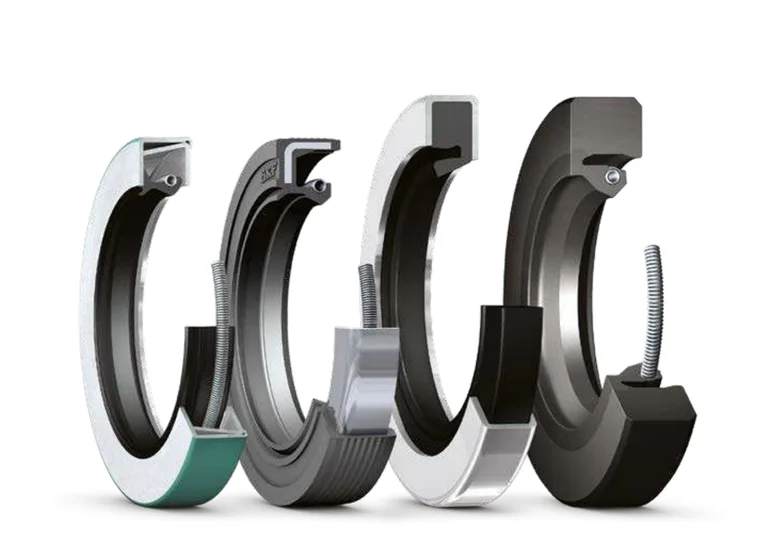
For most rotating machinery, the starting point is the radial shaft seal. It sits between a rotating shaft and stationary housing. The outside diameter establishes the static seal in the bore, while the flexible sealing lip runs on the shaft counterface. A garter spring is commonly used to maintain the intended lip load as the seal and equipment move through temperature and wear cycles.
The seal has to do two jobs at once: hold the intended fluid or grease on one side and manage what is trying to enter from the other. That sounds simple until shaft speed, vibration, thermal growth, pressure, dirt, washdown, lubricant chemistry, and installation tolerances are added to the picture.
How a Radial Shaft Seal Works
The most important working area is the narrow interface between the sealing lip and the shaft. The lip is pressed against the shaft with controlled radial load. A very thin lubricant film forms at that contact. The seal must retain enough contact to control leakage without creating unnecessary friction or heat.
Surface condition on the shaft is part of this tribological interface. A shaft that is too rough can abrade the lip. A shaft that is excessively smooth can also cause problems because the interface may not maintain the lubricant supply the way the seal needs. Directional machining lead, scratches, grooves, corrosion, and installation damage can create leakage paths even when the seal itself is new.
This is why seal troubleshooting should start with the whole contact system. Replacing only the elastomer is often a temporary repair if the shaft, bore, alignment, pressure, or lubrication condition that caused the failure is still present.
CR Seal Product Families and Where They Fit
The CR Seals range includes several designs because different machines fail in different ways. The table below is a practical starting point rather than a substitute for checking the operating limits of the specific seal size.
| Product family | Typical role | Useful design features | Selection note |
| SKF Wave: CRW1 / CRWA1 / CRWH1 / CRWHA1 | General industrial oil or grease sealing on rotating shafts | Metal outside diameter; SKF Wave lip; spring-loaded primary lip; auxiliary-lip versions available | Good starting point where low friction, lubricant retention, and robust pumping behavior matter. Check shaft speed, pressure, material, runout, and bore condition. |
| SKF Edge: HMS5 / HMSA10 | General industrial radial shaft sealing, especially metric applications | Rubber outside diameter; spring-loaded lip; auxiliary-lip version available; designed around modern elastomer compounds | Useful when bore sealing, lubricant compatibility, dynamic runout, and standard metric packaging are central to the application. |
| CRW5 / CRWA5 | Radial shaft sealing where pressure is above the normal range for a standard lip seal | Pressure-profile lip; auxiliary-lip version available | Pressure capability depends on shaft speed, diameter, support, and the specific part. Do not treat a pressure seal as interchangeable with a standard profile without checking the application. |
| HM series grease seals | Grease-lubricated bearing positions | Designed for grease retention or controlled grease purge, depending on orientation | Lip direction matters. The correct orientation depends on whether grease retention or contaminant exclusion is the primary function. |
| SKF Flex heavy industrial seals | Large shafts and heavy industrial equipment | Heavy-duty metal-cased or all-rubber constructions; solid and split options depending on design | Useful when standard catalog sizes or conventional installation access are not practical. |
| V-rings and axial excluders | Secondary contamination exclusion or axial sealing | Flexible axial lip running against a face rather than radially on the shaft | Often used ahead of a primary seal to reduce dirt, moisture, or splash reaching the main sealing interface. |
| SKF Speedi-Sleeve / heavy industrial wear sleeves | Restoring a worn shaft counterface | Thin wear surface installed over damaged shaft area | A repair strategy for shaft wear; sleeve size, installation, and final seal-running surface must be checked carefully. |
Why the SKF Wave Lip Is Different
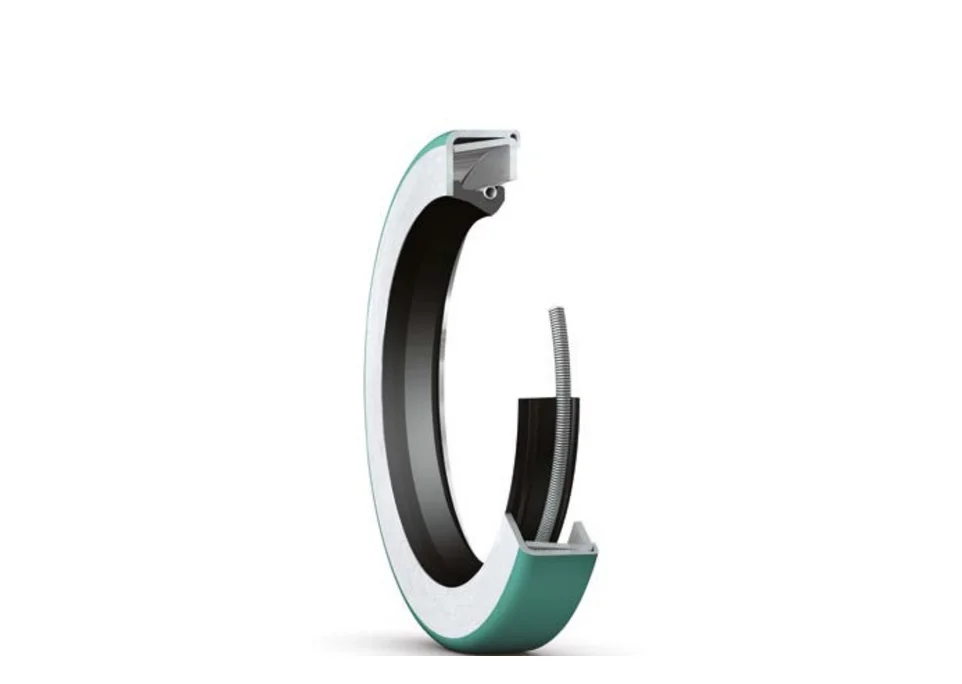
A conventional straight sealing lip has a relatively narrow contact path on the shaft. The SKF Wave design changes that geometry by molding the lip in a sinusoidal pattern. As the shaft rotates, the lip contact point moves back and forth across the shaft surface instead of staying on one narrow line.
That motion creates a hydrodynamic pumping action that directs lubricant toward the oil side of the seal. It also distributes frictional contact across a wider wear band. In practical terms, the design is intended to reduce the concentration of heat and wear at one narrow track while helping return oil to the side where it belongs.
This does not mean a Wave seal can compensate for any installation problem. Pumping ability can make the system more tolerant of normal variation, but severe runout, the wrong material, excessive pressure, a damaged shaft, or poor installation can still cause leakage and early wear.
Choosing the Sealing Lip Material
Seal material is one of the most important choices because the lip is exposed simultaneously to heat, lubricant chemistry, friction, and mechanical flexing. A material that works well with one oil and temperature range may harden, swell, crack, or wear quickly in another application.
| Material family | Where it is commonly useful | What to watch |
| NBR (nitrile rubber) | General oil and grease applications with moderate temperatures | A practical baseline material, but fluid additives, temperature, speed, and under-lip heat still have to be checked. |
| XNBR (carboxylated nitrile) | Applications where additional wear resistance is useful | Higher wear resistance does not remove the need for correct lubrication and shaft finish. |
| HNBR (hydrogenated nitrile) | Higher-temperature or more abrasive duty than standard nitrile can comfortably handle | Confirm actual fluid compatibility and low-temperature requirements for the application. |
| FKM (fluoro rubber) | Higher-temperature service and many demanding oil, fuel, or chemical environments | Do not assume FKM is universally compatible. Certain additives and chemical environments can still attack the material. |
| PTFE compounds | High temperature, aggressive media, pressure-sensitive duty, or applications where elastomer limits are restrictive | PTFE seal behavior, shaft requirements, installation, and pressure support differ from conventional elastomer lip seals. |
The useful selection approach is to define the exact fluid, operating and peak temperature, shaft surface speed, pressure differential, and expected contamination first. Material should then be chosen around that complete duty, not from temperature rating alone.
Speed, Pressure, and Under-Lip Heat
Shaft speed affects the seal through surface velocity at the lip, not RPM alone. A larger shaft at the same rotational speed produces a higher circumferential speed, which can increase frictional heat and make it harder for the lip to follow dynamic runout. This is why seal speed limits are tied to both diameter and rotational speed.
Pressure adds another load. As the pressure differential across a conventional lip increases, the lip can be forced harder against the shaft. Contact area grows, friction rises, and under-lip temperature can increase. At the wrong combination of pressure and speed, service life can fall quickly even if the seal looks dimensionally correct.
CRW5 and CRWA5 are examples of pressure-profile designs intended for higher pressure than standard CRW profiles. For still more demanding pressure service, a different seal technology may be required. Pressure should always be checked together with speed and shaft size rather than treated as an independent number.
Runout and Misalignment: Small Geometry Errors, Real Leakage
Static shaft-to-bore misalignment means the shaft and housing bore centerlines are offset. Dynamic runout means the shaft sealing surface moves eccentrically as it rotates. Both conditions change how the lip loads the shaft.
With static misalignment, one side of the lip can be overloaded while the opposite side is unloaded. With dynamic runout, the lip has to follow a moving surface. As speed rises, lip inertia becomes more important. If the lip cannot follow the shaft closely enough, the lubricant film and sealing contact can be interrupted and leakage can develop.
A useful design rule is to keep the seal close to the bearing whenever packaging allows. Reducing the unsupported shaft length between the bearing and seal helps control motion at the sealing surface. Bearing clearance, shaft stiffness, machining accuracy, and assembly alignment all become part of seal performance.
Counterface Condition Is Part of the Seal
A radial shaft seal runs on the shaft, so the shaft surface is effectively one half of the sealing pair. A worn groove, corrosion pit, burr, nick, spiral machining lead, or incorrect finish can defeat a good seal.
The counterface should be checked before a replacement seal is installed. If the shaft is badly grooved, simply moving the new lip onto the same damaged track usually sets up the next leak. Re-machining or replacing the shaft is one option. A wear sleeve is often a faster alternative because it creates a new running surface over the worn area.
SKF Speedi-Sleeve is designed specifically for that repair strategy on many common shaft sizes. For larger heavy industrial shafts, other wear-sleeve designs are available. The important point is that the repaired surface must still meet the seal’s requirements for diameter, finish, concentricity, and installation position.
Contamination Control and Auxiliary Lips
An oil seal can stop leaking and still fail its real job if dirt or moisture reaches the bearing. In dusty, wet, or dirty equipment, the air side of the seal deserves as much attention as the oil side.
CRWA and CRWHA versions add an auxiliary lip to improve contaminant exclusion. SKF Edge HMSA10 uses the same basic idea in a different construction. In more severe environments, a V-ring, axial excluder, labyrinth feature, or other secondary barrier may be used ahead of the primary seal so the main lip does not have to deal with the full contamination load.
More sealing contact is not automatically better. Added lips can increase drag or trap heat if the arrangement is poorly lubricated. The right contamination strategy blocks dirt while preserving the lubrication and temperature conditions the primary lip needs.
What Happens When the Wrong Seal Is Used
The wrong seal does not always fail immediately. More often, the machine starts showing secondary symptoms that are easy to blame on the bearing, lubricant, or shaft. The pattern below is a useful troubleshooting guide.
| Mismatch or system problem | What usually shows up | What improves with the correct selection |
| Wrong lip material for fluid or temperature | Lip hardening, swelling, cracking, excessive wear, or leakage | Material remains stable in the actual medium and temperature range, so lip contact is more consistent. |
| Seal profile not suited to pressure | Higher friction, lip distortion, heat, leakage, or seal displacement | A pressure-appropriate design manages contact load and retention more predictably. |
| Excessive shaft runout or misalignment | Uneven wear, intermittent leakage, one-sided lip damage | Better geometry lets the lip maintain contact and lubricant film around the full shaft circumference. |
| Damaged or incorrect shaft finish | Rapid lip wear, recurring groove, leakage soon after replacement | Correct counterface or wear sleeve gives the lip a controlled running surface. |
| Insufficient contamination exclusion | Dirt under the lip, abrasive wear, shaft scoring, contaminated bearings | Auxiliary or secondary exclusion keeps the primary seal and bearing environment cleaner. |
| Poor installation or dry initial contact | Cut lip, displaced spring, cocked case, startup wear, immediate leak | Correct tools, orientation, lubrication, and bore preparation protect the seal during assembly and first rotation. |
Installation Details That Decide Whether the Seal Works
Installation damage is one of the most avoidable causes of seal failure. The lip is flexible, but it is not designed to be dragged across burrs, splines, sharp keyways, or damaged shaft ends without protection. The seal case can also be distorted if it is driven unevenly into the bore.
• Inspect the shaft and housing bore before installation. Remove burrs, sharp edges, corrosion, nicks, and contamination that could damage the lip or outside diameter.
• Confirm seal direction. For oil retention, the primary lip normally faces the oil side. Grease applications can use different orientation depending on whether grease retention, purge, or contaminant exclusion is the priority.
• Pre-lubricate the sealing element with the lubricant that the application will retain unless the seal design or application instructions specify otherwise. This reduces dry startup at the lip.
• Use an installation tool that loads the seal squarely. Avoid striking the seal case directly and avoid cocking the seal in the bore.
• Protect the sealing lip when it must pass over splines, threads, keyways, or sharp shaft features. A proper installation sleeve or bullet is cheaper than damaging a new seal.
• After installation, check for interference with nearby machine parts and confirm that any pressure-retention features or support rings required by the design are in place.
A Practical CR Seal Selection Process
For a new design, retrofit, or recurring leak, PIB recommends collecting the operating conditions before selecting the part number. A useful review includes:
1. Confirm shaft diameter, housing bore diameter, available seal width, and whether the application is inch or metric.
2. Define the primary function: retain oil, retain grease, exclude contamination, separate media, or handle a pressure differential.
3. Record shaft RPM and calculate or verify surface speed at the seal location.
4. Define normal and peak temperature at the lip, not just ambient temperature.
5. Identify the exact lubricant or process fluid, including additives or wash chemicals that may contact the seal.
6. Measure or estimate pressure differential, shaft-to-bore misalignment, dynamic runout, and axial movement.
7. Review contamination severity and decide whether an auxiliary lip or secondary excluder is needed.
8. Inspect the shaft counterface for finish, lead, hardness, corrosion, and wear grooves.
9. Review installation access. Large shafts, blind housings, split machinery, or field repair may point toward a different construction or a wear-sleeve strategy.
10. Validate the final seal designation against the operating limits for the specific size and material before release.
Frequently Asked Questions
What does CR mean in CR Seals?
CR comes from Chicago Rawhide, the original sealing company behind the product line. The CR name remains associated with SKF industrial shaft seals.
What is the difference between CRW1 and CRWA1?
Both are metal-cased SKF Wave radial shaft seals. CRWA1 adds an auxiliary lip for additional contaminant exclusion. The correct choice depends on the environment, drag tolerance, lubricant, speed, and the specific part limits.
What is the difference between CRW1 and CRWH1?
Both use the SKF Wave lip. CRWH1 uses a double steel case, while CRW1 uses a single steel case. The housing, installation method, retention needs, and application severity help determine which construction fits better.
Are CR Seals only for oil?
No. The CR Seals range includes designs for oil, grease, contamination exclusion, pressure service, large industrial shafts, and shaft repair. The correct profile and orientation depend on the primary sealing function.
Can a standard radial shaft seal handle pressure?
Only within the limits of the specific seal and operating condition. Pressure increases lip load, friction, and temperature. When pressure is significant, a pressure-profile seal such as CRW5 or CRWA5, or another sealing technology, may be required.
Why does a new seal still leak on a worn shaft?
Because the sealing lip depends on the shaft counterface. A groove, roughness, corrosion, directional lead, or runout can create a leakage path even with a new seal. The shaft may need repair, re-machining, or a wear sleeve.
When should I use an auxiliary lip?
An auxiliary lip is useful when dust, moisture, splash, or other contamination threatens the primary sealing lip. It is not automatically the best choice for every application because additional contact and trapped heat must also be considered.
What information does PIB need to help identify a CR Seal?
The fastest starting point is the existing seal number if available, plus shaft diameter, housing bore, width, lubricant or medium, speed, temperature, pressure, contamination level, and any known runout, misalignment, or shaft-wear issue.
Final Thoughts
CR Seals from SKF are most effective when the seal is selected as part of the rotating system rather than as a dimensional replacement. Lip design, material, pressure, shaft speed, runout, bore condition, contamination, lubricant, and counterface finish all affect what happens at the sealing interface. When those details are matched correctly, leakage is easier to control, bearings stay better protected, shaft wear is more predictable, and maintenance becomes easier to plan.
PIB can help cross-reference CR Seal part numbers, review SKF Wave and Edge options, evaluate material and contamination requirements, and identify wear-sleeve solutions when the shaft surface is already damaged. The best starting point is the real operating condition and the condition of the shaft referencing the dimensions printed on the old seal.
Call us (800) 228-8895, email us [email protected], visit us www.pibsales.com.