Your cart is empty
 Short Rigid Couplings
 Controlflex Couplings
 Jaw Couplings
 Oldham Couplings
 Bearing Locknuts – TCN
 Double Wide Shaft Collars
 Heavy Duty Shaft Collars
 International Series Shaft Collars
 Keyed Shaft Collars
 Mountable Shaft Collars
 Quick Clamping Shaft Collars
 Set Screw Shaft Collars
 Thin Line Shaft Collars
 Threaded Shaft Collars – Pacific International Bearing Products
 Two-Piece Shaft Collars
 Friction Bearing Universal Joints
 Needle Bearing Universal Joints
Bearings
Drone Propeller Bearings
21 July, 2026
16 min read
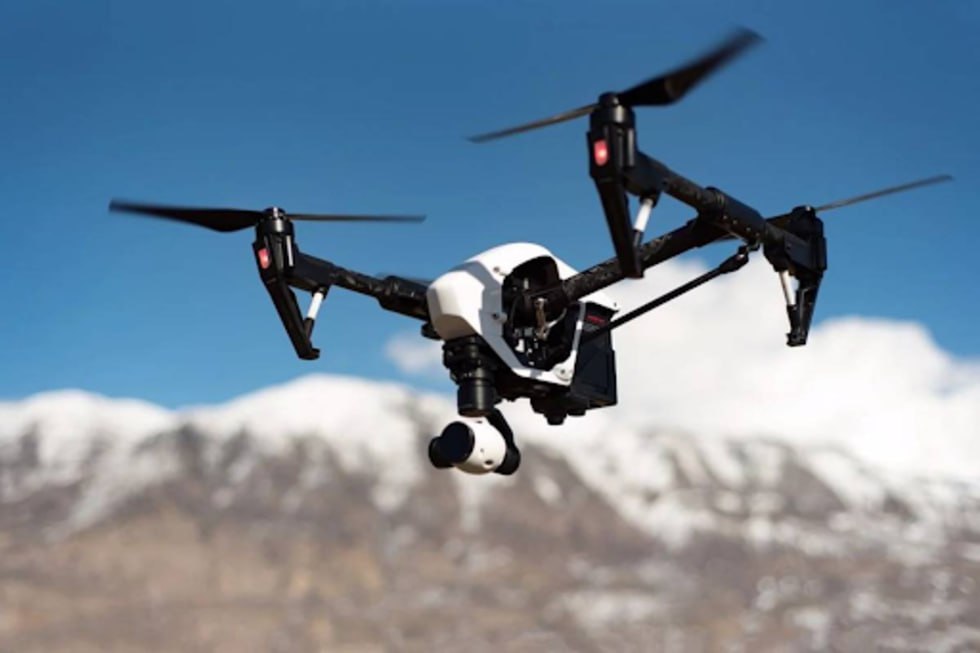
Drone propeller bearings support high-speed propeller and motor shaft rotation while helping control friction, vibration, noise, efficiency, and reliability. Pacific International Bearing Sales, can assist with the proper bearing choice based on factors like rpm, radial and axial load, shaft fit, lubrication, sealing, contamination exposure, and the application operating environment.
Key Takeaways
- Choosing a bearing by bore, outside diameter, and width is a good starting point.
- In many drone propulsion systems, miniature deep groove ball bearings do the main work, making sure to have the correct clearance, fit, and lubrication specified.
- Propeller thrust, radial loading, and shock from takeoff, landing, and abrupt maneuvering should be reviewed together, because the bearing sees the combined load. Sometimes envelope dimensions may need adjustment based on these load rating findings.
- The right bearing selection ensures the best results.
Why Bearings Matter in Drone Propeller Systems
Drone propeller bearings are small components, but they operate in demanding conditions. They sit inside assemblies that combine high rotational speed, compact packaging, tight weight limits, strong sensitivity to vibration and noise, and real exposure to dust, moisture, mishandling, and transportation shock. In that kind of environment, a bearing that looks right on paper can still be the wrong bearing in practice.
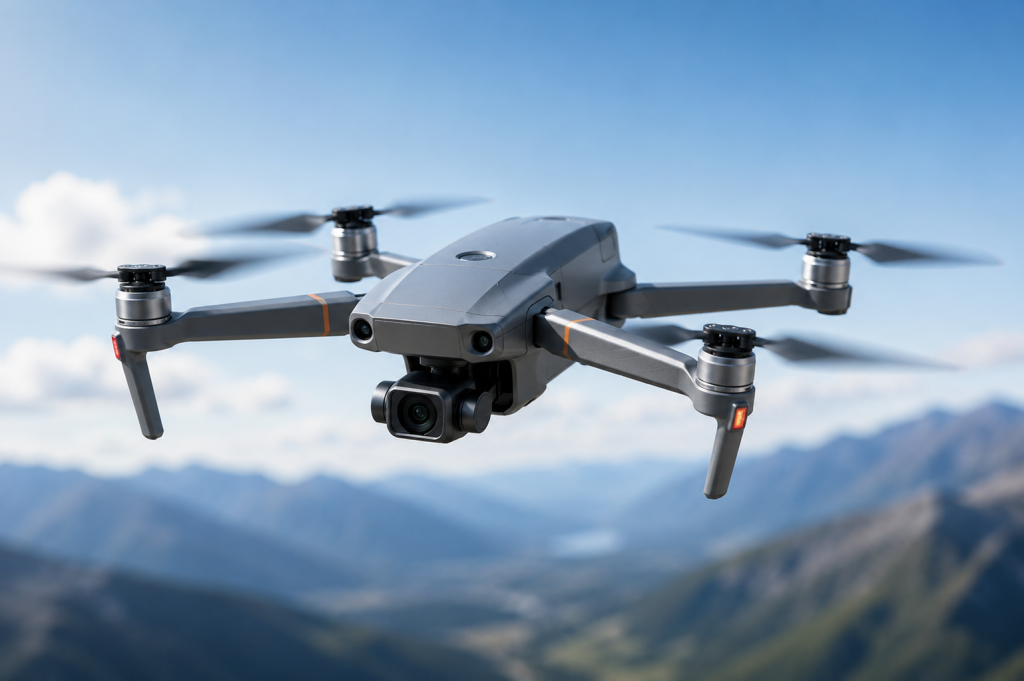
In a brushless propulsion motor, the bearing supports the rotating shaft and rotor and helps keep the rotating parts centered as the propeller generates thrust. That means the bearing may see radial load, axial load, or a combination of both, depending on the motor layout, propeller behavior, balance condition, and flight profile. Add landing shock, aggressive maneuvering, hard starts and stops, or the occasional impact means sizing the bearing is of utmost importance.
Too little effective clearance after fitting and thermal increases can raise torque, heat, and risk of damage. Errors in shaft or housing fits can affect running accuracy, cause loading inefficiencies , and create high temperatures during operation.
Where Drone Propeller Bearings Are Used
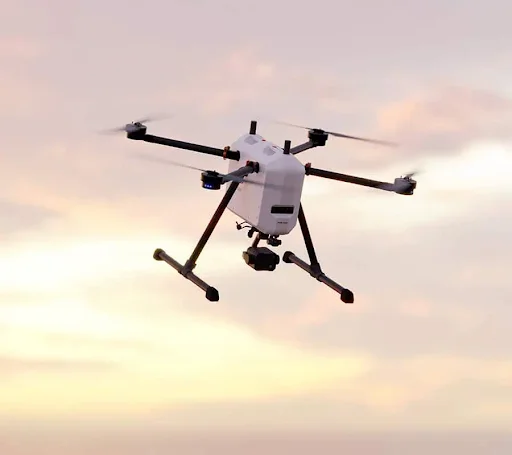
The most obvious locations are the propeller shaft support points and the brushless motor assembly itself. In many multirotor systems, the motor uses a small bearing pair to support the shaft and rotor while keeping the rotating assembly aligned relative to the stator. Fixed-wing drone propulsion systems use the same basic principles, though the propeller size, duty cycle, and load profile may be different. In both cases, the bearing has to support smooth rotary motion in a very compact envelope without adding unnecessary drag or weight.
Bearings also show up in motor rotor support locations, in shaft alignment points inside compact rotary modules, and in gear reduction assemblies where the propulsion design does not drive the propeller directly. Where axial support is especially important, a thrust-capable arrangement may be needed. The same selection procedure can be used for gimbal-adjacent rotating assemblies and other compact precision modules where low runout, low friction, and stable motion matter, even if the load case is different from a propulsion motor.
.
Drone Propeller Bearing Selection Specifications
For drone propulsion work, the most useful selection process starts with the job the bearing is doing, not simply the space available for it. Speed, load path, fit, runout sensitivity, lubrication, sealing, and environment all have to be reviewed together.
| Drone area or application | Bearing selection focus | Main operating condition | Key selection factor | Why it matters |
| Propeller shaft | Smooth support of rotating shaft and prop hub | High speed with axial thrust and vibration sensitivity | Low runout, proper fit, controlled internal clearance | Helps keep rotation predictable and reduces vibration transfer into the prop system |
| Brushless motor rotor support | Stable rotor positioning relative to stator | High speed, compact packaging, low drag requirement | Low friction, stiffness, lubricant compatibility | Supports repeatable motor response and helps control heat generation |
| Multirotor propulsion motor | Reliable operation through rapid throttle changes | Frequent acceleration, deceleration, maneuver shock | Combined radial and axial load review | Prevents a “fits but runs rough” outcome in small high-speed motors |
| Fixed-wing propulsion motor | Stable continuous running over longer duty cycles | Steady thrust with possible outdoor contamination | Seal or shield choice, temperature and duty review | Helps balance efficiency, durability, and service interval planning |
| Compact rotary module | Precision motion in tight spaces | Small envelope, alignment-sensitive rotation | Bearing accuracy, seat geometry, mounting method | Small alignment errors can show up fast in compact systems |
| Gear reduction assembly | Support for shafts and gears where used | Combined load, changing torque, possible shock | Load path definition, fit, lubrication strategy | Reduces the chance of premature wear or noisy mechanical behavior |
| Thrust-load support point | Axial load handling where thrust is meaningful | Axial-dominant loading | Thrust-capable bearing or arrangement | Prevents using a radial-only solution where axial control really matters |
| Maintenance replacement bearing | Reliable field replacement without guesswork | Mixed service history, contamination risk, time pressure | Match dimensions, seal type, grease, clearance, and material | Avoids installing a part that fits physically but does not fit the operating conditions |
Bearing Options for Drone Propeller and Motor Applications
Most drone propulsion systems start with miniature deep groove ball bearings because they are compact, versatile, low-friction, and capable of carrying radial load plus moderate axial load in both directions. Miniature bearings are commonly specified in small brushless motors and propeller shaft support points where smooth rotation, compact size, and low drag all matter at once.
Miniature deep groove ball bearings are usually the first place to look for direct-drive drone motors and other small rotary assemblies. They help support high speed and low torque while keeping packaging practical.
Flanged miniature bearings can make sense when the design needs simpler axial positioning in the housing or better control in a compact support point. They are useful when the assembly is sensitive to movement in the housing or where vibration and axial movement are possible.
Shielded and sealed bearings may be interchangeable from a performance standpoint. Shields help retain lubricant and block larger debris with little added drag. Seals provide stronger contamination control and better lubricant retention, but they can add drag compared with a non-contact shield. In a clean, enclosed motor assembly, shielded options may support lower torque. In dirtier or wetter service, sealed versions often make more sense. In many applications you can use a seal or shield depending on your needs.
Stainless steel bearings are worth considering where moisture exposure, washdown, storage conditions, or corrosion risk are part of the duty cycle. They are not automatically the best answer for every drone, but when the environment is the real problem, corrosion resistance matters. PIB offers other options to 440C stainless like Croniduir for better corrosion resistance
Hybrid ceramic bearings can be justified when speed, friction, weight, heat, or electrical behavior push past what a standard steel solution handles comfortably. Ceramic balls are lighter and stiffer than steel and can support higher operating speeds with lower internal friction and lower temperature rise in the right application.
Super Precision bearings should be specified for controlled low runout, higher running accuracy, or axial loading . For some compact propulsion or rotary support layouts, a thrust-capable bearing arrangement is available.
Lubrication Oil, grease, and dry film options exist for miniature bearing systems, and the choice affects torque, speed capability, temperature behavior, storage stability, and contamination resistance. Grease is often practical where re-lubrication is not realistic, but it generally raises starting and running torque compared with oil and can limit speed if the fill and chemistry are wrong.
The best option depends on what the assembly is really asking the bearing to do. That is why bearing type, shield or seal choice, material, lubrication, and fit should be considered at the same time.
| Bearing option or feature | Best fit in drone applications | Strengths | Watch-outs |
| Miniature deep groove ball bearing | Brushless motors, propeller shaft support, compact rotary modules | Low friction, compact, versatile, supports radial plus moderate axial load | Easy to under-spec if speed, fit, and clearance are not reviewed |
| Flanged miniature bearing | Housing locations where axial positioning matters | Simplifies mounting and helps hold position in compact housings | May add cost or complexity if the flange is not actually needed |
| Shielded bearing | Cleaner enclosed motor assemblies | Lower drag than contact seals, keeps lubricant in, blocks larger debris | Less protection against moisture and fine contamination |
| Sealed bearing | Outdoor or contamination-prone service | Better exclusion of dirt and moisture, better lubricant retention | Extra drag compared with shielded options, especially in torque-sensitive use |
| Stainless steel bearing | Moisture-prone or corrosion-sensitive service | Better corrosion resistance | Material choice still must match speed, load, and budget |
| Hybrid ceramic bearing | High-speed, low-friction, performance-driven motor systems | Lower mass rolling elements, higher stiffness, lower internal friction | Higher cost and not always necessary |
| Precision or low-runout bearing | Vibration-sensitive propulsion systems and precise compact modules | Better running accuracy and smoother rotation support | Gains can be lost if shaft and housing quality are poor |
| Thrust-capable bearing arrangement | Locations with meaningful axial load | Better axial support where thrust is the dominant concern | Not a substitute for full review of combined loading and fit |
| Application-matched lubrication | Any drone bearing where speed, heat, storage, and environment vary | Helps balance torque, life, and temperature behavior | Wrong fill or wrong chemistry can undo a good mechanical selection |
What Can Go Wrong When the Bearing Is Wrong
A drone motor can look electrically healthy and still fail due to poor selection or poor installation. The usual failure mode is not dramatic. Bearing can fail suddenly or you may notice a little more noise, a little more drag, a little more heat, and a little less consistency from one flight to the next.
Before: A bearing is chosen by bore, OD, and width. It fits the motor or propeller assembly, but may not be set properly for speed, axial thrust, vibration sensitivity, internal clearance, shaft runout, or the actual operating environment. The result can be noisy rotation, excess heat, inconsistent motor response, and a harder time separating actual propeller balance problems from bearing-related roughness.
After: The bearing is matched to rotational speed, radial load, axial thrust, fit, clearance, and running accuracy requirements. Rotation tends to become smoother and more predictable, vibration is easier to control, and the motor is better supported..
Before: Lubrication and contamination protection are incomplete . The bearing is dimensionally correct, but the grease adds too much drag, the seal choice is wrong for the environment, or dirt and moisture get in. That often shows up as rough rotation, noise, rising torque, variable feel at startup, and less predictable service intervals.
After: Lubrication is matched to speed, temperature, operating time, and storage conditions, and the shield or seal strategy follows the contamination risk.
Before: Fits may be wrong, thermal expansion not considered,, mounting force went through the rolling elements, or the housing and shaft geometry were not clean and true. Miniature bearings are easy to damage during assembly, and loose fits can lead to creep while overly tight fits can reduce radial play enough to create binding, heat, or early failure.
After: Shaft and housing fits are reviewed carefully, differential thermal expansion is considered, mounting force is applied to the correct ring, and the installation environment is kept clean. That usually means less risk of installation damage, less chance of creep or seizure, and fewer vibration problems from a poor fit.
Practical Selection Notes for Engineers, Maintenance Teams, and Buyers
Select bearings for speed, load , and environment.. Confirm whether the bearing sees mostly radial load, mainly axial thrust, or true combined loading. Review duty cycle and heat generation early, because allowable speed is tied to the bearing type, size, cage, lubrication condition, load, and cooling. If the system is vibration-sensitive, review running accuracy, shaft runout, and seat quality.
Match lubrication and closure style for the application. Decide whether shields or seals are needed based on dust, dirt, debris, and moisture exposure. Match the lubricant to speed, temperature, operating time, storage conditions, and torque sensitivity. And treat miniature bearing installation with real care; impacts, dirty tools, burrs, and force applied through the wrong ring can damage a bearing before the drone ever leaves the bench.
How PIB Supports Drone Propeller Bearing Selection
The PIB online catalog is a practical place to narrow options when you already know the bearing type, size range, or enclosure you need. If the application is less straightforward, such as a drone motor with unusual thrust loading, contamination exposure, compact rotary packaging, or a replacement bearing that must match more than just dimensions, PIB can help review the requirement and identify suitable miniature, radial, thrust, and precision options before the wrong part gets installed.
FAQ
What bearings are commonly used in drone propeller systems?
Miniature deep groove ball bearings are the most common starting point because they are compact, low-friction, and able to support radial load plus moderate axial load. Depending on the design, flanged, shielded, sealed, stainless, hybrid ceramic, precision, or thrust-capable options may also make sense.
Why do drone propeller bearings fail?
Common causes include contamination, wrong lubrication, incorrect fit, wrong internal clearance, overload, shock, corrosion, misalignment, and installation damage. In small high-speed systems, even minor denting, dirt, or seating errors can turn into noise, vibration, and rough rotation.
What matters most when choosing bearings for drone motors?
Start with speed, load direction, fit, and environment. After that, review runout sensitivity, internal clearance, lubricant, closure type, temperature, and whether the bearing is supporting mostly radial load, mostly axial thrust, or a combined condition.
How does bearing friction affect drone performance?
Friction inside the bearing turns into heat, and extra drag makes the motor work harder for the same result. In practical terms, that can show up as higher temperature, rougher feel, more noise, and less consistent motor response.
Should drone propeller bearings be sealed or shielded?
It depends on the application. Shielded bearings usually create less drag and work well in cleaner enclosed assemblies. Sealed bearings offer better protection against dirt and moisture and often make more sense when the drone operates outdoors or in contamination-prone conditions.
How does lubrication affect drone bearing performance?
Lubricant choice influences torque, speed capability, temperature behavior, wear, corrosion resistance, and storage stability. The wrong lubricant or the wrong fill can undo an otherwise good bearing choice.
Can PIB help source bearings for drone propeller and motor applications?
PIB’s site includes an online catalog with miniature, radial, thrust, and other bearing categories, and it also notes engineering support plus access to a wider sourcing network for harder-to-find options.
Contact us [email protected] or visit www.pibsales.com