Your cart is empty
 Short Rigid Couplings
 Controlflex Couplings
 Jaw Couplings
 Oldham Couplings
 Bearing Locknuts – TCN
 Double Wide Shaft Collars
 Heavy Duty Shaft Collars
 International Series Shaft Collars
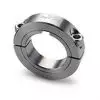 Keyed Shaft Collars
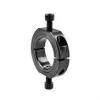 Mountable Shaft Collars
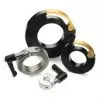 Quick Clamping Shaft Collars
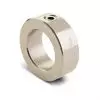 Set Screw Shaft Collars
 Thin Line Shaft Collars
 Threaded Shaft Collars – Pacific International Bearing Products
 Two-Piece Shaft Collars
 Friction Bearing Universal Joints
 Needle Bearing Universal Joints
Bearings
Hybrid Motors with Integrated Position Sensors
17 January, 2026
20 min read
Pacific International Bearing Sales (PIB) is proud to introduce advanced hybrid stepper motors with integrated position sensors. These motors combine the precise incremental motion of a hybrid stepping motor with built-in feedback devices (encoders, Hall-effect sensors, or resolvers). By integrating position sensors directly into the motor, PIB delivers a compact motion solution that offers precise movement control and highly repeatable articulation. In practical terms, this means engineers can achieve servo-like closed-loop performance using stepper-based motors – an ideal balance of high torque, accuracy, and cost-effectiveness for modern robotics and medical equipment applications.
What Are Hybrid Stepper Motors with Position Feedback?
Hybrid stepper motors are stepper motors known for their 1.8° step angle (200 discrete steps per revolution) and high holding torque. When you add an integrated position sensor to a hybrid motor, you get real-time feedback on the motor’s shaft position. In a hybrid motor with an encoder or sensor, the system can verify that each commanded step has actually been taken. The sensor (whether an optical encoder, magnetic encoder, Hall sensor, or analog resolver) measures rotation speed, direction, and angle – allowing the motor’s controller to detect and correct missed steps or position errors in real time. This design effectively transforms a traditional open-loop stepper into a closed-loop system without the cost and complexity of a full servo motor.
In practical operation, the motor and its integrated sensor work together: the controller sends pulses to move the motor in defined step increments, and the sensor feeds back the actual shaft position. If the motor encounters an unexpected load or obstruction (common in robotics or automated machinery), the feedback will indicate any deviation from the expected position. The controller can then adjust, e.g., by re-driving the step or stopping, to prevent loss of synchronization. This closed-loop behavior ensures precise movement and repeatable positioning, even under varying loads or potential disturbances. Engineers get the best of both worlds – the simplicity and high torque of a stepper motor and the assurance of feedback to eliminate missed steps and stalls.
Advantages in Robotics and Medical Equipment

A high-tech robotic arm and hand with internal mechanical components visible. Hybrid stepper motors with built-in sensors enable lifelike, repeatable movement in advanced robotics. Integrated sensor stepper motors offer significant benefits for robotics and medical devices, where precision and reliability are paramount. By monitoring position and automatically correcting errors, these motors provide greater confidence in motion control compared to conventional open-loop steppers. For example, if a robotic arm joint meets resistance or an unexpected force, an open-loop stepper would continue trying to move (potentially skipping steps or causing damage). In contrast, a hybrid stepper with feedback detects the issue immediately and can pause or adjust torque – protecting the mechanism and ensuring safety. This adaptability is vital in collaborative robots, surgical robots, prosthetics, and other systems that interact with unpredictable environments.
Key advantages of hybrid stepper motors with integrated position sensors include:
- Closed-Loop Precision and Safety: The feedback loop means no lost steps – the system knows the exact position at all times. This improves accuracy for delicate tasks (e.g., positioning a medical instrument) and enhances safety by preventing uncontrolled motions. The motor can automatically correct for missteps or resistive forces, greatly reducing positioning errors.
- High Torque & Holding Force: Hybrid stepper motors are known for high torque at low speeds and strong holding torque when stopped. This is especially useful in robotics and medical applications where a joint or axis must hold a position firmly (such as maintaining a robotic arm pose or clamping a medical device) without continuous hunting. The closed-loop control further ensures the motor only applies as much torque as needed, preventing overheating while still leveraging the motor’s full power when required.
- Compact, Integrated Design: Because the encoder or sensor is built into the motor housing, the solution remains compact and streamlined. There’s no need for a bulky external encoder assembly or additional mounting brackets and couplings – a big advantage for space-constrained designs like surgical tools, prosthetic limbs, or laboratory analyzers. The integrated design also simplifies wiring (a single integrated unit for power and feedback), improving system reliability and reducing points of failure.
- Energy Efficiency: Many closed-loop stepper systems can dynamically adjust current based on load. In an open-loop stepper, the motor often runs at full current regardless of load to avoid stalling. By contrast, a hybrid stepper with feedback draws only the current needed to achieve or hold position. For a lightly loaded mechanism, the controller can reduce drive current, resulting in less heat and lower power consumption. This is crucial in battery-powered medical devices or robots, as it extends battery life and reduces thermal output.
- Ease of Integration: Unlike a traditional servo motor that usually requires a specialized servo drive, most hybrid stepper motors with encoders can be driven by standard stepper drivers/controllers that accept encoder inputs for closed-loop control. Programming and tuning tend to be simpler than full PID servo systems. Designers get an improvement in performance without a steep learning curve. From a cost perspective, these motors sit between simple steppers and higher-end servomotors, often making them a cost-effective upgrade to eliminate problems like missed steps without fully redesigning a motion control system.
In summary, robots and medical machines get more reliable, precise motion with these hybrid motors. Robotic systems gain smooth, repeatable articulation – a humanoid robot’s fingers can execute delicate movements without jitter, and if an external force is applied, the finger motors sense it and respond appropriately. Medical devices such as infusion pumps, imaging equipment, or surgical robots gain assurance that critical motions (like dosing an exact volume or positioning a tool) are completed correctly, with the motor’s feedback ready to alert if something goes off-target. All of this comes in a compact package that fits into portable or space-sensitive equipment, making hybrid stepper motors with sensors a compelling solution for advanced motion control in healthcare technology and robotics.
Representative Hybrid Motor Specifications
To illustrate the capabilities of hybrid motors with integrated position sensors, the table below highlights specifications of a few MinebeaMitsumi (NMB) hybrid stepping motors. (MinebeaMitsumi is a leading manufacturer of hybrid steppers, and PIB’s catalog includes their models among others.) These examples feature NEMA 17-size hybrid motors equipped with a built-in batteryless absolute encoder for position feedback. Each motor provides closed-loop control via a 4000 counts-per-revolution (CPR) absolute encoder that can track multi-turn position without power. This means the motor always “knows” its shaft angle, even after power cycles, eliminating the need for home sensors or backup batteries. The motors differ primarily in stack length and winding, which yield different torque and current characteristics to suit various application needs:
| Model | Step Angle (deg) | Holding Torque (mN·m) | Current/Phase (A) | Position Sensor (Resolution) | Motor Length (mm) |
| M17PMK340CMB03 | 1.8° | 290 mN·m | 2.0 A | Absolute Encoder (4000 CPR) | 52 mm (short) |
| M17PMK440CMB03 | 1.8° | 510 mN·m | 2.0 A | Absolute Encoder (4000 CPR) | 62 mm (medium) |
| M17PMFA34CMB03 | 1.8° | 690 mN·m | 2.6 A | Absolute Encoder (4000 CPR) | 74 mm (long) |
Key: All above motors have a 42 mm x 42 mm frame (NEMA 17) and are designed for 24 V operation. “Holding Torque” is the maximum static torque the motor can exert when energized (a measure of how much load it can hold at a standstill). Higher torque models generally have longer bodies and/or higher current ratings, as seen above. Each model integrates a batteryless multi-turn absolute encoder with 4000 CPR resolution and can track up to 1000 revolutions. In practice, that means the motor can be powered off and moved (up to 1000 turns), and it will still remember its exact position upon power restoration – a major advantage for automation systems that require recovery after an emergency stop or power loss.
PIB’s catalog encompasses a wide range of hybrid stepper motors beyond these examples, including other frame sizes from NEMA 08 (20 mm) up to NEMA 34 (85 mm), and motors with different sensor types. Whether you need a tiny high-precision motor for a lab instrument or a larger torque-heavy motor for an industrial robot, there are hybrid motor options with appropriate feedback technology. Below, we address some common questions to help you determine the best solution for your application.
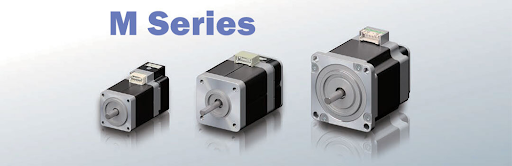
Three different sizes of Minebea hybrid stepper motors (M series) with integrated encoder connectors, shown side by side. MinebeaMitsumi’s hybrid motors with position sensors come in various frame sizes (small NEMA 08 to larger NEMA 23 shown). All include built-in connectors and encoders, offering an all-in-one compact motion solution.
Frequently Asked Questions
Q: What are the benefits of using a hybrid stepper motor with an integrated position sensor?
A: The primary benefits are improved accuracy and reliability of motion control. A hybrid stepper motor with feedback operates in closed loop, meaning it can correct any missed steps and maintain precise control over position and speed. This eliminates the common stepper issues of slip or loss of synchronization under load. You get the high positional accuracy of a stepper without the risk of unknown position error. Another benefit is greater safety and fault detection – the system knows immediately if the motor hasn’t reached the commanded position, allowing for intelligent stop or recovery, which is especially important in medical or critical robotic systems. In addition, these motors can provide high torque for holding or moving loads just like standard steppers, but use feedback to apply only the necessary torque, preventing excessive stress. The result is servo-like performance (smooth, controlled and adaptive motion) in a simpler, often more cost-effective package. Overall, integrating a sensor into the motor enables more consistent, repeatable, and safe operation in any application where precision matters.
Q: What types of position sensors can be integrated into hybrid motors?
A: Several sensor technologies are used in hybrid stepper motors, each with its own advantages:
- Optical Encoders (Incremental): These use a disk with fine markings read by an optical sensor to produce a digital pulse train. They can offer high resolutions (for example, 1600 CPR or more) for precise control. Optical encoders provide quadrature signals that allow detecting both position and direction. They typically also offer an index pulse (reference position) per revolution. They require power to operate and do not inherently remember position if the system powers down (they are incremental), but they are excellent for high-speed and high-resolution requirements where the environment is relatively clean (optical sensors can be sensitive to dust or oil).
- Magnetic Encoders (Incremental): These encoders use magnetic fields (from a magnet on the shaft) and Hall effect or magnetoresistive sensors to sense rotation. They often have slightly lower resolution than optical encoders (for example, 400 CPR or 1000 CPR are common), but are very robust to contaminants like dust, vibrations, or temperature changes. Magnetic incremental encoders can also provide quadrature signals. They are a good choice for industrial and medical environments that might be too harsh for optics. Similar to optical, standard magnetic encoders are incremental, so they track changes in position and typically require a home cycle or external reference to know absolute position on startup.
- Hall-Effect Sensors (Low-Resolution): Some hybrid motors integrate simple Hall effect switches – often three Hall sensors spaced around the motor’s rotor. These provide a very coarse feedback (commonly giving 6 counts per revolution on a 2-phase stepper, since the stepper’s permanent magnet rotor has multiple poles). Hall sensors are primarily used to detect basic position or zero-speed for stall detection. They won’t give fine-grained position info like encoders, but they can tell if the motor is moving or roughly which phase is energized. Hall sensors are extremely compact and cost-effective. In closed-loop stepper implementations, Hall sensors can serve as an assist to verify motion or to index the motor’s position without an external home sensor. However, due to the low resolution (e.g., one pulse every 60° in a typical setup), they are not suitable for precise control by themselves – they are often combined with microstepping control as a way to check if any gross position error has occurred.
- Resolvers (Analog Angle Sensors): A resolver is an analog electromagnetic sensor that provides an absolute angular position within one revolution, typically as two analog signals (sine and cosine of the angle). Resolvers are known for extreme robustness – they handle high temperatures, shock, vibration, and even radiation that might disable digital encoders. In hybrid motors, a resolver can be integrated to give absolute position feedback that is noise-immune and does not require digital optics or magnets. Resolvers output needs an analog/digital converter or specialized drive to interpret, but they effectively turn the stepper into a servo-like system capable of very fine resolution (by analog interpolation) and reliable operation in harsh conditions. They are often used in aerospace or surgical robotics where reliability is paramount. One downside is that resolvers typically add more cost and require more complex signal processing compared to encoders.
- Magnetic Absolute Encoders: A newer option (like the batteryless absolute encoder in the Minebea motors above) uses a set of magnetic gear reductions and sensors to track not only the angle within one turn but also the number of turns. These provide a true absolute position over multiple revolutions. For example, a motor could be turned off and manually rotated many turns; when powered on, the integrated multi-turn encoder still knows exactly how far it moved. These encoders eliminate the need for homing routines or external limit sensors. They are ideal for applications that require instantaneous know-how of position on startup or after an unexpected power loss. The feedback resolution can be high (4000 CPR or more for the single-turn angle, plus typically a turn count up to a certain number of revolutions, like 500 or 1000). Magnetic absolute encoders are typically slightly larger in size due to the gear mechanism, but they add tremendous convenience and safety for complex automated systems.
Each sensor type can be selected based on the application’s needs. For example, a simple pick-and-place robot might use an incremental optical encoder for high precision in a clean factory, whereas a surgical robot or MRI-compatible device might opt for a resolver or magnetic encoder for reliability. PIB offers hybrid motors with all of these sensor types, so you can choose the best feedback technology for your project.
Q: How does closed-loop control differ from open-loop control in stepper systems?
A: In an open-loop stepper system, the controller sends step commands to the motor and assumes the motor achieves each step. There is no feedback; the system doesn’t verify the actual position. Open-loop control is simple and cost-effective, but it has a critical limitation: if the motor fails to step (due to overload, too rapid acceleration, or a jam), the controller is unaware and the motor’s true position will deviate from the commanded position. This can lead to cumulative errors or even mechanical crashes if not accounted for. Engineers often have to build in large safety margins – using a motor much larger than needed or limiting speeds – to avoid missed steps in open-loop systems.
In a closed-loop (feedback) stepper system, the motor’s integrated sensor continuously reports position back to the controller. The controller actively compares the motor’s actual position to the commanded position in real time. If there’s any discrepancy (say the motor is lagging behind due to a heavy load), the controller can compensate by sending additional pulses, increasing current, or slowing down the motion profile to catch up. Essentially, closed-loop control adds the self-correcting behavior typical of servo systems to the stepper motor. This means no missed steps go undetected. If a disturbance occurs, the system will immediately take action or can even trigger an alarm if the motor cannot reach the commanded position.
From a performance standpoint, closed-loop stepper motors can be run closer to their torque and speed limits. The controller will automatically prevent a stall by adjusting drive parameters, whereas an open-loop stepper might just stall and lose sync. Closed-loop motors also typically run cooler and more efficiently since they draw current on demand rather than at a constant full level – this was mentioned earlier as an energy efficiency gain. The result is you get improved torque utilization, higher throughput (since you can push the motor faster knowing the system will correct any slip), and superior dependability. In summary, open-loop is “blind” control, while closed-loop is “observant” control. Closed-loop systems are slightly more complex (require an encoder and a suitable driver or controller that can handle feedback), but the payoff is significant in any application where accuracy, reliability, or safety is critical.
Q: How do I select the right hybrid motor and sensor for my application?
A: Choosing the best hybrid stepper motor for your needs involves considering several factors:
- Torque and Size Requirements: Start with the mechanical load – determine the torque and speed needed, as well as any space constraints. Select a motor frame size (e.g., NEMA 11, 17, 23, etc.) that can deliver the required holding and running torque. Larger frame motors produce more torque but take more space. Within a given frame, you may have options for different stack lengths or windings (as shown in the table above) to get higher torque (with higher current) if needed. PIB’s catalog provides torque-speed curves for each model to help match a motor to your load and motion profile.
- Precision and Feedback Needs: Decide how much positioning accuracy and feedback detail your system requires. If you need very fine position control or the ability to detect minute position deviations, choose a motor with a high-resolution encoder (for instance, an optical or high-count magnetic encoder). If your system must know absolute positions (for example, in a medical robot that must resume a procedure exactly after power is cycled or an emergency stop), then consider a motor with an absolute encoder or resolver. Absolute feedback adds convenience and safety by eliminating homing sequences. On the other hand, if your primary goal is simply to ensure the motor moves (without requiring ultra-fine resolution), a more basic feedback device like Hall sensors could suffice. In short, match the encoder type to the criticality of positioning in your application: incremental for general closed-loop control, absolute for power-loss recovery or multi-axis synchronization without homing, and potentially resolvers for extreme environments or analog interfacing.
- Environmental Conditions: The operating environment can influence sensor choice. For instance, if the motor will be in a dusty, humid, or high-vibration environment (industrial automation, outdoors, lab equipment with fluid exposure), a magnetic encoder or resolver is preferable to an optical encoder, because optical disks can be fouled by contaminants. For very high-temperature conditions or strong magnetic fields (like MRI machines), resolvers or certain specialized magnetic encoders will perform better. Ensure the motor you select is rated for the temperatures or any special sterilization processes if it’s a medical device. PIB can assist by providing specifications and recommending models that have the needed environmental ratings (IP sealing, etc.).
- Controller and Integration: Check what kind of controller or driver you will use, and ensure it’s compatible with the motor’s feedback. Some stepper drivers support closed-loop mode with specific encoder types (for example, expecting quadrature A/B signals plus an index). If you plan to use a particular motion control board, verify whether it has inputs for encoder signals or resolver interfaces. Most of PIB’s hybrid motors use industry-standard encoder outputs that work with common stepper drives or CNC controllers. Also consider cable management – an integrated motor means fewer cables than a separate motor+encoder, but you’ll still have a feedback cable alongside power phases. Make sure your system can accommodate the connectors (PIB provides motors with connectors, pigtails, or flying leads, depending on model).
- Cost and Complexity: Finally, balance the budget and complexity against the application’s demands. Hall sensor feedback, for example, might be the cheapest option, but it provides limited info. High-end absolute encoders give a lot of functionality, but at a higher cost. If your application (say a basic 3D printer or simple XY stage) doesn’t strictly need absolute positioning, you might not need to invest in that feature. However, for something like a surgical robot or an autonomous mobile robot arm, the added cost of absolute encoding may be justified by the improved reliability. PIB can help highlight the trade-offs: often, the incremental optical/magnetic encoder models offer a good middle ground for precision vs. cost, whereas absolute encoder models are chosen for top-tier applications where downtime or re-homing is unacceptable.
In summary, select a motor that meets your torque and size needs first, then choose the sensor option that provides the necessary feedback for your level of precision and operational requirements. If you’re unsure, you can consult with PIB’s engineering team – we regularly help customers determine the optimal motor-sensor combination for uses ranging from laboratory automation devices to collaborative robotic arms.
Explore PIB’s Catalog for Your Next Project
Hybrid stepper motors with integrated position sensors empower designers to achieve closed-loop motion control with simplicity and reliability. They are a game-changer in industries like robotics and medical technology, where every move counts. PIB (Pacific International Bearing Sales) offers a wide selection of these advanced motors, from miniature high-precision units to larger high-torque models, all featuring built-in encoders or sensors tailored to different needs. We encourage engineers and designers to explore the PIB online catalog to find detailed specifications, performance curves, and configuration options for our hybrid motors with position feedback. Our team at PIB is also ready to assist with personalized guidance – whether you need help selecting the right motor or have questions about integration, we’re here to support your innovation. Turn your motion control challenges into success stories by leveraging the precision and dependability of hybrid stepper motors with integrated sensors – visit our catalog or contact PIB today to get started on your next project.