Your cart is empty
 Short Rigid Couplings
 Controlflex Couplings
 Jaw Couplings
 Oldham Couplings
 Bearing Locknuts – TCN
 Double Wide Shaft Collars
 Heavy Duty Shaft Collars
 International Series Shaft Collars
 Keyed Shaft Collars
 Mountable Shaft Collars
 Quick Clamping Shaft Collars
 Set Screw Shaft Collars
 Thin Line Shaft Collars
 Threaded Shaft Collars – Pacific International Bearing Products
 Two-Piece Shaft Collars
 Friction Bearing Universal Joints
 Needle Bearing Universal Joints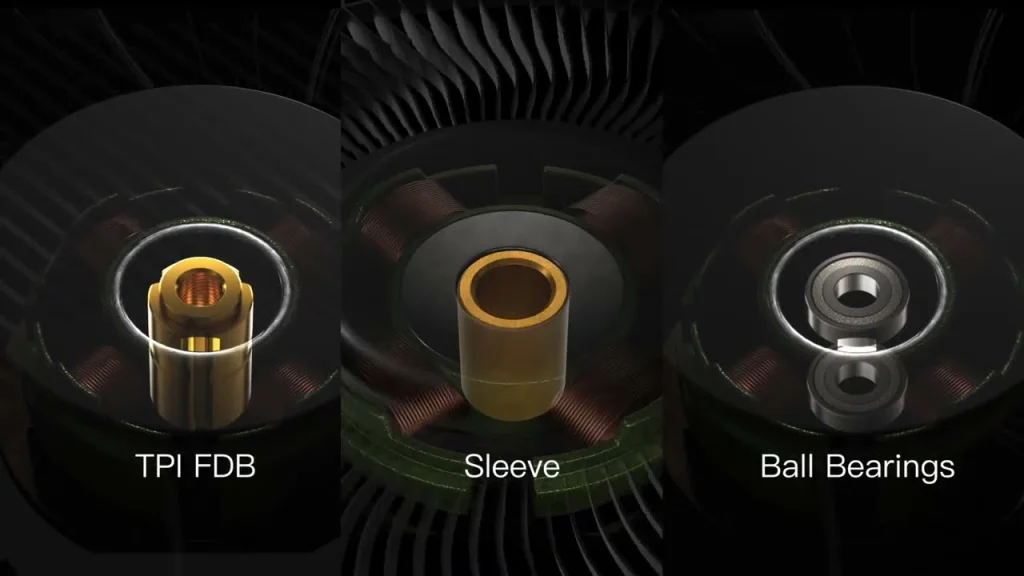
Bearings
TPI Fluid Dynamic Bearings
06 August, 2026
28 min read
TPI Fluid Dynamic Bearings are compact precision components designed to support a rotating shaft through pressure generated within a controlled oil film. They do not use balls or rollers. Instead, the shaft, sleeve, internal geometry, operating clearance, and lubricant work together to create stable support during rotation.
This makes the bearing more than a conventional sleeve with oil added to it. The lubricant is an active part of the bearing design, and details such as rotation direction, oil specification, installation fit, and operating temperature can change how the bearing performs.
Pacific International Bearing Sales supplies TPI bearings for OEM and compact rotating-equipment applications. When reviewing a TPI FDB, PIB considers the complete designation and operating conditions rather than treating dimensionally similar components as automatically interchangeable.
What Is a TPI Fluid Dynamic Bearing?
A TPI fluid dynamic bearing, or FDB, consists primarily of a precision shaft, a closely fitted bearing sleeve, and lubricating oil contained within the operating clearance.
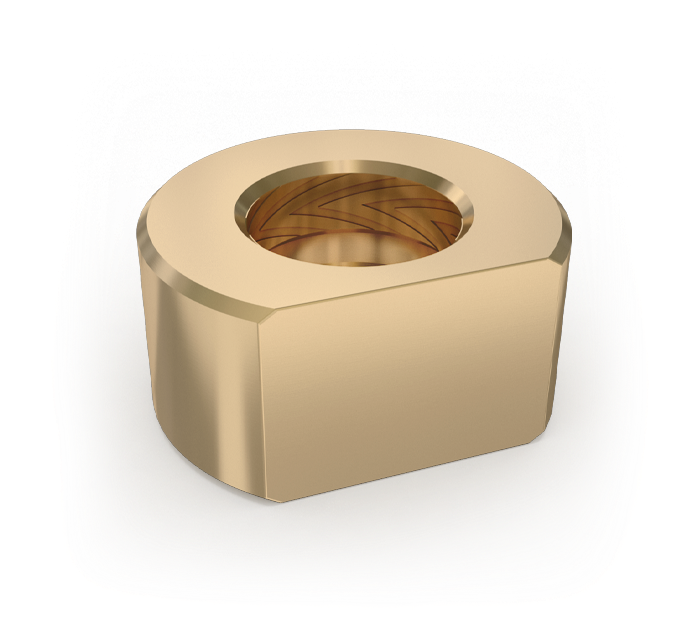
As the shaft rotates, it carries oil through the internal bearing geometry. The relative motion and converging clearance generate pressure in the lubricant. This pressure helps support and center the shaft.
Once the intended operating condition is established, the shaft is supported by a controlled fluid film rather than relying only on direct sliding contact.
A TPI FDB can therefore contribute to:
- Smooth shaft rotation
- Controlled running friction
- Stable shaft positioning
- Mechanical damping
- Reduced operating noise
- Low vibration
- Compact bearing construction
The bearing does not use rolling elements, raceways, or a cage. Its performance depends instead on the relationship among the shaft, sleeve, oil, internal structure, speed, clearance, and temperature.
How the Hydrodynamic Film Develops
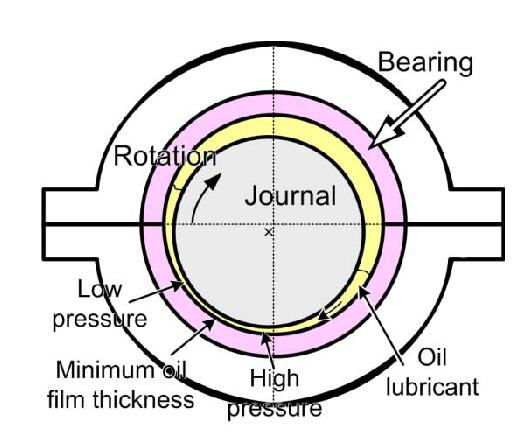
Rotation draws oil into a converging clearance, creating a pressure distribution that supports and centers the shaft.
A fluid dynamic bearing generates its supporting pressure through shaft movement. No external pump supplies the oil pressure.
When the shaft is stationary, the oil is present in the clearance, but the full hydrodynamic film has not yet developed.
As rotation begins, the shaft surface drags the oil with it. The internal geometry guides the lubricant into a converging space. Pressure increases within that narrowing region and begins to support the shaft.
As speed rises, the pressure distribution becomes sufficient to stabilize the shaft in its intended running position.
The operating sequence can be viewed in three stages:
Startup
At initial movement, dynamic pressure is still developing. Lubricant availability, surface finish, shaft load, and drive torque influence how the bearing passes through this stage.
Normal operation
At operating speed, the hydrodynamic oil film provides the intended shaft support. The film also offers damping, helping the bearing resist small changes in shaft position.
Shutdown
As shaft speed falls, dynamic pressure decreases. The bearing passes back through lower-speed lubrication conditions before coming to rest.
This speed-dependent behavior matters when comparing continuous operation with frequent start-stop cycling. A bearing that spends most of its time at stable speed experiences a different duty cycle from one that repeatedly starts, stops, and reverses.
TPI Design Variables
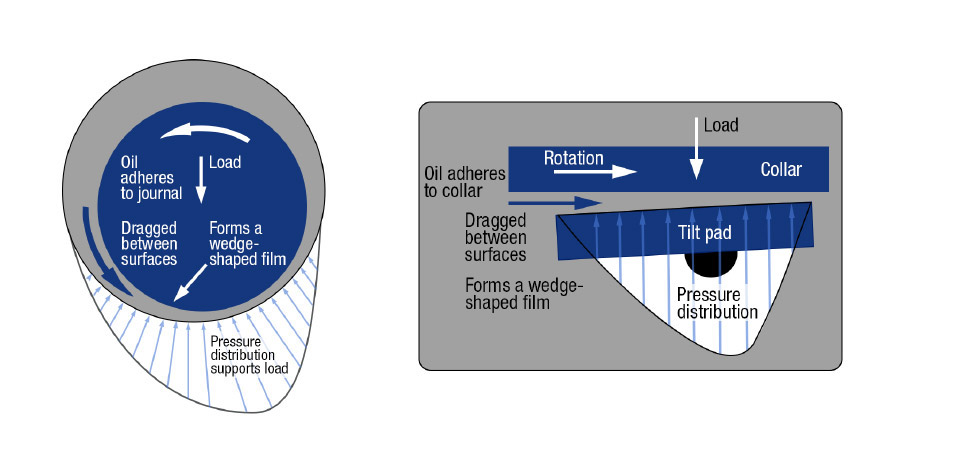
The pressure distribution around the shaft depends on rotation, clearance, lubricant behavior, and the internal bearing geometry.
A TPI FDB is defined by more than its external dimensions.
The main design variables include:
- Shaft diameter and roundness
- Sleeve geometry
- Internal bearing structure
- Operating clearance
- Surface finish
- Rotation direction
- Bearing height
- Lubricant specification
- Lubricant-retention features
- Precision
- Housing fit
These variables interact.
For example, a lubricant that produces appropriate dynamic pressure in one clearance may not behave the same way if the sleeve is distorted during installation. A groove system intended for one rotation direction may not generate the same pressure distribution when operated in reverse.
Shaft and sleeve geometry
The shaft and sleeve establish the basic operating space in which the oil film develops.
Roundness, straightness, and dimensional consistency affect how evenly the pressure is distributed around the shaft. Local geometric error can create an area of reduced clearance or unstable support.
Internal structure
Engineered internal features direct the oil as the shaft rotates. These features influence pressure generation, shaft centering, and lubricant movement.
The exact geometry is part of the bearing design and should not be generalized from one fluid dynamic bearing to another.
Surface finish
The shaft and sleeve surfaces must support lubricant-film formation without creating unnecessary friction or wear.
A rough or damaged shaft can disrupt the oil film. Burrs, scratches, corrosion, or contamination can also affect startup behavior and long-term stability.
Lubricant retention
The bearing contains a limited quantity of oil. Its design must keep that lubricant available during operation, storage, temperature changes, and repeated cycling.
Gradual oil migration may first appear as increased noise, changing torque, or unstable shaft behavior rather than visible leakage.
Why Oil Is Part of the Bearing Specification
In a TPI FDB, oil performs two connected functions.
First, it lubricates the shaft and sleeve surfaces.
Second, it must generate sufficient and stable dynamic pressure during rotation.
A general-purpose lubricant may reduce sliding friction but still be unsuitable for the bearing’s intended pressure-generation behavior.
Viscosity
Viscosity influences both the supporting oil film and bearing torque.
If viscosity is too high for the operating conditions, the bearing may experience:
- Increased startup resistance
- Greater running drag
- Higher drive current
- Additional heat generation
- Slower acceleration
If viscosity becomes too low, the oil film may provide less shaft support and damping.
Because viscosity changes with temperature, the lubricant must work across the full operating range rather than only at room temperature.
Evaporation and oil loss
TPI FDBs contain a relatively small lubricant volume. Gradual evaporation or migration can therefore become significant over time.
Reduced lubricant availability may affect:
- Startup lubrication
- Dynamic-pressure generation
- Running torque
- Shaft stability
- Noise
- Service life
Oxidation stability
Heat and exposure to air can change lubricant properties.
Oxidized oil may thicken, form deposits, or move less freely through the bearing. This can change both friction and pressure generation.
Material compatibility
The oil must be compatible with the shaft, sleeve, closures, adhesives, plastics, coatings, and other nearby components.
A substitute with similar nominal viscosity can still behave differently chemically or thermally.
TPI publishes LT43 and LT44 as oil codes in its FDB designation. These should be treated as manufacturer codes. Their chemistry or operating properties should not be inferred without additional TPI documentation.
Understanding the TPI FDB Designation
The TPI designation identifies the bearing’s rotation direction, dimensions, special requirements, and lubricant code.
| Designation element | Published code | Meaning |
| Rotation direction | F | Counterclockwise rotation |
| Rotation direction | H | Clockwise rotation |
| Bore | 15 | 1.5 mm |
| Bore | 20 | 2.0 mm |
| Bore | 30 | 3.0 mm |
| Outside diameter | 040 | 4.0 mm |
| Outside diameter | 080 | 8.0 mm |
| Height | 016–105 | 1.6–10.5 mm |
| Special requirement | N | Available to rotate in both directions |
| Oil code | LT43 | Published TPI oil code |
| Oil code | LT44 | Published TPI oil code |
The designation may also represent form, precision, and internal structure.
Bore, outside diameter, and height are necessary when identifying or replacing the component. They establish the installation envelope.
They are not the complete specification.
Two FDBs can share the same physical dimensions while differing in rotation direction, internal design, oil code, or special operating requirements.
The safest replacement process is to retain the complete original designation rather than rebuilding it from dimensions alone.
Why Rotation Direction Matters
TPI uses F to identify counterclockwise rotation and H for clockwise rotation.
This distinction matters because the internal structure may be designed to direct the oil and generate pressure in a specific direction.
When the shaft rotates as intended, the internal geometry can develop the designed lubricant flow and pressure distribution.
Reverse operation may change:
- Oil movement
- Pressure generation
- Shaft centering
- Running torque
- Damping
- Noise
- Wear behavior
A direction-specific bearing may still rotate when driven backward, but physical rotation alone does not confirm equivalent performance.
A reverse-direction problem may not cause immediate failure. The first signs may instead be increased noise, changing vibration, unstable startup, or reduced shaft control over time.
For an application that requires rotation in both directions, TPI identifies N as a special bidirectional requirement. A standard directional bearing should not be assumed to perform identically in both directions.
Shaft, Housing, and Operating Clearance
The oil film develops within a small controlled clearance. Installation changes that clearance.
Shaft condition
The shaft should meet the dimensional, geometric, and surface requirements of the bearing design.
Potential problems include:
- Incorrect diameter
- Out-of-round condition
- Bent shaft
- Rough surface
- Scratches
- Burrs
- Corrosion
- Contamination
A replacement bearing cannot correct a damaged or unstable shaft.
Housing fit
The sleeve must remain securely located without being compressed beyond its intended geometry.
Excessive interference can distort the sleeve and reduce internal clearance.
An insufficient fit can allow movement between the bearing and housing, changing alignment and potentially generating wear debris.
Clearance that is too small
Insufficient clearance may result in:
- Higher startup torque
- Increased friction
- Higher temperature
- Reduced oil flow
- Shaft binding
- Sensitivity to thermal expansion
Clearance that is too large
Excessive clearance may cause:
- Greater shaft movement
- Reduced rotational stability
- Increased vibration
- Changing noise
- Less effective pressure generation
- Poorer rotor positioning
The correct operating clearance is the value present after the bearing has been installed and reached its actual operating temperature.
Startup, Shutdown, and Duty Cycle
Full hydrodynamic support develops as shaft speed increases.
This makes the number of starts and stops relevant, not only total operating hours.
A continuously operating assembly spends more of its life under developed fluid-film conditions.
A frequently cycled assembly repeatedly passes through startup and shutdown, placing greater emphasis on:
- Oil availability
- Surface finish
- Startup torque
- Drive control
- Oil redistribution
- Temperature at restart
- Shaft and sleeve condition
Duty cycle also includes time spent stationary. During a long stop, oil can redistribute and temperature can equalize before the next startup.
An FDB should therefore be reviewed around the actual operating pattern, not only its maximum speed.
Temperature, Humidity, and TPI Life Evaluation
Temperature affects lubricant viscosity, evaporation, oxidation, bearing clearance, and the dimensions of surrounding components.
At lower temperature, the oil becomes more viscous and startup torque may increase.
At higher temperature, viscosity decreases while oxidation and oil loss may accelerate.
TPI bases its published FDB life expectation on high-temperature and high-humidity testing at:
- 80°C
- 65% relative humidity
TPI states that an L10 life factor can be calculated from the resulting test data. Under the manufacturer’s stated calculation, a general product environment of 60°C can correspond to an approximate 100,000-hour value.
This is a calculated estimate based on the stated test method, not a universal operating guarantee.
Actual results can be affected by:
- Bearing temperature
- Shaft speed
- Start-stop frequency
- Rotation direction
- Oil retention
- Installation fit
- Contamination
- Rotor balance
- Shaft condition
- Housing distortion
- Equipment duty cycle
The temperature at the bearing is more useful than general room temperature when reviewing the operating condition.
Noise, Vibration, and Shaft Stability
Fluid dynamic bearings are often selected where stable shaft motion and low mechanical noise matter.
The oil film has damping characteristics that can reduce the response to small shaft disturbances. The absence of balls, raceways, and a cage also removes several rolling-element noise sources.
A TPI FDB can contribute to:
- Smooth rotation
- Reduced mechanical noise
- Stable shaft position
- Controlled vibration response
- Consistent operating torque
It does not eliminate every source of vibration.
Other contributors include:
- Rotor imbalance
- Bent shafts
- Motor electromagnetic forces
- Housing flexibility
- Loose mounting
- Misalignment
- Control-system behavior
- External vibration
Before the correct bearing condition is established, an assembly may show shaft movement, tonal noise, or changing current draw.
After the direction, oil, clearance, shaft, and housing are matched correctly, rotational behavior becomes more stable and repeatable.
Common TPI FDB Application Problems
Incorrect rotation direction
A directional design may not generate the intended oil flow when operated backward.
Confirm the F or H designation against the actual shaft direction.
Incorrect oil substitution
Changing the oil can alter pressure generation, viscosity, friction, temperature response, evaporation, and material compatibility.
Use the specified TPI oil code unless an alternative has been approved for the exact design.
Excessive operating temperature
High temperature can reduce oil viscosity and accelerate lubricant aging or loss.
The heat source may come from the motor, surrounding electronics, friction, or the external environment.
Sleeve distortion
Excessive housing interference or uneven installation force can change the sleeve’s internal geometry.
The bearing may then show high torque, noise, or unstable clearance even though the original component was correct.
Shaft damage
Scratches, burrs, corrosion, and runout can interfere with oil-film formation and startup behavior.
Contamination
Small particles can score the shaft or sleeve and disturb the lubricant film.
Clean handling matters because FDB clearances are small.
Rotor imbalance
The oil film can damp small disturbances but should not be expected to compensate for a poorly balanced rotor.
Frequent cycling
Repeated starts and stops increase the time spent outside the fully developed hydrodynamic operating condition.
Oil loss
Migration or evaporation can reduce the available lubricant volume. Increasing noise or changing torque may appear before visible leakage.
Frequently Asked Questions About TPI Fluid Dynamic Bearings
Do TPI Fluid Dynamic Bearings contain balls?
No. A TPI FDB uses a precision shaft, sleeve, lubricant, and engineered internal structure. Rotation generates pressure within the oil film, which supports and stabilizes the shaft without balls or raceways.
Why is oil included in the TPI designation?
The lubricant is part of the operating system. It affects lubrication, dynamic-pressure generation, torque, temperature response, evaporation, and shaft stability. TPI publishes LT43 and LT44 as oil codes.
What do F and H mean?
F identifies counterclockwise rotation, while H identifies clockwise rotation. The internal bearing structure may be directional, so the code should match the shaft’s actual operating direction.
What does N mean in a TPI FDB designation?
N identifies a special requirement for operation in both directions. A standard directional FDB should not be assumed to provide the same performance during clockwise and counterclockwise rotation.
Can two TPI FDBs with the same dimensions be interchanged?
Not automatically. They may differ in rotation direction, internal structure, precision, oil code, or bidirectional capability. The complete original designation should be compared.
How does temperature affect a TPI FDB?
Temperature changes oil viscosity and can influence startup torque, running friction, oil loss, oxidation, and operating clearance. The bearing should be evaluated at both the lowest startup temperature and highest expected operating temperature.
How does TPI evaluate FDB life?
TPI publishes a method based on testing at 80°C and 65% relative humidity. The resulting data are used to calculate an L10 factor. The published approximate 100,000-hour value at 60°C is a calculated estimate, not a universal guarantee.
Are TPI FDBs used only in cooling fans?
No. Cooling fans are a published application, particularly in computers, communications equipment, and consumer electronics. Suitability for another compact rotating assembly depends on speed, load, direction, oil, temperature, clearance, and duty cycle.
What should be checked when an FDB becomes noisy?
Check rotation direction, shaft condition, rotor balance, installation fit, operating temperature, lubricant condition, contamination, sleeve distortion, mounting, and drive behavior before assuming the bearing alone is defective.
Final Considerations
TPI Fluid Dynamic Bearings depend on a controlled relationship among the shaft, sleeve, internal structure, lubricant, clearance, and rotation direction.
During operation, shaft movement generates pressure within the oil film. That pressure supports and stabilizes the shaft while the lubricant also controls friction and wear.
Dimensions establish whether the component fits. The complete designation establishes how it is intended to operate.
When direction, oil, fit, shaft condition, and temperature are overlooked, the assembly may develop high torque, noise, heat, or unstable motion. When the complete TPI specification is matched, shaft behavior becomes more consistent and the bearing can perform its intended role.
The PIB TPI manufacturer page and PIB online catalog are practical starting points for reviewing TPI products. Not every TPI FDB may be listed online, so applications involving a specific rotation direction, oil code, size, or duty cycle can also be reviewed through PIB engineering support.
The TPI-specific designation codes, published applications, oil function, and life-test conditions used above were verified against TPI’s official product page