Your cart is empty
 Short Rigid Couplings
 Controlflex Couplings
 Jaw Couplings
 Oldham Couplings
 Bearing Locknuts – TCN
 Double Wide Shaft Collars
 Heavy Duty Shaft Collars
 International Series Shaft Collars
 Keyed Shaft Collars
 Mountable Shaft Collars
 Quick Clamping Shaft Collars
 Set Screw Shaft Collars
 Thin Line Shaft Collars
 Threaded Shaft Collars – Pacific International Bearing Products
 Two-Piece Shaft Collars
 Friction Bearing Universal Joints
 Needle Bearing Universal Joints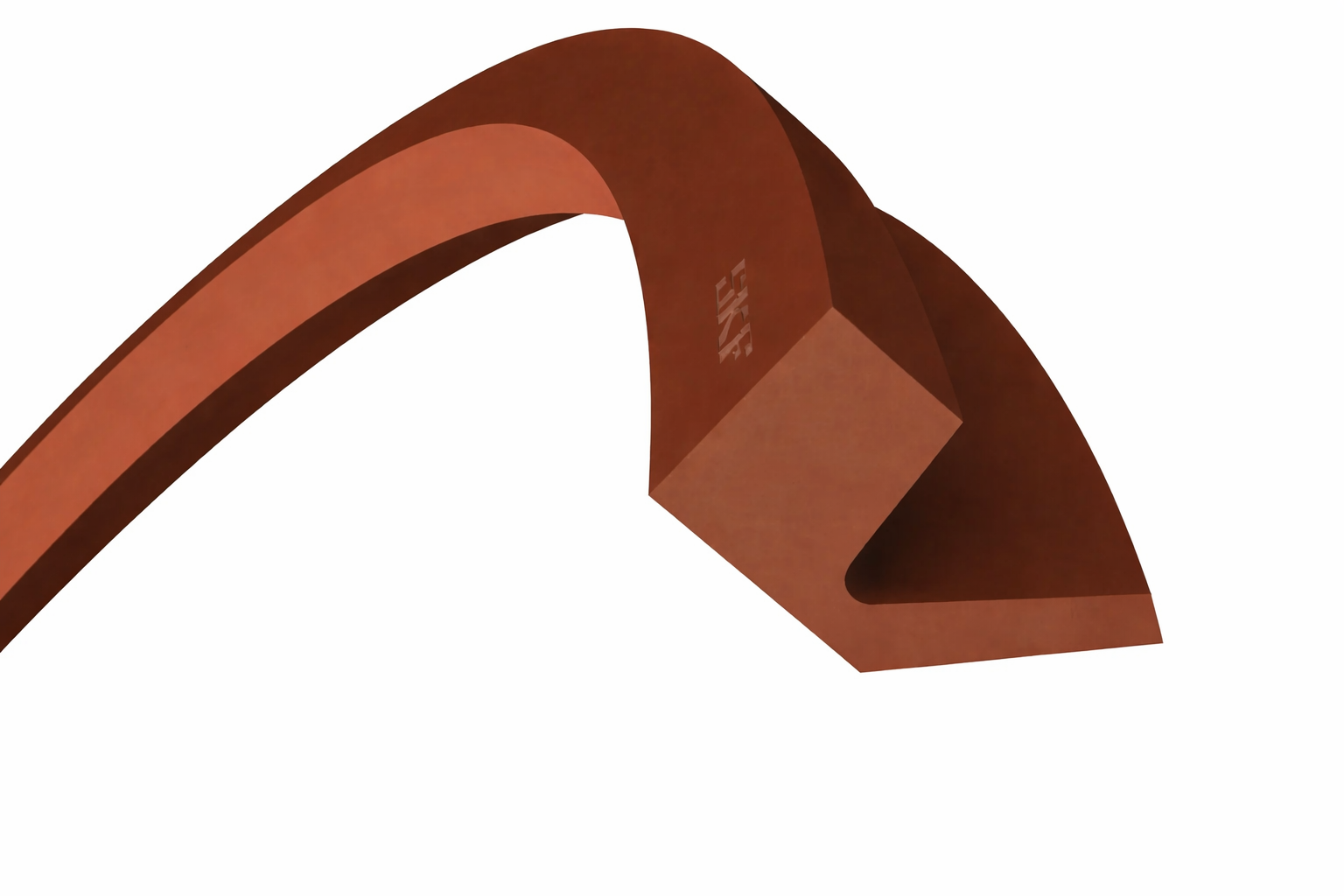
Bearings
V‑Ring Seals
13 March, 2026
11 min read
Pacific International Bearing Sales often specifies V‑ring seals when a shaft needs a simple, rugged contamination barrier. A V‑ring is an all‑rubber axial lip seal that stretches over the shaft, rotates with it, and seals against a stationary counterface, acting like a flinger to keep dirt and splash out while helping retain lubricant.
Key Takeaways
- V‑rings seal axially against a stationary counterface and spin with the shaft, so they seal and “sling” contaminants away at the same time.
- They’re easy to install (stretch over shafts and even components), making them a favorite for retrofits and maintenance.
- Standard designs cover a huge shaft size range and come in common elastomers like NBR and FKM depending on temperature and media.
- Surface finish and speed matter: at high sliding speeds the lip can lift and behave more like a gap seal, so selection and setup must match reality.
What a V‑ring seal is and what it’s not
A V‑ring is an all‑rubber axial shaft seal: it mounts directly on the shaft with an interference fit, rotates with the shaft, and the flexible “V” lip seals against a stationary counterface that’s perpendicular to the shaft. That counterface can be as simple as a washer, a housing face, or even the metal case of a radial shaft seal.
That “axial contact + rotating with the shaft” behavior is the reason V‑rings are so practical in dirty environments: they’re both a seal and a contaminant excluder/flinger. SKF positions them as cost‑effective barriers for optimized bearing protection in rotating applications, emphasizing easy installation and strong contaminant exclusion.
What a V‑ring is not: it’s generally not the right choice when you need a high‑pressure dynamic fluid seal. Catalog guidance commonly lists 0 psi as standard and only limited pressure capability under certain conditions (think “helpful for grease retention/exclusion,” not “a pressurized oil seal”).
Where V‑rings shine in real machines
The most common “win” story is boring in a good way: bearings fail early because contamination gets in, lubricant gets compromised, and temperatures climb. V‑rings are often used as a secondary seal to protect a primary sealing element (like a radial shaft seal) or to upgrade a non‑contact arrangement (like a labyrinth) when the environment gets uglier than expected.
SKF highlights typical V‑ring use across gearboxes, electric motor drives, off‑highway equipment, material handling, mining/construction, steel, pulp and paper, marine machinery, and wind turbines—exactly the places where dust, water splash, and washdown can wreck uptime.
PIB’s broader sealing guidance is consistent with how V‑rings get used in the field: the “right seal” is about speed, temperature, pressure, and contamination, and different seal types exist for different jobs (radial shaft seals, cassette seals, V‑rings, mechanical face seals, etc.).
If you’re comparing options, it’s worth skimming PIB’s guides on radial shaft seals and seal selection principles before committing.
How to choose the right V‑ring
Start with the job. V‑rings are commonly chosen as contaminant excluders and can also help retain grease; catalog descriptions note they can act as a face seal, lip seal, or slinger depending on how they’re applied.
Match the design family to your shaft size and duty. SKF’s standard designs are widely referenced as VA/VR1, VS/VR2, VL/VR3, VE/VR4, and VRME/VR6 (with some naming differences by market), and typical “where used” guidance is straightforward:
- VA/VR1: common choice for gearboxes, electric motors, drives
- VS/VR2: commonly used in agricultural and automotive applications
- VL/VR3: compact design, often used to enhance labyrinth seals
- VE/VR4: heavy‑duty large diameter V‑ring, often used to protect a primary seal
- VRME/VR6: heavy‑duty large diameter V‑ring that can be radially clamped; primarily for high‑speed bearing arrangements
Choose your elastomer based on temperature and media. SKF materials are commonly cited as special NBR and FKM compounds, with benefits like abrasion resistance and oil/chemical resistance; these compounds are also associated with reduced contact force (20–30% in benchmark testing) while maintaining contaminant exclusion.
Typical catalog temperature guidance often shown alongside these materials includes roughly –40°F to 212°F (–40°C to 100°C) for nitrile and –15°F to 392°F (–26°C to 200°C) for fluoroelastomer.
V‑rings can behave differently as speed climbs. SKF guidance notes that at about 15–20 m/s (2,900–3,900 ft/min), the sealing lip can lift from the counterface and the V‑ring acts mainly as a gap‑type seal.
Factor in real‑world shaft imperfections. V‑rings are often used specifically because they can tolerate practical issues like angular misalignment and can provide reliable sealing even with out‑of‑round or eccentrically rotating shafts (within guideline limits).
Installation notes that prevent repeat failures
Counterface and bore basics. V‑rings don’t require extensive machining in many applications; a fine-turned housing bore is typically acceptable, and SKF recommends buffing turned surfaces to remove sharp peaks from turning operations.
If the counterface area is exposed to water or corrosive conditions, mild steel surfaces may need protective treatments (plating or anti‑corrosive sprays) to keep the sealing surface from degrading.
Recommended counterface surface finish depends on speed. A practical guideline table ties circumferential speed to recommended Ra ranges, for example, roughly 0.4–0.8 µm Ra for >10 m/s, with rougher finishes acceptable at lower speeds.
Shaft condition matters more than people think. To avoid damaging the seal during installation, shafts should be free of sharp edges, nicks, and burrs. SKF guidance also notes that the V‑ring typically requires only a moderate surface roughness on the shaft (with tighter tolerances suggested when sealing fluids or very fine contaminants).
Practical installation rules
- Clean the V‑ring, housing bore, and shaft; keep the shaft dry and free from grease/oil where required.
- Lightly lubricate the V‑ring lip with a thin film of grease or silicone oil unless the application calls for minimum friction, in which case low‑friction agents may be used instead.
- Install with a uniform stretch around the shaft; for multiple seals, simple tools can help place seals consistently at a set distance from the counterface.
- Some guidance notes: V‑rings can be cut and rejoined in the field, which can be useful when disassembly is impractical.
Some catalog guidance ties higher surface speeds to when axial support or radial support is required, and when the lip may leave the sealing surface.
When you want a second set of eyes on the selection reach out to PIB’s Engineering Support .
V‑ring seal specifications at a glance
The tables below summarize common, published guidance that engineers use when sizing and applying V‑rings. Always confirm final dimensions and limits against the exact part series you’re buying and your machine’s real speed/temperature profile.
Standard design families and size ranges
| Design family | Also referenced as | Typical use case | Approx. shaft diameter range |
| VA | VR1 | Gearboxes, electric motors, drives | ~2.7 mm to 2,020 mm |
| VS | VR2 | Agricultural and automotive applications | ~4.5 mm to 210 mm |
| VL | VR3 | Compact profile; enhances labyrinth seals | ~105 mm to 2,025 mm |
| VE | VR4 | Heavy‑duty; often protects a primary seal | ~300 mm to 2,010 mm |
| VRME | VR6 | Heavy‑duty; radially clamped; high‑speed bearing arrangements | ~300 mm to 1,995 mm |
Materials and operating guidelines
| Spec item | Typical guidance used in selection work |
| Construction | All‑rubber axial lip seal; rotates with shaft and seals against stationary counterface |
| Common compounds | NBR and FKM |
| Typical temperature ranges (illustrative) | NBR: ~–40°F to 212°F (–40°C to 100°C); FKM: ~–15°F to 392°F (–26°C to 200°C) |
| Pressure capability | Standard guidance often lists 0 psi as standard, with limited pressure only under certain conditions |
| High‑speed behavior | Around 15–20 m/s, lip can lift and act as a gap‑type seal |
| Counterface finish guideline | Speed‑dependent Ra ranges; e.g., >10 m/s: ~0.4–0.8 µm Ra |
| Shaft surface guidance | Avoid sharp edges/nicks/burrs; moderate roughness, with tighter roughness suggested for fluids/fine contaminants |
FAQ
Are V‑ring seals contact seals or non‑contact seals?
They’re primarily a contacting axial lip seal against a counterface at typical speeds, but published guidance notes the lip can lift at high speeds (behaving more like a gap‑type seal).
Can a V‑ring seal oil under pressure?
V‑rings are mainly used as contamination excluders and for grease retention; typical catalog guidance shows 0 psi standard and only limited pressure in specific conditions—so they’re not the go‑to solution for pressurized oil sealing.
What can I use as the counterface?
A counterface can be the end face of a bearing, a washer, a stamping, a housing face, or even the metal case of a radial shaft seal, as long as it’s suitable and finished appropriately.
Do V‑rings tolerate misalignment or shaft runout?
They’re commonly chosen because they can tolerate practical misalignment and still seal reliably even if a shaft is slightly out‑of‑round or rotating eccentrically, within guideline limits.
Why do some designs have two names like VA vs VR1?
Some references note design codes may vary by market (for example, global design naming versus North American aftermarket codes).
How smooth does my counterface need to be?
Speed drives the answer. A published guideline table gives recommended counterface Ra ranges by circumferential speed (for example, about 0.4–0.8 µm Ra above 10 m/s).
Can I install a V‑ring without tearing down the machine?
Often, yes. V‑rings are described as elastic and can be stretched (size‑dependent) and pushed over components like flanges, pulleys, or housings — one reason they’re popular for retrofits and replacements.
If you’re ready to spec parts (or you’re trying to stop repeat seal failures), use the PIB online catalog to narrow options by size and application, then loop in our team when you want confirmation on material choice, speed limits, and counterface assumptions. Start here: PIB online catalog and Contact Us.