Your cart is empty
 Short Rigid Couplings
 Controlflex Couplings
 Jaw Couplings
 Oldham Couplings
 Bearing Locknuts – TCN
 Double Wide Shaft Collars
 Heavy Duty Shaft Collars
 International Series Shaft Collars
 Keyed Shaft Collars
 Mountable Shaft Collars
 Quick Clamping Shaft Collars
 Set Screw Shaft Collars
 Thin Line Shaft Collars
 Threaded Shaft Collars – Pacific International Bearing Products
 Two-Piece Shaft Collars
 Friction Bearing Universal Joints
 Needle Bearing Universal Joints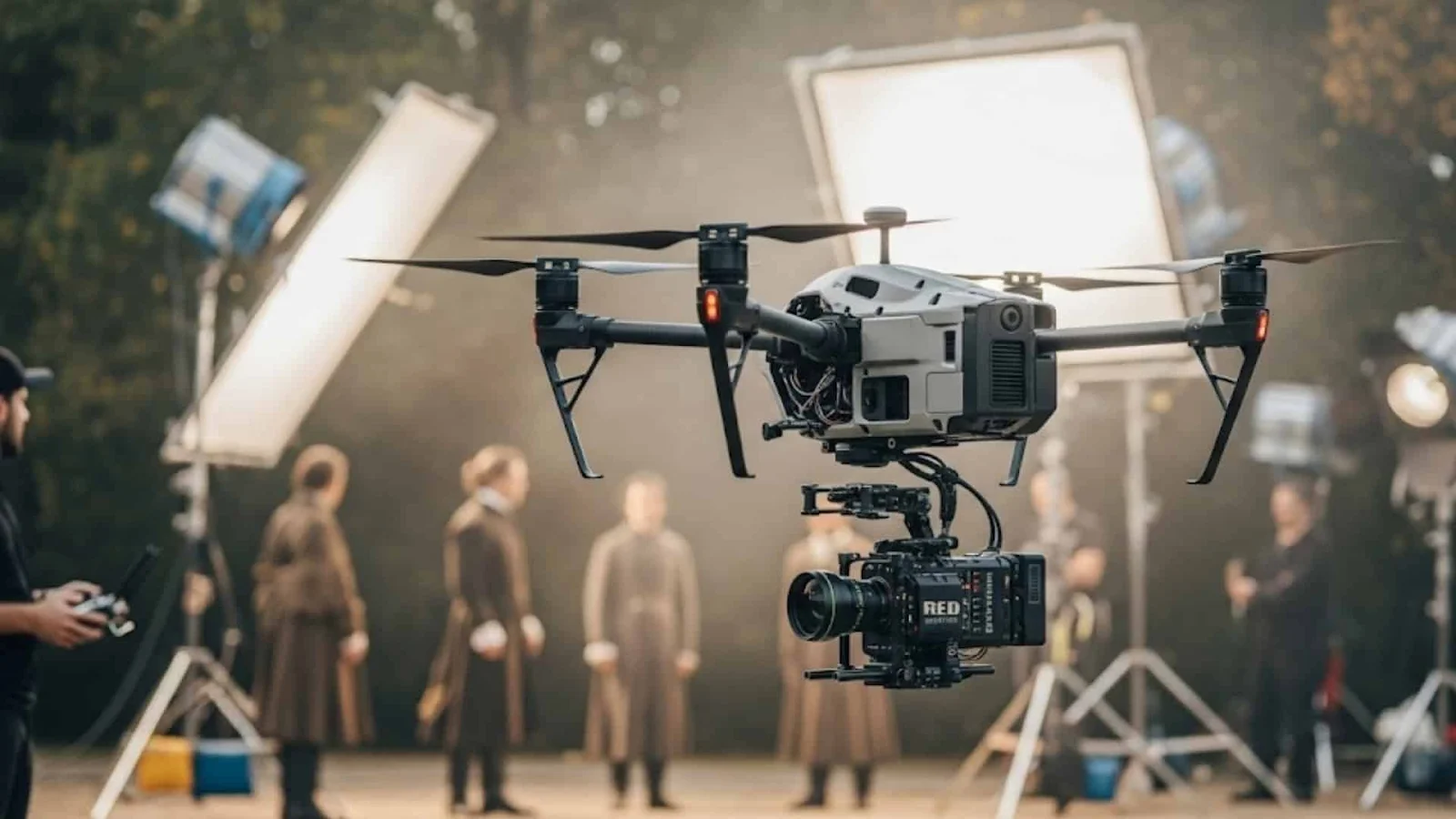
Industries
Types of Bearings used in Media and Filmmaking Drones
21 November, 2025
26 min read
Media and filmmaking drones are unmanned aerial vehicles designed specifically to carry cameras and capture smooth, cinematic footage from the sky. These drones range from agile quadcopters used for dynamic action shots to large octocopters that lift heavy professional cinema cameras. In the film industry, drones have become indispensable for aerial photography and videography – replacing or complementing cranes and helicopters to get breathtaking angles at a fraction of the cost. What sets cinematography drones apart is their emphasis on stability and precision: they must hover reliably, respond to control inputs smoothly, and keep the camera steady in flight. This requires not only advanced flight control systems and gimbals, but also the right hardware components in every moving part – especially the bearings that enable rotation.
Pacific International Bearing Sales (PIB) is a leading supplier of high-performance bearings that help keep professional camera drones flying smoothly and reliably. With decades of experience, PIB supports drone manufacturers and operators from initial design to routine maintenance, ensuring each UAV is equipped with optimal bearings for its mission. The company’s extensive catalog includes miniature ball bearings, thin-section gimbal bearings, angular contact bearings, and more – all sourced from top brands or built to aerospace-grade specifications. By providing the right bearing solutions, PIB helps cinematography drones achieve longer flight times, steadier camera movement, and a lower risk of component failure during critical shoots.
Why do high-quality bearings matter so much in aerial filming? Consider the challenges a drone faces on a movie set: it carries an expensive camera rig, it needs to maneuver deftly for complex shots, and it absolutely cannot introduce jarring vibrations or noise that would ruin the footage. Below are some key reasons the choice of bearings is crucial for media and filmmaking drones:
- Reliability – Drones used in filmmaking often carry very expensive cameras and gear, so a mid-air failure is unacceptable. Every bearing must operate flawlessly under stress. A motor or gimbal bearing seizing up during a shoot could cause a crash or ruined take. Using proven, precision bearings (often high-grade ABEC-5/7 or above) ensures long service life and reduces the chance of malfunction. In other words, quality bearings give filmmakers confidence that the drone will perform reliably through take after take. (PIB can provide bearings with the necessary quality and certifications to meet these reliability demands.)
- Smooth, Stable Footage – Vibration is the enemy of clear video. Precision bearings minimize vibration and jitter in both the drone’s propellers and its camera gimbal. When motors and prop hubs rotate on high-quality bearings, they spin true without wobbling, so the drone’s flight is stable and the gimbal has an easier job keeping the shot steady. In the gimbal itself, low-friction bearings allow fluid camera movement with no “stiction” or rough spots. The result is shake-free footage – no jello effect or micro-jitters spoiling the image. Smooth bearings essentially isolate the camera from motor buzz and turbulence, which is why professional drones deliver rock-steady aerial shots even in challenging conditions.
- Quiet Operation – On many film sets, especially when recording live audio, the noise from a drone can be a concern. While propellers make most of the sound, poorly made bearings can add high-pitched whine or grinding noises. Precision-engineered bearings, properly lubricated, operate whisper-quiet. By dampening vibrations and friction, good bearings help the drone run more silently. This means less interference with on-camera dialogue or ambient sound recording. Even when audio isn’t a concern, a quieter drone is generally less distracting and more professional. Filmmakers appreciate when the drone’s presence doesn’t overpower the scene, and quality bearings contribute to that reduced noise profile.
- Load Capacity & Stability – Professional cinematography drones often carry larger payloads (like a high-end DSLR or cinema camera, heavy lens, gimbal, and even remote focus gear). Supporting that weight and keeping the drone stable requires bearings that can handle significant loads. For instance, the rotor shafts on a heavy-lift camera drone might use tapered roller bearings or angular contact bearings to support the combined radial and axial forces of the spinning propeller and the weight of the rig. If the wrong bearings are used, they could deform or wear out under the stress, leading to imprecise rotor alignment or even failure. Using the correct bearing type for each load — e.g. a pair of angular contact bearings in a gimbal pivot to support a heavy camera, or a thrust bearing to take up vertical forces — keeps the drone stable and safe. (PIB’s engineering team often helps drone designers identify where higher-load bearings are needed to ensure critical components hold up under the demands of aerial cinematography.)
- Efficiency & Flight Time – Drones have limited battery life, so any reduction in power loss translates to more minutes of flight and filming. Low-friction bearings in the motors and propellers mean less energy wasted as heat – the motors can spin freely with minimal resistance. This improves the drone’s overall efficiency: more of the battery’s energy goes into thrust and maneuvering rather than overcoming internal drag. The payoff is longer flight times (allowing extra takes or extended aerial shots on a single charge) and possibly the ability to carry slightly heavier gear without sacrificing too much endurance. For example, replacing a standard steel motor bearing with a hybrid ceramic bearing can reduce friction and heat at high RPM, potentially yielding a bit of extra flight time and cooler motor operation. Across multiple flights or takes, those gains add up. Additionally, lightweight bearing options (like ceramic hybrid balls or thin-section bearings) can shave off grams from the drone’s build. A lighter drone can fly longer or handle a heavier camera payload. By optimizing bearing choices for minimal friction and weight, PIB helps aerial filmmakers get the most out of their drones’ performance.
In short, high-quality bearings are an unsung hero in aerial filmmaking. They keep the drone’s rotors turning smoothly, the camera gimbal gliding effortlessly, and the whole system reliable through demanding shoots. Next, we’ll look at the common types of bearings used in media and filmmaking drones, and how each type contributes to the drone’s performance.
Types of Bearings Used in Media and Filmmaking Drones
A variety of bearing types are integrated throughout a cinematography drone’s design, each tailored to a specific function. A single professional camera drone can contain multiple kinds of bearings working together. For example, a large octocopter used in filmmaking might use miniature deep groove ball bearings in its brushless motors, a thin-section ball bearing in the yaw axis of the camera gimbal, a pair of angular contact bearings to support a heavy camera mount, and even a tapered roller bearing in a folding arm joint or landing gear hinge for extra durability. The exact bearing selection depends on the drone’s size, the weight of the camera payload, and the maneuvers or flight conditions it needs to handle. Below is a comparison of the main bearing types found in media and filmmaking drones, highlighting their features, typical part examples, and how they are used in these UAVs:
| Bearing Type | Advantages & Features | Example Part Numbers | Typical Drone Usage |
| Ball Bearings (Deep Groove) | Low friction, high-speed rotation; handle radial and moderate axial loads; compact and lightweight design; the most widely used general-purpose bearings in drones. | SMR115 (5×11×4 mm miniature), 608-2RS (8×22×7 mm), 6202 series | Used in virtually all drone motors and propeller hubs; also found in camera gimbals and folding arms due to their versatile load handling and small size. |
| Roller Bearings (Tapered or Cylindrical) | Very high load capacity for heavier applications; tapered rollers handle combined radial and axial loads, while cylindrical rollers handle heavy radial loads; extremely robust but larger and heavier than ball bearings (with higher friction). | 30302 (tapered roller), N204 (cylindrical roller) | Employed in heavy-lift drones and high-stress points – e.g. main rotor/propeller shafts on drones carrying heavy cameras, gimbal pan axes on large rigs, or landing gear mechanisms that must support hard landings. |
| Ceramic Bearings (Hybrid Ball) | Ultra-smooth, low-friction rolling thanks to ceramic balls (which are ~60% lighter than steel); can run at higher RPM with less heat; resistant to corrosion and can act as electrical insulators; offer longer lifespan but at higher cost than all-steel bearings. | SMR115C (hybrid ceramic 5×11×4 mm), 608 hybrid (with Si3N4 ceramic balls) | Used in high-performance drone motors (e.g. racing FPV drones or long-duration filming drones) where maximum efficiency and low vibration are required; also chosen for drones operating in harsh conditions (humid or wet filming environments) because they won’t rust and wear out as quickly. |
| Angular Contact Bearings (Single-Row) | Engineered to support significant axial (thrust) loads in one direction along with radial loads; high stiffness and precision, especially when used as opposing pairs (back-to-back or face-to-face) with preload; maintain alignment under heavy axial stress. | 7204B (20×47×14 mm single angular contact); pairs of 7000-series bearings pre-matched for axial preload | Common in drone locations that see combined axial+radial loads: for example, in some drone motor shafts or prop hubs that also bear the weight of a heavy camera, in tilt-rotor mechanisms, or in heavy gimbal joints. Using angular contact pairs in a drone’s main prop shaft or gimbal pivot helps it handle thrust from lift or a camera’s weight without losing precision. |
| Thrust Bearings (Axial Ball or Roller) | Specialized to carry purely axial loads (forces along the axis of rotation); come in ball or roller designs (e.g. needle thrust washers) to prevent shafts or components from shifting under axial force; not meant for radial loads. | 51104 (thrust ball bearing); AXK series (needle roller thrust washers) | Used wherever a drone component needs support against axial force: for instance, in multi-rotor drones a small thrust bearing might be installed in a propeller assembly to take the upward thrust so the motor’s other bearings aren’t overloaded; also used in camera gimbal assemblies (pan or tilt axes) to support the weight of the camera and rig, keeping movements smooth and preventing sag or binding under load. |
Table 1 – Common bearing types in filmmaking drones, with their features and typical uses.
Ball Bearings (Deep Groove)
Ball bearings are the workhorse of most drones. In particular, deep groove ball bearings (a type of radial ball bearing) are ubiquitous in media drone designs due to their versatility and compact size. A deep groove ball bearing consists of an inner ring and outer ring with a raceway channel in each, in which a series of steel balls roll. This simple, efficient design supports high radial loads (forces perpendicular to the shaft) and also tolerates moderate axial loads (along the shaft) in either direction. In other words, a good deep groove bearing can handle the kinds of forces and speeds seen in many drone applications, all while remaining small and lightweight.
In practice, nearly all drone motors use pairs of miniature deep groove ball bearings to support their rotor shafts. For example, a typical brushless gimbal motor or propeller motor on a quadcopter might have two small ball bearings (one at each end of the motor’s bell/shaft) to hold it in place. These bearings are precision-made to minimize friction, so the motor can spin at tens of thousands of RPM efficiently. A quality miniature ball bearing like an SMR115 (5 mm bore × 11 mm outer diameter × 4 mm width) is often rated for 50,000+ RPM. Such bearings enable high-speed drone propellers to rotate smoothly at incredible speeds without overheating or wearing out prematurely. They convert the motor’s electrical power into mechanical thrust with minimal losses, which is crucial for keeping the drone aloft and responsive.
Beyond motors, deep groove ball bearings appear in many other moving parts of a cinematography drone. Propeller hubs often have a pair of ball bearings to keep the prop shaft centered and ensure it spins without wobble – critical for avoiding vibration that could blur the video. Ball bearings are also commonly used in the drone’s camera gimbal system. Each axis of a 3-axis gimbal (pan, tilt, roll) may incorporate one or more small ball bearings to allow free rotation. Because these bearings have such low friction, the gimbal’s motors can make fine adjustments to camera angle with almost no resistance. This is what lets a drone capture silky-smooth pans and tilts in mid-air. Even the folding arms or hinges on some drones use ball bearings or similar bushings to ensure solid locking and easy deployment. Thanks to their broad capabilities – handling high speeds, moderate loads, and offering long life in a tiny package – deep groove ball bearings are by far the most common bearing type in drones of all kinds. From a handheld camera drone to a large cinema rig, you’ll find ball bearings keeping things spinning smoothly.
It’s worth noting that within the category of ball bearings, there are special sub-types used for filmmaking drones. One example is thin-section ball bearings, which have an unusually slim cross-sectional profile relative to their diameter. These are often used in camera gimbals and drone pivot mechanisms where space and weight are at a premium. A thin-section bearing can provide a large diameter (to support a big camera or allow wires and optics to pass through the center) while adding very little weight or bulk. The trade-off is that they handle slightly lower loads than a standard bearing of the same diameter, but good thin-section bearings are still quite robust for their size. Many high-end camera stabilizers and gimbal assemblies use thin-section bearings to achieve the necessary precision without overweighting the drone. PIB regularly supplies such bearings for gimbal manufacturers – ensuring the stabilized camera platform remains light and responsive.
Roller Bearings
When a drone application demands extra load capacity or stiffness beyond what a ball bearing can offer, roller bearings come into play. Unlike ball bearings which use spherical balls for the rolling elements, roller bearings use cylinders or tapered cylinders as rollers. This gives them a line of contact with the bearing races instead of a single point, distributing loads over a larger area. The result is the ability to support much heavier loads – at the cost of greater size and friction.
In drones, there are two main sub-types of roller bearings that might be used: cylindrical roller bearings (which handle very high radial loads) and tapered roller bearings (which handle combined radial and axial loads). Tapered roller bearings are cone-shaped and designed so that they can support force in one axial direction as well as radial force. These are commonly found in automotive wheel hubs, and their drone usage is analogous: any place you have a shaft that sees both rotation and a lot of thrust or weight, a tapered roller can be a good choice.
For example, consider a heavy-lift drone carrying a large camera rig. The main propeller or rotor shafts on such a drone not only experience radial forces from the spinning prop, but also significant axial force from lifting the weight of the camera and drone itself. Some drone designers will employ small tapered roller bearings in those rotor hubs to ensure the shaft can handle the combined load without flexing or wearing out. Another area might be the pivot or tilt mechanism on a big gimbal mount – if a drone gimbal needs to support a 10 kg cinema camera and allow it to pan smoothly, a tapered roller bearing could be used in the pan axis to manage that weight. Cylindrical rollers, on the other hand, might appear in heavy-duty gearboxes or transmissions of certain drones (for instance, a large drone with a geared drive or an accessory winch system for dropping cables). They provide robust support for high radial forces in a relatively compact form.
The upside of roller bearings is clear: strength and durability. They excel in drones that must carry heavier payloads or endure continuous operation under strain. A professional octocopter designed to lift a high-end digital cinema camera might rely on roller bearings in key joints so that the added weight doesn’t shorten the machine’s life. However, there are downsides: roller bearings are generally larger and heavier than ball bearings, and their increased friction (due to more surface contact and sliding between roller ends and guides) can slightly reduce flight efficiency. Every extra gram and bit of drag matters for flight time. Therefore, engineers typically use roller bearings only where necessary – in critical points that truly need the load support. When implemented in the right spots, roller bearings give drones a huge boost in load-bearing safety and longevity, ensuring that even demanding shots (like sharp maneuvers with a heavy camera) don’t cause mechanical stress failures. It’s a conscious trade-off: add a bit of weight and friction via a roller bearing in exchange for peace of mind that the drone can handle the job day in and day out.
Ceramic Bearings (Hybrid Ball Bearings)
Ceramic bearings used in drones are almost always hybrid ceramic ball bearings. “Hybrid” means the bearing’s races (rings) are metal – usually high-grade steel like 52100 chrome steel or stainless steel – but the balls themselves are made of ceramic (often silicon nitride, Si₃N₄). These bearings have garnered a lot of attention in high-performance drone circles because they push the performance envelope beyond what standard all-steel bearings can do.
The key advantage comes from the ceramic balls. Ceramic (Si₃N₄) balls are extremely hard and smooth, and significantly lighter than steel balls (around 60% lighter). When you swap steel balls for ceramic, a few things happen. First, the bearing’s rotating mass drops, which means less centrifugal force and friction at high speeds. The bearing can run at higher RPMs or run cooler at the same RPM compared to steel. In a drone’s brushless motor, for example, using hybrid ceramic bearings can allow the motor to spin more freely and efficiently. Many racing drone enthusiasts report that upgrading to ceramic motor bearings gives a slight improvement in throttle response and perhaps a bit more top-end speed or flight time. For cinematography drones, the benefit might be seen in cooler motor operation and a bit more battery life – every extra minute of hover time counts when setting up a shot.
Second, ceramic balls contribute to reduced friction due to their ultra-smooth surfaces. Less friction not only improves efficiency but also can reduce vibration and noise. A motor with ceramic bearings may run a touch quieter and with less vibration, which again is a boon for keeping the drone steady and unobtrusive during filming.
Third, hybrid ceramic bearings are highly durable in challenging conditions. Ceramic won’t rust, so if you’re filming in humid environments, near the ocean, or even in light rain or mist, the bearings are less likely to corrode. They also tolerate heat well and are very wear-resistant. This means they maintain their precision for a long time, even if the drone is used heavily. Additionally, the ceramic balls act as electrical insulators. In high-power drone setups, electrical currents can sometimes pass through bearings (causing pitting in steel balls), but ceramics prevent that. It’s a small factor, but in some UAV designs with powerful motors or generators, it protects the bearings and electronics.
It’s important to note that all these advantages do come at higher cost – ceramic bearings are more expensive than standard ones. That’s why they’re typically used when the performance gains justify it: racing drones, where every bit of speed counts; long-endurance drones, where maximizing efficiency can be the difference between getting the shot or landing early; or any professional drone where downtime is costly and you want the longest life from every component. Also, not every bearing on a drone needs to be ceramic. Often, drone builders will put hybrids in the motors (to maximize motor efficiency and lifespan) but might not bother for things like landing gear or low-stress linkages.
In summary, hybrid ceramic ball bearings are a high-end option that can give media drones an edge in terms of smoothness, efficiency, and durability. They underscore how even in a cutting-edge drone, something as small as a bearing upgrade can yield tangible improvements. If you’re pushing the limits of your drone’s performance – or simply want extra assurance that your motor won’t overheat during a critical film shoot – ceramic hybrid bearings are an excellent solution. PIB offers a range of hybrid ceramic bearings for drone applications, and can advise if an upgrade to ceramic is a worthwhile investment for a given drone model or use-case.
Angular Contact Bearings
Angular contact ball bearings are a specialized type of ball bearing designed to cope with significant axial loads (along the axis of the bearing) in addition to radial loads. Unlike a deep groove bearing, where the ball is mostly handling radial force, an angular contact bearing has races that are angled relative to the bearing axis, so the balls contact the races at a certain angle. This geometry means the bearing can support a heavy thrust load in one direction. The trade-off is that a single angular contact bearing isn’t symmetrical – it’s typically only able to take axial load in one direction (depending on which way it’s mounted). Therefore, these bearings are often used in pairs, oriented opposite each other (one takes thrust from one side, the other takes thrust from the opposite direction), to handle axial forces both ways and keep shafts precisely positioned.
In drones, angular contact bearings find use in places where a shaft or component experiences a combination of radial and axial forces and we need extra stiffness or precision. For example, a drone’s main rotor shaft (the motor shaft that directly turns the propeller) usually sees axial force from the propeller’s thrust pushing up or down. While many small drones just rely on regular ball bearings plus maybe a thrust washer, larger or more advanced drones might use a pair of angular contact bearings on a motor shaft to really secure it and maintain alignment under those loads. This can be especially relevant in drones that carry heavy cameras – the added weight means more thrust is needed, which increases the axial force on the motor’s bearings.
Another use could be in the gimbal or camera mount area. Suppose you have a heavy camera on a drone and you want to be able to tilt it up and down smoothly. The hinge or shaft that allows that tilt might use angular contact bearings (or tapered rollers) to support the camera’s weight (axial load) while still allowing rotation. Angular contacts would keep the movement precise without slop, even as the weight shifts.
A common configuration in industry is to use matched pairs of single-row angular contact bearings, one facing each direction (often called a back-to-back or an X arrangement). This pairing can handle axial loads in both directions and gives a very rigid support for the shaft. In a drone, this might be overkill for smaller parts, but for something like a heavy gimbal pivot or a drone rotor hub that needs perfect alignment, it’s a great solution.
Angular contact bearings are known for their high stiffness and ability to maintain accuracy under load. The downside is they can be a bit more sensitive to installation (they often require setting the correct preload, which is a slight “squeeze” to remove internal clearances) and they usually cost more than standard ball bearings. They also might create slightly more friction because they’re preloaded. Still, when a drone’s design demands it – for example, to avoid any flex in a critical axis – angular contact bearings are the go-to choice. Many drone makers will incorporate at least a couple of these bearings in strategic spots to ensure the whole system stays tight and responsive even when forces mount up (like during sudden accelerations, wind gusts, or rapid maneuvers with a heavy payload).
Thrust Bearings
Thrust bearings are designed specifically to handle axial forces – that is, forces pushing along the axis of a shaft. In a drone, axial force examples include the upward push on a rotor shaft caused by lift (the propeller pulling up on its motor) or the downward weight of a heavy camera pushing on a vertical gimbal shaft. Thrust bearings come in a few varieties, but two common types are thrust ball bearings (which use balls arranged typically in a ring between two washer-like races) and thrust roller bearings (often thin needle rollers sandwiched between flat races, sometimes called needle thrust washers).
In media drones, thrust bearings are used to prevent unwanted motion and wear when axial loads are present. Take a multi-rotor drone’s motor and prop assembly: as the prop generates lift, it’s actually trying to pull the motor’s shaft upward out of the motor. Many motor designs incorporate a small thrust ball bearing or at least a spacer to take that load, so that the main radial bearings aren’t forced to do so (since standard ball bearings don’t like heavy axial loads). By adding a thrust bearing, the propeller hub stays firmly in place and you avoid any slight up-down play or grinding that could occur if axial force went unchecked. This contributes to the stability of the drone and longevity of the motor.
Now consider a camera gimbal. Imagine the pan axis – this is usually a vertical shaft that supports the weight of the camera as the camera yawns left-right. That vertical axis is essentially a cantilever holding the camera up, so the lower bearing in that axis is carrying the full weight of the camera rig (an axial load down the shaft). Often, designers will incorporate a thrust bearing at that point. It might be a small thrust ball bearing or a needle thrust washer set that sits at the bottom of the shaft, taking the vertical load of the camera. The other bearing on that axis (maybe a radial or angular bearing at the top) then mainly just centers the shaft. With the thrust bearing in place, the heavy camera can swivel smoothly without grinding or binding, and the load is properly distributed.
Thrust bearings might also show up in less obvious places. For example, some folding drone arms have locking mechanisms that could use a thrust washer to take the clamping force, or a swivel mount might use one to handle any end pressure. In essence, whenever there’s a force trying to push two components together or apart along the line of rotation, a thrust bearing is the component that quietly handles that force.
These bearings ensure that axial forces don’t lead to excess friction or wear in the system. By giving axial loads their own dedicated path, they keep the motion smooth. For drone operators and filmmakers, that means the propellers won’t start scraping or shifting even when the drone is working hard to lift a heavy camera, and the gimbal movements won’t get jerky or stuck due to the camera’s weight. As a result, thrust bearings contribute to the overall reliability and smooth operation of high-end drones. They are usually small and not as famous as other bearing types, but they fill a very important niche in the drone’s design.
Explore PIB’s Online Catalog for Drone Bearings
Every part of a filmmaking drone – from the whirring motors to the stabilizing gimbal – relies on quality bearings to perform its best. Whether you’re an engineer designing a new professional drone or an enthusiast upgrading your rig for smoother footage, choosing the right bearings is crucial to success. Pacific International Bearing Sales (PIB) makes that process easier by offering a comprehensive online catalog of bearings suitable for all drone applications. In PIB’s catalog, you can find everything from miniature ball bearings for high-speed motors to precision angular contact bearings for heavy camera mounts, all in one place. Each product listing comes with detailed specifications, so you can quickly identify a bearing that meets your size and performance requirements.
Ready to enhance your drone’s performance? Visit the PIB online catalog and explore the range of premium bearings available for drones and UAVs. With expert support just a call or click away, PIB can help you select and order the ideal bearings to keep your media drone flying smoothly and capturing gorgeous footage. Don’t let a tiny component hold back your big creative vision – equip your drone with the best bearings from PIB and film with confidence.
FAQ
Q: What types of bearings do professional camera drones use?
A: Aerial cinematography drones use a combination of bearing types. Most of them rely on high-quality deep groove ball bearings in the motors and propeller hubs because these bearings are great for high-speed rotation with minimal friction. The camera gimbal and other moving joints often use miniature or thin-section ball bearings to allow smooth, precise movement without adding much weight. In heavier-duty professional rigs, you’ll also find angular contact bearings or tapered roller bearings in places like the main rotor shafts or gimbal pivots – anywhere that needs to support the weight of a big camera or sustain higher loads. In short, camera drones use light, low-friction ball bearings for most tasks, and they add heavier-load bearings (angular, tapered, etc.) in the specific spots that need extra support.
Q: How do good bearings help keep drone footage stable?
A: High-quality bearings are essential for stable footage because they reduce vibration and allow smooth motion. In a drone’s propellers and motors, precision bearings ensure the rotation is balanced and wobble-free, so the drone doesn’t shake or transmit jitter to the camera. In the camera gimbal, good bearings let the camera pivot fluidly on all axes with almost zero resistance. This means the gimbal’s stabilization system isn’t fighting against sticky or rough spots – the camera can glide as the gimbal compensates for movement, resulting in silky smooth video. If bearings are worn out or of poor quality, you might see the “jello” effect or slight shakes in footage because the movements aren’t perfectly smooth. By contrast, quality bearings keep everything running like it’s on rails, so the only movements in your video are the ones you intend.
Q: Can upgrading my drone’s bearings improve its performance?
A: Yes, in many cases upgrading to higher-grade bearings can yield noticeable improvements. For example, swapping stock motor bearings with hybrid ceramic bearings can reduce friction and rotational mass, which helps the motors run more efficiently (potentially running cooler and extending flight time by a small margin). Many drone hobbyists upgrade to ceramic bearings in racing or filming drones to get a bit more responsiveness and longevity. Upgrading gimbal bearings or using precision thin-section bearings can also tighten up the stabilization – if the original bearings had any slop, better ones will remove that play and make the gimbal more precise. Even if you stick with steel bearings, choosing an ABEC-7 or aerospace-grade bearing over a generic one can improve reliability and reduce vibrations. That said, the improvements might be subtle depending on the drone and how demanding your application is. It’s often most beneficial in high-performance scenarios or when replacing bearings that have worn out. Always ensure the replacement bearings match the size and specifications required by your drone. If you’re unsure, PIB’s experts can help guide you on the best bearing upgrades for your specific drone model – contact us at [email protected]