Your cart is empty
 Short Rigid Couplings
 Controlflex Couplings
 Jaw Couplings
 Oldham Couplings
 Bearing Locknuts – TCN
 Double Wide Shaft Collars
 Heavy Duty Shaft Collars
 International Series Shaft Collars
 Keyed Shaft Collars
 Mountable Shaft Collars
 Quick Clamping Shaft Collars
 Set Screw Shaft Collars
 Thin Line Shaft Collars
 Threaded Shaft Collars – Pacific International Bearing Products
 Two-Piece Shaft Collars
 Friction Bearing Universal Joints
 Needle Bearing Universal Joints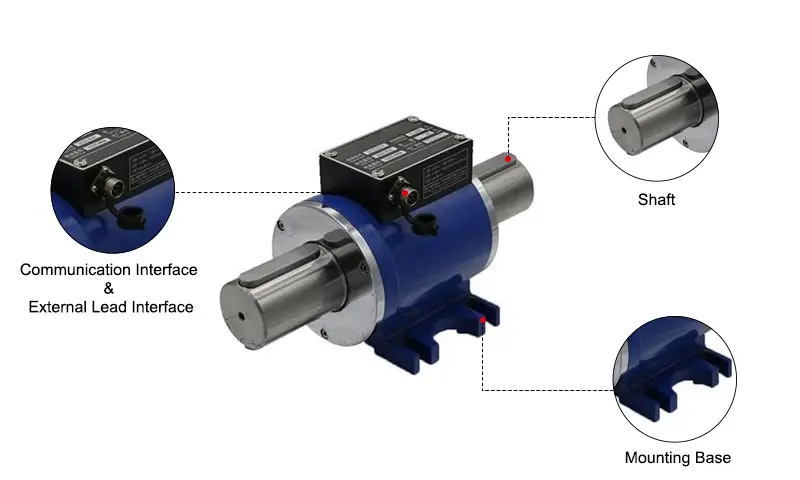
Power Transmission
What is the Difference Between a Force Sensor and a Rotary Torque Sensor?
03 December, 2025
12 min read
In engineering and automation, using the right sensor for the job is critical. Choosing between a force sensor and a torque sensor can be confusing, because both involve measuring forces – but in very different ways. Pacific International Bearing Sales (PIB) supplies both types of sensors and often guides customers on selecting the correct one. In this article, we’ll break down what force sensors do vs. what rotary torque sensors do, how each works, and why picking the proper sensor matters for your application.
Force and torque are not interchangeable: one is a straight-line push/pull, the other is a twisting force. Selecting the wrong type could lead to incorrect data or even mechanical issues. Let’s clarify the differences so you can choose confidently.
Force Sensors (Measuring Linear Force)
A force sensor is designed to measure linear force – essentially any push or pull along a straight line. This is the kind of sensor you’d use to measure weight, tension, compression, or pressure. Common examples include load cells in scales (measuring weight) or force transducers in machinery (measuring how hard something is being pressed or pulled).
How it works: Most force sensors work by detecting slight deformations in a structural element when a force is applied. Typically, strain gauges are bonded to a metal element that bends or stretches under load. As the material deforms, the strain gauges change their electrical resistance. This change is picked up through a Wheatstone bridge circuit and converted into an electrical signal proportional to the force. In practice, when you push or pull on a force sensor, the sensor outputs a tiny voltage change (or a conditioned signal like 4–20 mA current or a digital reading) that corresponds to how much force is being applied.
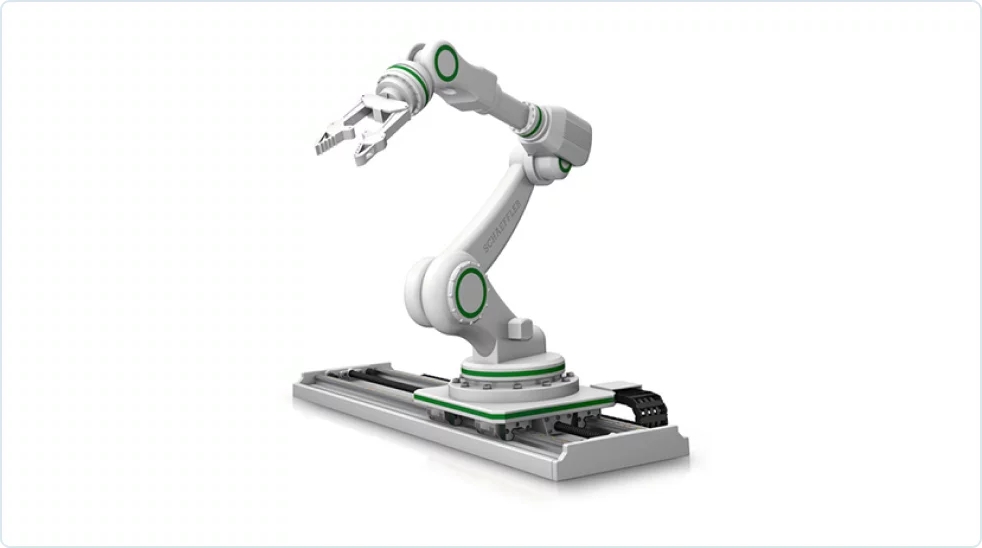
Where they’re used: Force sensors are found in all sorts of industries. In manufacturing and robotics, they might monitor how much force a robot arm applies when gripping an object. In automotive testing, force sensors measure suspension loads or crash forces. Medical devices use force sensors for precise pressure measurements (for example, in infusion pumps or surgical tools). Essentially, whenever you need to measure a direct force (tension, compression, or shear), a force sensor is the tool for the job. For instance, if you need to measure the weight of a tank, you’d use force sensor load cells under the tank supports. If you’re testing how much force it takes to press a button or crimp a connector, a force sensor gives you that linear force data. These sensors are usually mounted in a fixed position, experiencing force along one axis, and they don’t involve any spinning shafts.
Rotary Torque Sensors (Measuring Rotational Force)
A rotary torque sensor measures torque, which is a rotational force – the kind of force that causes something to twist or spin. If force is a push or pull in a line, torque is the equivalent in rotation (think of it as a “twisting” force). You encounter torque when you turn a wrench, tighten a bolt, or when a motor turns a shaft. A rotary torque sensor is specifically designed to be installed in-line with a rotating shaft or component to measure how much twisting force is present.
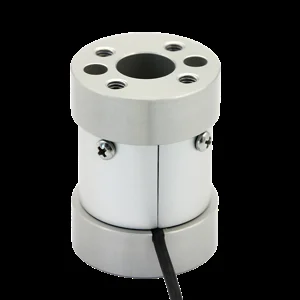
How it works: Just like force sensors, most torque sensors also use strain gauges, but arranged to detect twisting rather than straight-line bending. Inside a rotary torque sensor, strain gauges are bonded to a shaft or structural element that deforms very slightly when torque is applied (it twists by a tiny angle under load). As torque is applied, the strain gauges detect the torsional strain (twist) and change resistance. This change is converted into an electrical signal proportional to the torque. The engineering challenge with rotary torque sensors is that the sensor itself is spinning along with the shaft it’s measuring. How do you get the signal out of a rotating object? There are a couple of methods:
- Slip rings or brushes: Some rotary torque sensors use slip rings to maintain an electrical connection between the rotating sensor element and the stationary output wires. The strain gauge signal goes through the rings, allowing continuous measurement even while spinning. Slip-ring designs work well but can introduce a bit of electrical noise or wear over time, especially at high RPMs.
- Wireless or inductive coupling: Modern rotary torque sensors often use non-contact techniques. They might have a rotary transformer or wireless transmitter that sends the signal from the rotating shaft to a stationary receiver. This means no physical contact is needed, which avoids wear and lets the sensor handle high rotation speeds with reliable signal transmission.
No matter the method, the outcome is the same: you get a live signal (voltage, current, or digital output) that corresponds to the torque on the rotating shaft.
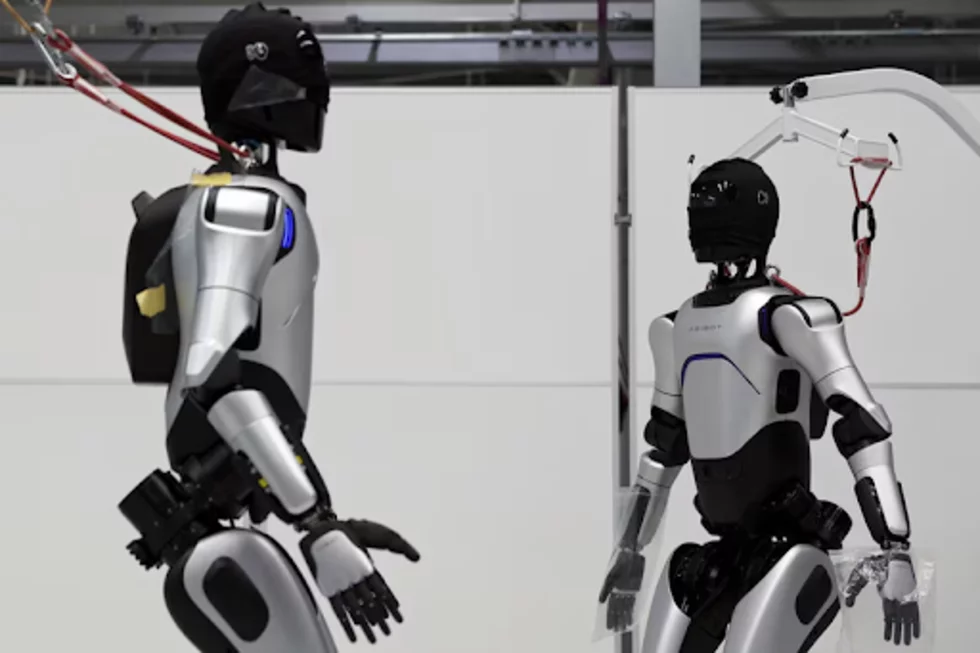
Where they’re used: Rotary torque sensors are vital wherever we need to measure twisting forces in real time. For example, in automotive engineering, a rotary torque sensor might be mounted on an engine’s driveshaft or a gearbox output to monitor how much torque the engine is delivering under various conditions. This helps in tuning performance and protecting against overloads. In robotics, you might put a torque sensor on a robot joint or motor shaft to ensure the motor isn’t applying too much torque that could damage the mechanism or to enable precise force control (like feeling how hard to twist a part). Industrial manufacturing systems use rotary torque sensors on rotating equipment – for instance, in a bottling plant, a torque sensor can verify that a capping machine is tightening bottle caps with the correct torque. In quality control, they’re used in test rigs to measure the torque of electric motors or to calibrate power tools like torque wrenches. The key is that rotary torque sensors allow continuous rotation of the measured shaft while capturing the torque, which distinguishes them from reaction (static) torque sensors that only measure twist on a stationary or semi-stationary element. If your application involves a spinning component and you need to know the twisting force, a rotary torque sensor is what you need.
Why choosing the right one matters: It should be clear that force sensors and torque sensors are built for different kinds of forces. Using a force sensor when you actually need to measure torque would result in inaccurate or meaningless data – a force sensor can’t properly capture twisting forces. Likewise, a torque sensor isn’t shaped or calibrated to measure a direct linear push/pull. In real-world terms, if you tried to measure the output of a motor (a twisting force) with a load cell (meant for linear force), it wouldn’t work – you might even damage the sensor. Conversely, measuring a weight or push force with a torque transducer would be impractical. By understanding the difference, engineers can avoid these mistakes. Picking the correct sensor type ensures accurate measurements, safety, and optimal performance of your system.
Comparison Table: Force Sensor vs. Rotary Torque Sensor
For a handy overview, the table below summarizes the key differences and characteristics of a typical force sensor versus a rotary torque sensor:
| Aspect | Force Sensor (Linear Force) | Rotary Torque Sensor (Twisting Force) |
| Measurement Type | Linear force in one axis (tension, compression, or push/pull). It reads how much straight-line force is applied. | Rotational force (torque) around an axis. It measures how much twisting force is applied to cause rotation. |
| Typical Applications | Weighing scales, load cells for measuring weight or force, material testing machines, press force monitoring, tension in cables, etc. Examples: Measuring the weight of an object, or the force to press or pull something. | Monitoring motor or engine shaft torque, bolt tightening (torque wrenches/calibrators), robotic joint torque, gear or drivetrain testing, and rotating machine condition monitoring. Examples: Measuring the torque output of a spinning motor or ensuring a bolt is tightened to the correct torque. |
| Orientation | Mounted to measure force along a straight line. The sensor experiences force in one direction (no continuous spinning parts). | Mounted in-line with a rotating shaft or component. The sensor itself often spins with the shaft, measuring torque while allowing full rotation. |
| Output Signal Type | Typically, an analog electrical signal is proportional to force. Many are strain-gauge-based load cells giving a millivolt-level signal (requires amplification). Often provided as 0–10 V, 4–20 mA, or digital output after signal conditioning. No special rotating signal interface needed (sensor is static). | Typically, an analog or frequency signal proportional to torque. May output voltage, current, or a pulse/frequency (for digital rotation sensors). Because the element rotates, designs use slip rings or wireless coupling to send the signal out. High-end models often have built-in amplifiers or wireless transmitters to output a clean signal despite rotation. |
| Example PIB Product | WT722 Bending Beam Load Cell – a force sensor that measures linear loads (great for weight measurement or machine force feedback). | TQ908F Dynamic Torque Sensor – a rotary torque transducer designed to measure twisting force on a rotating shaft (handles continuous rotation with a non-contact signal transfer). |
As the comparison shows, the fundamental difference comes down to the type of force each sensor is built to measure. Force sensors deal with straight-line effects, whereas rotary torque sensors deal with twisting effects. Both play absolutely critical roles in modern technology – you’ll find one or the other (or sometimes both) inside countless devices, machines, and testing systems. Understanding which one you need is key to obtaining accurate data and protecting your equipment.
If you’re not sure which sensor fits your needs, contact Pacific International Bearing Sales.PIB offers a comprehensive selection of force sensors and torque sensors for different capacities and applications. By reaching out to our team you will be directed to find the exact sensor model that meets your requirements – whether it’s for a heavy industrial application or a delicate precision task.
FAQ
Q: Can one sensor do both force and torque measurements?
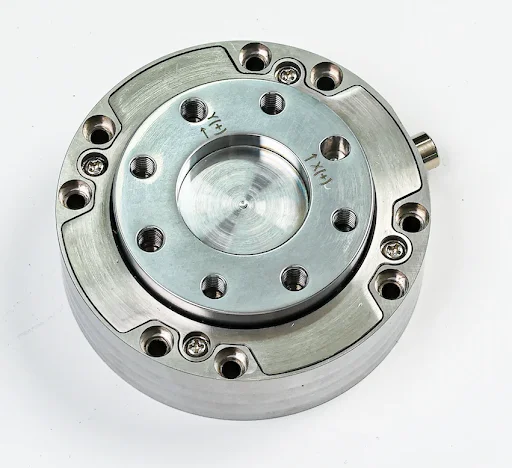
A: Generally, a given sensor is designed for one type of measurement or the other – either force or torque. A force sensor can’t directly measure twisting torque, and a torque sensor isn’t built to measure linear push/pull force. That said, there are specialized multi-axis sensors (for example, a 6-axis force/torque sensor) that can measure forces and torques along multiple axes simultaneously. Those are essentially multiple sensors in one package, used in advanced applications like robotics. For most use cases, you will select a dedicated force sensor or a dedicated torque sensor based on what you need to measure.
Q: What should I consider when selecting a sensor for my project?
A: First, determine the type of measurement you need – is it a linear force or a rotational torque? That will immediately point you to either a force sensor or a torque sensor. Next, consider the range/capacity required (how many Newtons of force or Newton-meters of torque at maximum) and ensure the sensor’s range covers it with some safety margin. Look at the required accuracy and resolution for your application – different sensors have different precision levels. You should also consider the form factor and mounting: does the sensor need to fit in a tight space or attach in a certain way (flange mount, threaded shaft, etc.)? For torque sensors, decide if they need to handle continuous rotation (rotary type) or if a static (reaction) torque sensor suffices. Environmental factors are important too – durability, IP rating, temperature range – especially if the sensor will be in a harsh environment (industrial plant, outdoors, high heat, etc.). Finally, think about the output signal and compatibility: do you have instrumentation to read millivolt signals, or do you need a sensor with built-in amplification to output 0-10 V, 4-20 mA, or digital data (USB/CAN/Ethernet)? Picking a sensor that easily integrates with your control system or data acquisition system will save a lot of effort. In summary, match the sensor’s specifications to your application’s needs in type, range, accuracy, size, and output.
Q: Are force sensors and torque sensors interchangeable?
A: No – you cannot use a force sensor in place of a torque sensor or vice versa and expect correct results. They are engineered differently to measure different phenomena. A force sensor is physically designed to respond to linear loads; if you twist it, it won’t register that properly (or could be damaged). A torque sensor is built to measure twist and often has a form factor meant to be installed in a rotating system; pressing or loading it linearly in a way it wasn’t meant for could give erroneous readings or harm it. Always use the appropriate type of sensor for the quantity you want to measure. If you need to measure both force and torque in a system (for example, the force and torque at a robot’s end effector), you would use two different sensors or a specialized multi-axis sensor. Using the correct sensor ensures accuracy and prevents equipment damage.
Remember, understanding the distinction between these sensors will help you gather the right data and keep your systems running safely and efficiently. Whether you need to measure a straightforward force or a complex twisting torque, PIB has the sensor solutions to get the job done.