Your cart is empty
 Short Rigid Couplings
 Controlflex Couplings
 Jaw Couplings
 Oldham Couplings
 Bearing Locknuts – TCN
 Double Wide Shaft Collars
 Heavy Duty Shaft Collars
 International Series Shaft Collars
 Keyed Shaft Collars
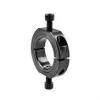 Mountable Shaft Collars
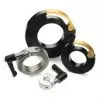 Quick Clamping Shaft Collars
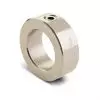 Set Screw Shaft Collars
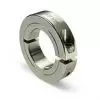 Thin Line Shaft Collars
 Threaded Shaft Collars – Pacific International Bearing Products
 Two-Piece Shaft Collars
 Friction Bearing Universal Joints
 Needle Bearing Universal Joints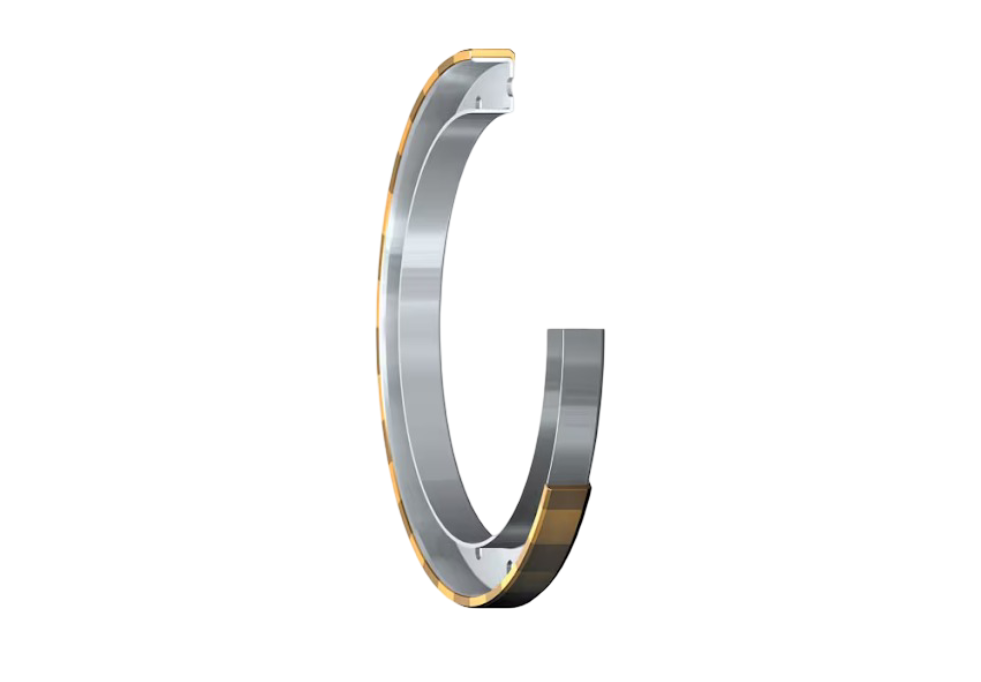
Tutorials
Magnetic Encoders Explained
28 July, 2026
11 min read
Magnetic encoders turn rotary motion into speed and angular-position data by reading a magnetized ring or target with Hall-effect or magnetoresistive sensors. For OEM designs dealing with oil, dust, vibration, or limited package space, Pacific International Bearing Sales supports engineers with online catalog access and engineering support while they evaluate the right motion components.
Key Takeaways
- Magnetic encoders convert changing magnetic fields into electrical signals that report speed, direction, and angular position.
- They are often the practical choice when oil, dust, humidity, shock, or vibration make a clean optical reading path harder to maintain.
- In SKF-style automotive designs, the encoder can live inside an elastomer-over-metal ring and be read axially or radially, with strong chemical resistance and temperature capability up to 150 °C.
- Good selection work starts with the basics: encoder type, read direction, pole pattern or resolution, air-gap tolerance, interface, and how the encoder shares space with nearby bearings and seals.
What Magnetic Encoders Actually Do
At the basic level, a magnetic encoder is a motion-feedback device. SKF describes magnetic encoders as components used with sensors to supply a dynamic signal about speed and angular position, while AKM explains the same idea in plainer language: they detect changes in a magnetic field, convert those changes into electrical signals, and output rotational information. Comparable Hall-effect ring encoders that provide rotational displacement, speed, and direction information.
That broad definition covers more than one physical format. In automotive sealing, SKF says its magnetic encoders are made from an elastomer compound with ferromagnetic particles over-moulded onto a metal stamping, and the magnetized surface can sit on the circumference for radial sensing or on the flank for axial sensing. SKF also positions magnetic encoders for ABS brake systems, powertrain and driveline systems, and engine camshaft and crankshaft applications.
In many assemblies the encoder is part of a compact sealing or bearing package, which changes how you think about space, contamination control, and service life from the start. SKF’s published motor encoder units push that point further by combining encoder and bearing functions in a single compact assembly.
How a Magnetic Encoder Works in Practice
The sensor is reading a changing magnetic field. In a ring-based Hall encoder, a magnetized ring with alternating north and south segments rotates with the shaft, magnetic sensors detect that motion, and electronics convert the sensed field changes into rotational displacement, speed, and direction data. SKF’s magnetic-encoder document states the poles provide a signal to a sensor connected to a central control unit.
SKF’s automotive packaging makes the form factor easy to picture: the encoder can be a thin ring or sealing element rather than a large external wheel, which is one reason magnetic encoders fit so well into compact bearing and seal systems.
This simplified flow matches the way SKF, AKM, and TE describe the technology: a magnetic target moves, a fixed sensor reads the resulting field variation, and electronics translate that variation into usable motion data.
In shaft-end layouts, an especially compact version of the same idea: a permanent magnet mounted to the shaft, a nearby sensor IC, and signal processing that converts X- and Y-axis magnetic field components into angle information. AKM specialists also notes that a radially magnetized magnet combined with a Hall element that reads the horizontal field is more robust against misalignment than other basic arrangements. That is a practical design point, not just a lab detail, because small assembly errors are common in real machines.
Where Magnetic Encoders Outperform Optical Designs
Before the machine ships, it is easy to imagine a clean, controlled encoder environment. After the machine is installed, reality shows up: oil mist, fine dust, humidity, shock loads, vibration, and tighter packaging than anyone wanted. That is where magnetic encoders tend to earn their keep. SKF magnetic sensing does not need a clean transparent gap, and optical encoders were not designed to deliver reliable feedback in the most difficult ambient conditions, where dirt, humidity, extreme temperatures, severe shock, and vibration are present.
That does not mean magnetic automatically wins every argument.Optical encoders are commonly used when the highest precision and resolution are the main priority, while magnetic encoders are traditionally chosen for environmental robustness, small size, and high reliability. The more interesting point today is that the old tradeoff is not as one-sided as it used to be, because modern magnetic designs have pushed accuracy and resolution well beyond older expectations.
The table below is a practical synthesis of what current manufacturer guidance says magnetic encoders are especially good at.
| Real-world condition | What magnetic encoders are good at |
| Dirty, oily, humid, or vibration-heavy service | Magnetic sensing does not require a clean transparent gap, and vendors position it specifically for contaminated, shock-prone, vibration-prone environments. |
| Tight packages or through-shaft designs | Magnetic encoder layouts can be compact, lightweight, and compatible with hollow through shafts in designs where space is limited. |
| Need to know position after restart | Absolute magnetic encoder types can report current position after power returns, unlike purely incremental counting methods that lose accumulated angle when power is removed. |
| Need stronger performance than old “magnetic means low precision” assumptions | Pepperl+Fuchs cites single-turn resolutions up to 16 bits, multiturn resolutions up to 39 bits, and measurement accuracies down to 0.1° in specific magnetic encoder products. |
This comparison is based on AKM, Timken, and Pepperl+Fuchs technical material.
Specification Table and Selection Checkpoints
If you are reviewing a magnetic encoder datasheet, the fastest way to stay out of trouble is to separate the motion requirement from the packaging requirement, then bring them back together. First ask what motion information the control system actually needs. Then ask whether the mechanical package has room for a ring, a shaft-end magnet, a seal-integrated encoder, or a bearing-integrated unit.
Specifications at a Glance
| Specification area | What SKF’s magnetic encoder material explicitly highlights | Why it matters |
| Signal function | Dynamic signal for speed and angular position | Defines the feedback job the encoder is expected to do |
| Geometry | Axial and radial reading options | Affects where the sensor sits and how the package is laid out |
| Construction | Elastomer with ferromagnetic particles over-moulded onto metal stamping | Makes compact, seal-friendly designs possible |
| Chemical resistance | Resistance to oils and chemicals; excellent chemical resistance | Important in engine, driveline, and other contaminated environments |
| Temperature capability | Up to 150 °C in SKF’s automotive material set | Screens the design for hot-zone applications |
| Pole pattern and pitch | Customized pole width or pattern and superior pitch precision | Drives signal quality, sensing accuracy, and layout flexibility |
| Integration benefit | Encoder can serve as the running surface of the seal in a cassette system | Can reduce parts count and package size |
| Typical application examples | ABS, powertrain, driveline, camshafts, crankshafts | Helps match the encoder style to the duty cycle and environment |
If you want a bearing-integrated example rather than a stand-alone ring, SKF’s Motor Encoder Unit is a useful reference point. SKF says the unit combines encoder and bearing functions, is only 6.2 mm wider than the corresponding standard deep groove ball bearing, fits shaft diameters from 15 to 45 mm, provides 32 to 80 digital pulses per revolution depending on size, detects speed and direction, and is described as accurate down to zero r/min.
That kind of packaged solution is a good reminder that encoder selection rarely starts and ends with resolution. In practice, the first pass should cover read direction, incremental versus absolute behavior, output interface, pole pattern or pulses per revolution, air-gap or misalignment sensitivity, temperature, chemicals, and how the encoder shares space with seals, bearings, and cable routing. SKF explicitly calls out higher tolerance on air gap and sensor position in its automotive magnetic encoder materials, and AKM spends significant time on how misalignment affects angular error.
FAQ
Are magnetic encoders always the better choice?
No. If the application is driven mainly by the highest possible precision and resolution, optical encoders still remain a common choice. Where magnetic encoders usually pull ahead is when the real constraints are contamination, vibration, size, durability, or easier integration into compact mechanical packages.
Can a magnetic encoder be incremental or absolute?
Yes. AKM explains that encoders can represent motion as either relative angle or absolute angle. Incremental versions report movement through pulses, typically including phase A and phase B so direction can be determined, while absolute versions report current position directly through digital or analog outputs. TE likewise lists rotary encoder solutions in absolute and incremental forms.
Can magnetic encoders be integrated into seals or bearings?
Yes, and that is one of their most practical strengths. SKF’s automotive magnetic encoders are built as seal-style elements using ferromagnetic elastomer over metal, and SKF’s Motor Encoder Unit combines a magnetized impulse ring, Hall-effect sensing, and a rolling bearing in one integrated package.
Which specs matter first when I talk to a supplier?
Start with the environment and the control requirement. The supplier needs to know whether the application is incremental or absolute, radial or axial, the target speed range, temperature and chemical exposure, available space, and the controller interface. After that, pole count or resolution, alignment tolerance, and packaging details can be narrowed much faster.
Find the right fit at PIB
Magnetic encoder selection is rarely just an encoder decision. It usually affects seal geometry, bearing arrangement, mounting room, cable routing, and contamination control at the same time. If that is where your project is headed, the PIB online catalog is a practical place to review related mechanical components, check inventory, and download drawings while you narrow the design.
For personal guidance, contact PIB’s experts: call (800) 228-8895 to discuss your application.