Your cart is empty
 Short Rigid Couplings
 Controlflex Couplings
 Jaw Couplings
 Oldham Couplings
 Bearing Locknuts – TCN
 Double Wide Shaft Collars
 Heavy Duty Shaft Collars
 International Series Shaft Collars
 Keyed Shaft Collars
 Mountable Shaft Collars
 Quick Clamping Shaft Collars
 Set Screw Shaft Collars
 Thin Line Shaft Collars
 Threaded Shaft Collars – Pacific International Bearing Products
 Two-Piece Shaft Collars
 Friction Bearing Universal Joints
 Needle Bearing Universal Joints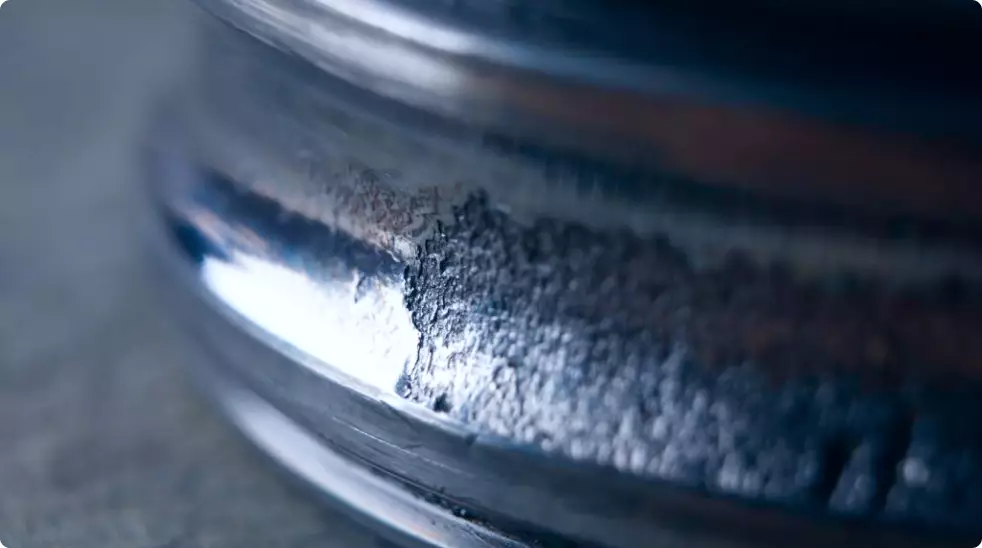
Bearings
Bearing Damage and Failure Analysis
08 March, 2026
11 min read
Most bearing failures are not random they result from overload, contamination, corrosion, brinelling, or improper mounting. The raceway condition and load pattern reveal the true cause. Pacific International Bearing Sales supports accurate diagnosis and provides correct replacement bearings through the PIB online catalog to prevent repeat failures.
Key Takeaways
- Bearings fail for identifiable mechanical reasons, not by chance.
- Raceway patterns show how the bearing was loaded and stressed.
- Replacing a bearing without correcting the cause leads to repeated downtime.
- Load direction, contamination, and lubrication condition are decisive factors.
- PIB helps match the correct bearing once the failure mechanism is understood.
The bearing service life of a rolling bearing rotating under load can fail due to material fatigue and wear at the running surfaces of rings and rolling elements. Statistically stressed bearings may be made unserviceable by plastic deformation of the contact surfaces. Premature bearing failures are attributed to other causes.
Rolling bearing damage is generally detected by:
- Unusual operational behavior
- Noise emitting from the bearings
- High friction causes less than smooth operation
- Higher than normal operating temperatures
In practice diagnosing the primary cause of damage is not always easy because it is often obscured by consequential damage.
Examining failed bearings along with an understanding of the application parameters can lead to educated conclusions. In some cases, it may be only possible to ascertain that overheating and seizure took place. In bearings suffering lesser damage after removal conclusions can be drawn from the examination of the ball and roller pathways.
Conclusions can be reached if you understand the operating conditions, loads, and lubrication.
To list all known types and causes of bearing damage would go beyond the scope of this writing so only the most important will be discussed.
Causes of bearing damage
Plastic Deformation
Ball indentations in the ring raceway. A rolling bearing subjected to excessive loading while stationary or performing small oscillating movements becomes unserviceable due to plastic deformation at the contact surfaces. The result of these indentations is that the balls received shock or impact loads or had excessive loads. In future operations, this bearing would rotate unevenly and would generally not be fit for further service.
Wear
Wear is a common cause of bearing failure. Wear occurs mainly due to dirt and foreign particles entering the bearing. Abrasive particles such as dust, sand, and grit roughen the contact surfaces. Severe wear considerably increases the bearing clearance and changes the raceway profile.
Corrosion Damage
The result of severe rust on the running surfaces is uneven and noisy operation.
Rust particles worn off by the rolling elements have an abrasive effect and generate wear. Rust pits are the starting point for subsequent flaking. Rust forms not only when water, acids, etc, penetrate the bearing but is also promoted by acidic lubricants.
Condensation is another cause for corrosion which can occur from sudden cooling of the bearing from the operating temperature in humid air environments.
Brinelling
The raceways of correctly hardened rolling bearings occasionally show indentations regularly distributed over the entire circumference, corresponding approximately, in their shape to the Hertzian contact area. As a consequence, the bearing becomes noisy and uneven in operation.
This damage is known as brinelling and may have three possible causes:
- Indentations may be a result of static overloading
- Shock loads and vibrations and fretting corrosion or false brinelling. The removal of the material originates at the periphery of the Hertzian contact area and is a consequence of the tangential friction forces
- Bearing races showing regularly distributed indentations the third possible cause is the passage of electric current
Faulty Mounting
The position of the loading zone of a bearing is determined by the direction of the externally applied forces and conditions of rotation.
The loaded zone can be recognized even after a short running time by its dull appearance and indicated whether the bearing was loaded in an intended manner. In radial bearings, point load is indicated by a track shorter than half the raceway circumference. Radial bearings subjected to axial loads show tracking offset to the raceway center. The most frequent mounting fault excessive preloading can be recognized by the track formation.
Bearing Damage Comparison Table
| Damage Mechanism | Root Cause | Surface Pattern | Operational Effect | Corrective Focus |
| Plastic Deformation | Excessive static or shock load | Ball indentations in raceway | Rough rotation | Reduce overload |
| Wear | Abrasive particles | Surface roughening | Increased clearance | Improve sealing & cleanliness |
| Corrosion | Moisture, acidic environment | Rust pits | Noise, flaking | Moisture control & lubrication |
| Brinelling | Static overload, vibration, electrical current | Regular circumferential indentations | Vibration, noise | Load isolation / electrical grounding |
| Faulty Mounting | Excess preload, improper load zone | Abnormal tracking | Heat, uneven wear | Correct installation procedure |
FAQ
What is the most common cause of bearing failure?
Overloading and contamination are among the most frequent causes. Shock loads, static overload, and abrasive particles damage raceways quickly and initiate progressive failure.
How can I tell if overload caused the damage?
Look for:
- Permanent indentations in the raceway
- Evenly spaced contact marks
- Evidence of plastic deformation
Overload damage usually shows a clear load-zone pattern.
Can a bearing fail even if it was properly lubricated?
Yes. Lubrication alone does not prevent failure if:
- Load exceeds capacity
- Contamination enters the system
- Mounting is incorrect
- Electrical current passes through the bearing
Lubrication is necessary, but not sufficient on its own.
What’s the difference between wear and brinelling?
Wear is gradual material removal from abrasive particles.
Brinelling is indentation damage from overload, vibration, or electrical discharge.
The surface pattern clearly distinguishes the two.
Is corrosion always caused by water?
Water is common, but not the only factor. Corrosion can also result from:
- Acidic lubricants
- Condensation during rapid cooling
- Humid operating environments
Rust particles then accelerate additional wear.
How long should a properly installed bearing last?
Service life depends on:
- Operating load
- Lubrication quality
- Contamination control
- Mounting accuracy
Under correct conditions, bearing life is significantly extended.
Can I continue operating equipment with early-stage damage?
Operating with visible damage increases:
- Heat generation
- Friction
- Surface fatigue
- Risk of sudden failure
Early correction prevents secondary damage.
What if the same bearing keeps failing?
Repeated failure almost always indicates an unresolved root cause such as:
- Excessive load
- Misalignment
- Contamination
- Incorrect preload
Replacing without diagnosing the cause rarely solves the problem.
Does electrical current really damage bearings?
Yes. Electrical discharge can create evenly spaced indentation patterns similar to brinelling. It must be addressed at the system level.
FAG Failure Diagnosis – Guide to Troubleshooting Wheel BearingFailures and Malfunctions
For additional information please Contact us.