Your cart is empty
 Short Rigid Couplings
 Controlflex Couplings
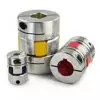 Jaw Couplings
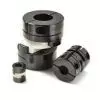 Oldham Couplings
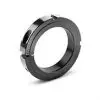 Bearing Locknuts – TCN
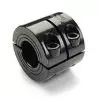 Double Wide Shaft Collars
 Heavy Duty Shaft Collars
 International Series Shaft Collars
 Keyed Shaft Collars
 Mountable Shaft Collars
 Quick Clamping Shaft Collars
 Set Screw Shaft Collars
 Thin Line Shaft Collars
 Threaded Shaft Collars – Pacific International Bearing Products
 Two-Piece Shaft Collars
 Friction Bearing Universal Joints
 Needle Bearing Universal Joints
Bearings
Bearings Used in Collaborative Robots
17 May, 2026
14 min read
Bearings used in collaborative robots need to do more than carry load. They have to keep joint motion smooth, repeatable, compact, and predictable while working in machines built for human-facing tasks. Pacific International Bearing Sales can support cobot designs with crossed roller, thin-section, angular-contact, miniature, linear-guide, and flexible bearing solutions.
Key Takeaways
- Cobots rarely use one bearing style from base to tool; main joints, wrists, reducers, and linear axes ask for different stiffness, torque, packaging, and load-handling behavior.
- Crossed roller bearings and XZU-style articulated-arm supports are strong fits for compact joints that must resist radial, axial, and moment loads at the same time.
- Thin-section and four-point contact bearings matter when joint diameter must stay large but section height, weight, and routing space stay tight.
- Angular-contact pairs, flexible bearings inside strain-wave drives, and linear guides for external axes solve different pieces of the same cobot motion stack.
- Preload, fit, sealing, and lubrication directly affect rigidity, torque, noise, wear, and service life.
What Cobots Ask a Bearing to Do
Collaborative robot systems are governed by the same safety logic as other industrial robot systems, with ISO 10218 and ISO/TS 15066 defining collaborative operation requirements and work-environment guidance. That matters here for one simple reason: the bearing is not the safety system, but it does shape how naturally, smoothly, and predictably the joint behaves in real use. If friction is inconsistent, stiffness is too low, or preload is wrong, the robot can still move, but it will feel less controlled and less repeatable. In collaborative work, that difference shows up fast.
The articulated rotary joints need compact support under combined load. Strain-wave reducers need a bearing that can deform in a controlled way inside the wave generator. External travel axes need linear guides built for straight-line positioning. PIB’s robotics and catalog reflects that same split: crossed roller bearings, thin section bearings, angular contact bearings, miniature bearings, flexible bearings, and linear guides all belong in the conversation, but not in the same place.
Before the bearing stack is right, the arm may technically hit the motion profile, but breakaway torque is harder to manage, reversals sound rougher, and repeatability drifts as friction, heat, and vibration build. After the bearing type, preload, seal strategy, and lubricant are matched to the job, the same axis starts cleaner, holds position better, runs quieter, and stays more predictable over duty cycle. SKF preload to stiffness and running accuracy, NMB ,MinebeaMitsumi warns that too little preload can reduce stiffness and invite fretting while too much can shorten life and increase noise, and NMB,MinebeaMitsumi also notes that torque varies with preload, assembly, and lubricant selection.
| Before the bearing stack is sorted out | After the bearing stack is sorted out |
| Higher breakaway feel, more servo compensation, noisier reversals | Lower and more consistent torque, smoother starts and stops |
| Joint feels stiff in the wrong way or loose in the wrong way | Stiffness is where the axis needs it, without uncontrolled play |
| Vibration, fretting, or premature wear from poor preload choice | Better running accuracy and longer usable life when preload is matched correctly |
| Contamination gets in or torque rises because sealing was chosen casually | Seal choice is matched to the real environment and friction budget |
Bearing Types That Actually Make Sense in Cobots
The most useful way to look at cobot bearings is not by brand first, but by what the joint is really doing. PIB’s online catalog offers: Crossed Roller Bearing, Thin Section, Angular Contact Ball Bearings, Four Point Contact Ball Bearings, Miniature Ball Bearings, Linear Guides & Carriages, Flexible Bearings, Spherical Plain, and Rod Ends.
Crossed roller bearings are usually the first consideration for a compact rotary cobot joint that must deal with radial load, axial thrust, and overturning moment in one relatively small package. THK states that a cross-roller ring arranges cylindrical rollers at right angles in a 90° V-groove so one bearing can receive radial, axial, and moment loads in all directions. IKO describes the same type as a compact, high-rigidity, high-accuracy answer to multi-directional loading. PIB’s current catalog examples show how compact that format can be: the IKO CRBS808AUUT1 is listed at 80 mm bore, 96 mm OD, and 8 mm width, with Class 0 JIS precision and preload T1. In plain English, this is the bearing you look at when one rotary joint has to stay stiff without turning into a bulky stack of separate parts.
XZU-style articulated-arm supports matter when the design goal is not just combined load capacity, but lower friction and higher tilting rigidity in a cobot-sized joint envelope. Schaeffler’s XZU series is explicitly described as being tailored to the requirements of lightweight robots and cobots in running behavior, rigidity, load carrying capacity, and compactness. In Schaeffler’s robotics brochure, XZU is presented as having the same cross-section as comparable crossed roller bearings, while delivering outstanding tilting rigidity and lower friction; the same brochure claims up to 30% higher tilting rigidity and about 20% less friction than crossed roller bearings of the same size. PIB’s own cobot-focused robotics content repeats that same positioning. So if a cobot builder is trying to improve controllability and dynamic response without enlarging the joint, this is a strong alternative to a classic crossed roller solution.
Thin-section and four-point contact bearings are what make slim, hollow, cable-friendly cobot joints possible. SKF’s Reali-Slim guidance explains that one thin-section series keeps the same cross-section while bore diameter increases, which is exactly why these bearings show up in designs where diameter matters more than thickness. SKF also states that a single type-X four-point contact thin-section bearing can often replace two bearings, saving space and weight while simplifying mounting. PIB’s catalog illustrates the format clearly: the Kaydon SB035XP0 is listed as a 3.5000 in × 4.1250 in × 0.3125 in thin-section four-point contact bearing in stainless steel. The packaging benefit of hollow-shaft layouts, where other components can pass through the center. This is the right type when the cobot joint has to stay narrow, light, and internally routable.
Angular-contact bearings are still one of the most practical tools in a cobot designer’s toolbox, especially around servo shafts, gearboxes, and reducer supports. NSK states that angular-contact ball bearings carry significant axial load in one direction at the same time as radial load, and are therefore typically used in pairs or multi-bearing sets. SKF adds that single-row angular-contact bearings in high-precision service are generally mounted as sets, often back-to-back or face-to-face under preload. SKF’s design guidance also notes that face-to-face arrangements are less stiff and more forgiving of misalignment, while back-to-back arrangements are stiffer under moment loading. PIB’s current product pages show real catalog detail here too: the FAG 7304-B-XL-JP is listed at 20 mm × 52 mm × 15 mm with a 40° contact angle. This type is a smart fit when the joint behaves more like a preloaded shaft support than a single large structural ring.
Flexible bearings belong inside strain-wave reducers, not as the main external articulated-arm support. Harmonic Drive explains that the wave generator in strain-wave gearing is a specially designed thin-raced ball bearing fitted onto an elliptical hub. PIB’s flexible-bearing material says the SX05T01T2 acts as the wave generator in strainwave drives and withstands radial loads, while PIB’s TPI robotics article places the SX series directly in harmonic drives, robotic actuators, and collaborative robots. That same article lists the SX05T01T2 at 25.074 mm ID, 33.9 mm OD, and 6.41 mm width, and identifies larger SX07T01T2 models as frequent fits in cobots. So when the reducer is a harmonic or strain-wave design, flexible bearings solve a very specific internal motion problem that crossed rollers and angular-contact pairs do not.
Miniature ball bearings, deep-groove bearings, linear guides, and spherical plain bearings fill the rest of the cobot motion map. SKF describes deep-groove ball bearings as low-friction, low-noise, low-vibration bearings that can accommodate radial and axial loads in both directions, which makes them useful in smaller pivots, motor shafts, tool modules, and idlers rather than the main combined-load structural joint. PIB’s NMB miniature catalog examples reinforce that supporting-role case: the NMB DDRF-4HH RA3 P25LO1 page lists a flanged miniature deep-groove bearing with metallic shields, ABEC 3 precision, ester oil lubrication, and compact dimensions of 0.2500 in × 0.6250 in × 0.1960 in. For straight-line motion, THK says linear guide mechanisms are used to move or position objects along a straight line with precision, while IKO says its Crossed Roller Way achieves very small, smooth friction resistance without stick-slip. And for misalignment or oscillating linkage points, SKF’s spherical plain guidance says these bearings are particularly suitable when alignment movement and recurrent tilting or slewing must be accommodated at relatively slow sliding speeds. That combination is why cobots often need more than one bearing type even within one arm.
Specification Tables and Selection Schemes
The fastest way to improve cobot bearing selection is to stop asking only, “What fits the housing?” and start asking, “What load path, torque budget, stiffness target, environment, and motion type does this axis actually have?” SKF and MinebeaMitsumi both tie preload directly to stiffness, torque, and running accuracy, while THK frames linear motion components around precision positioning. That is the right decision order for a cobot.
| Cobot problem or joint behavior | Bearing type that usually deserves the first look | Why it fits |
| Compact rotary joint carrying radial, axial, and moment load together | Crossed roller bearing | One compact ring can take all three load directions with high rigidity |
| Same compact rotary joint, but friction and tilting rigidity are the limiting issues | XZU-style articulated-arm bearing | Schaeffler positions XZU for lightweight robots and cobots, with higher tilting rigidity and lower friction than same-size crossed rollers |
| Large-bore hollow wrist or slim ring joint | Thin-section four-point or thin-section angular-contact bearing | Saves space and weight; four-point designs can often replace two bearings |
| Gearbox support, servo shaft, or reducer support where stiffness is tuned through preload | Angular-contact pair | Handles combined load and can be arranged back-to-back or face-to-face depending stiffness and alignment priorities |
| Harmonic or strain-wave reducer wave generator | Flexible bearing | Built to deform in a controlled way inside the wave generator while transmitting motion accurately |
| Linear extension axis or seventh axis | Linear guide, cross-roller guide, or cross-roller table | These products are built around straight-line precision, rigidity, and low-friction travel |
| Linkage with deliberate misalignment or oscillation | Spherical plain bearing or rod end | Self-aligning geometry handles misalignment and recurrent tilting well |
The table below gives examples of what you will find using the PIB website data section
| PIB catalog category | Example from the live catalog | Visible specs |
| Crossed Roller Bearing | IKO CRBS808AUUT1 | 80 mm ID, 96 mm OD, 8 mm width, Class 0 JIS, preload T1 |
| Thin Section | Kaydon SB035XP0 | 3.5000 in × 4.1250 in × 0.3125 in, four-point contact, stainless steel |
| Angular Contact Ball Bearings | FAG 7304-B-XL-JP | 20 mm bore, 52 mm OD, 15 mm width, 40° contact angle, dynamic load 4,878.35 lb |
| Four Point Contact Ball Bearings | FAG QJ305-XL-TVP | 25 mm bore, 62 mm OD, 17 mm width |
| Miniature Ball Bearings | NMB DDRF-4HH RA3 P25LO1 | 0.2500 in bore, 0.6250 in OD, 0.1960 in width, ABEC 3, metallic shield, ester oil |
| Linear Guides & Carriages | INA LFKL32-SF | 112 mm length, 86 mm width, 32 mm height |
| Flexible Bearings | TPI SX05T01T2 | 25.074 mm ID, 33.9 mm OD, 6.41 mm width; wave-generator use in strainwave drive |
A typical cobot rotary joint usually looks more like a motion stack than a single bearing.The bearing only makes sense once it is connected to the motor, reducer, output support, seals, preload method, and lubrication plan.
FAQ
What is usually the first bearing type to review for a cobot’s main rotary joints?
If the joint is compact and has to carry radial, axial, and moment loads together, crossed roller bearings are usually the cleanest first review because one bearing can support all three. If the design priority shifts toward lower friction and higher tilting rigidity in the same general envelope, XZU-style articulated-arm bearings become a serious alternative.
Can a thin-section four-point bearing replace two bearings in a cobot wrist?
Often, yes. SKF states that a single type-X four-point contact thin-section bearing can often replace two bearings, which is precisely why this type is attractive in slim wrists and hollow rotary sections. But “often” is not the same as “always”: life, deflection, seal strategy, and mounting quality still have to be checked against the real load case.
Where do angular-contact bearings belong in cobots?
Usually around servo shafts, reducer supports, and other shaft-like bearing arrangements where preload is part of the stiffness strategy. NSK and SKF both describe angular-contact bearings as combined-load bearings typically used in pairs, and SKF distinguishes the back-to-back arrangement as the stiffer answer under moment load. That makes them especially useful where the cobot joint acts more like a precision shaft support than a large structural ring.
Are seals always the right answer for cobot bearings?
Not automatically. Seals keep contaminants out and lubricant in, but SKF notes that seals influence friction, which means they affect the torque budget too. In a clean internal joint, a shielded or open solution may make more sense if low torque is the priority. In dusty, wet, or dirty automation, better sealing usually wins. The right choice depends on the environment and the motion budget, not on a blanket rule.
Does PIB carry the bearing types cobot builders actually compare?
Yes. PIB’s catalog and robotics pages show the exact types that map to real cobot design work: crossed roller bearings, thin section bearings, four-point contact ball bearings, angular contact ball bearings, miniature ball bearings, linear guides and carriages, flexible bearings, spherical plain bearings, and rod ends.
Find the Right Bearing Faster
If you are narrowing options right now, the PIB online catalog is the right place to start. PIB also offers engineering support, custom designs, JIT programs, volume pricing, relubrication services, and B2B tools that fit OEM workflows.
For bearing solutions that support accurate, repeatable cobot performance, explore the PIB online catalog or call PIB at (800) 228-8895. Our team can help you identify the right components for your application.