Your cart is empty
 Short Rigid Couplings
 Controlflex Couplings
 Jaw Couplings
 Oldham Couplings
 Bearing Locknuts – TCN
 Double Wide Shaft Collars
 Heavy Duty Shaft Collars
 International Series Shaft Collars
 Keyed Shaft Collars
 Mountable Shaft Collars
 Quick Clamping Shaft Collars
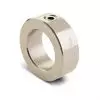 Set Screw Shaft Collars
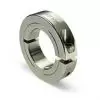 Thin Line Shaft Collars
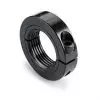 Threaded Shaft Collars – Pacific International Bearing Products
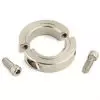 Two-Piece Shaft Collars
 Friction Bearing Universal Joints
 Needle Bearing Universal Joints
Bearings
Driveline Seals: Protecting Lubrication, Bearings, and Power-Transmission Components
03 August, 2026
35 min read
A driveline seal has a simple job on paper: keep lubricant inside the assembly and contamination outside. In service, that job becomes more demanding.
Transmission shafts, transfer cases, differentials, pinion shafts, axle shafts, and wheel ends all operate under combinations of rotation, heat, vibration, shaft movement, lubricant splash, and environmental exposure. The seal must maintain contact with the rotating surface without creating excessive friction or wearing a groove into the shaft.
When the seal is correct for the application and the surrounding components are in good condition, the driveline retains lubricant, runs cleaner, and delivers more predictable service life. When the seal is incorrect — or when shaft movement, bearing wear, contamination, or installation damage is ignored — the first visible oil leak may be only one part of the problem.
Pacific International Bearing Sales supports customers working with bearings and power-transmission components where reliability depends on the complete mechanical system. In driveline applications, the seal, shaft, lubricant, bearing arrangement, housing, and operating environment must work together.
What Is a Driveline Seal?
Driveline seals are used at points where a rotating shaft passes through a transmission, differential, axle, transfer case, wheel end, or related housing.
Common locations include:
- Transmission input and output shafts
- Differential pinion shafts
- Axle shafts
- Transfer-case shafts
- Wheel hubs and wheel ends
- Power take-off units
- Gear-reduction units
- Electric-drive assemblies
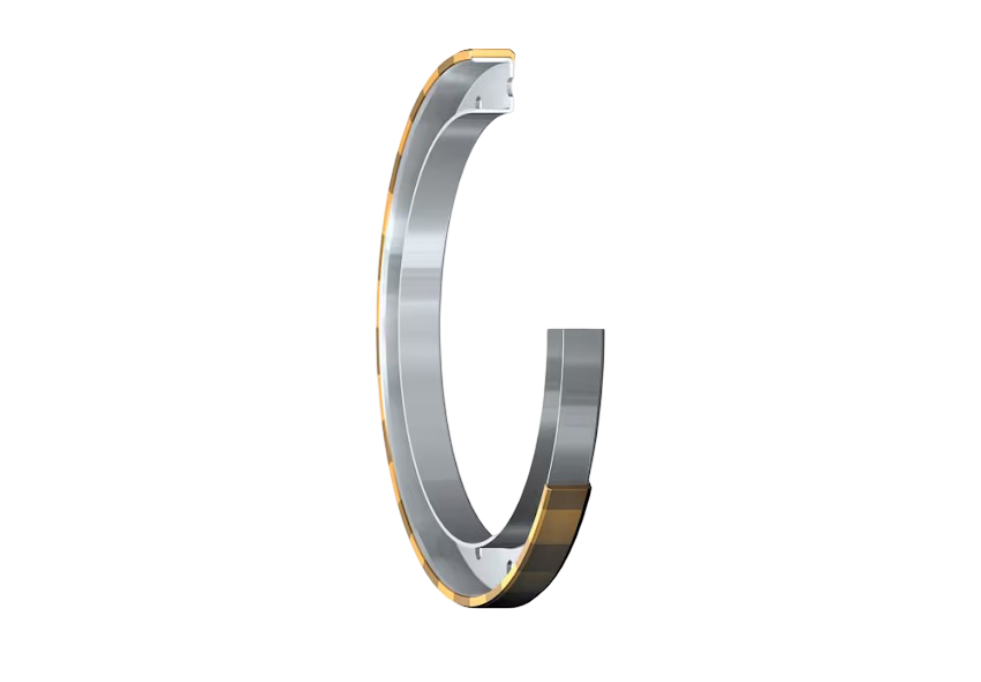
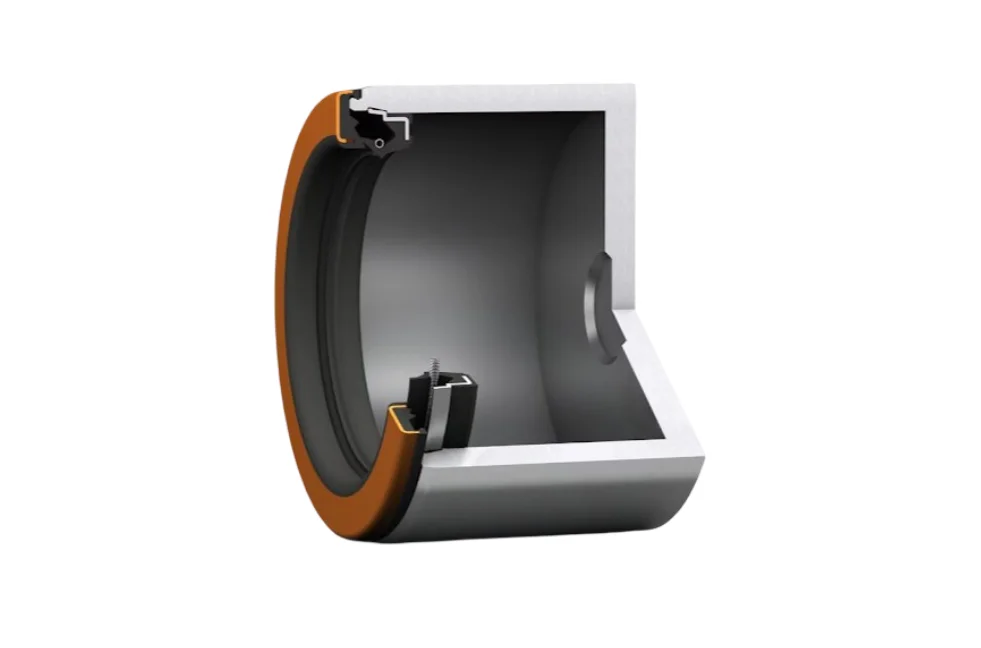
Most of these locations use some form of radial shaft seal. The seal is installed in a stationary housing while its primary lip runs against the rotating shaft, flange, sleeve, or wear surface.
The oil-side lip retains the lubricant. Many designs also include an auxiliary dust lip or exclusion feature that helps prevent dirt, moisture, and road debris from reaching the primary sealing contact.
Some applications use more complex arrangements, including unitized seals, cassette seals, multiple-lip designs, face seals, or integrated wear surfaces. The correct arrangement depends on the speed, lubricant, contamination level, shaft movement, available space, and expected service conditions.
How a Radial Driveline Seal Works
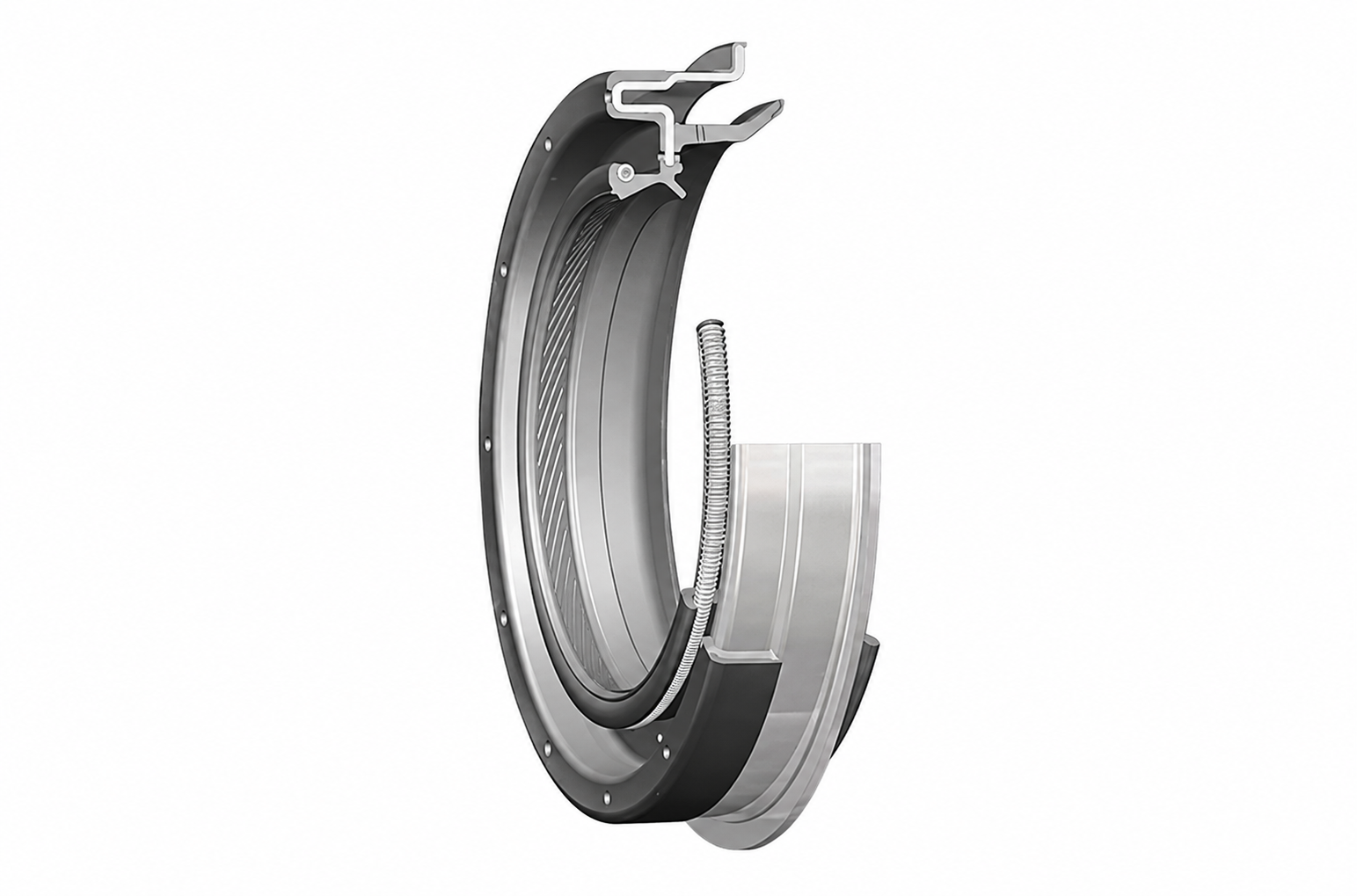
A typical radial shaft seal includes an elastomeric or polymer sealing element, a reinforcing case, and sometimes a garter spring.
The primary sealing lip contacts the shaft along a narrow running band. That contact must be controlled carefully.
Too little contact pressure can allow lubricant to migrate beneath the lip. Too much contact pressure increases friction, heat generation, and wear.
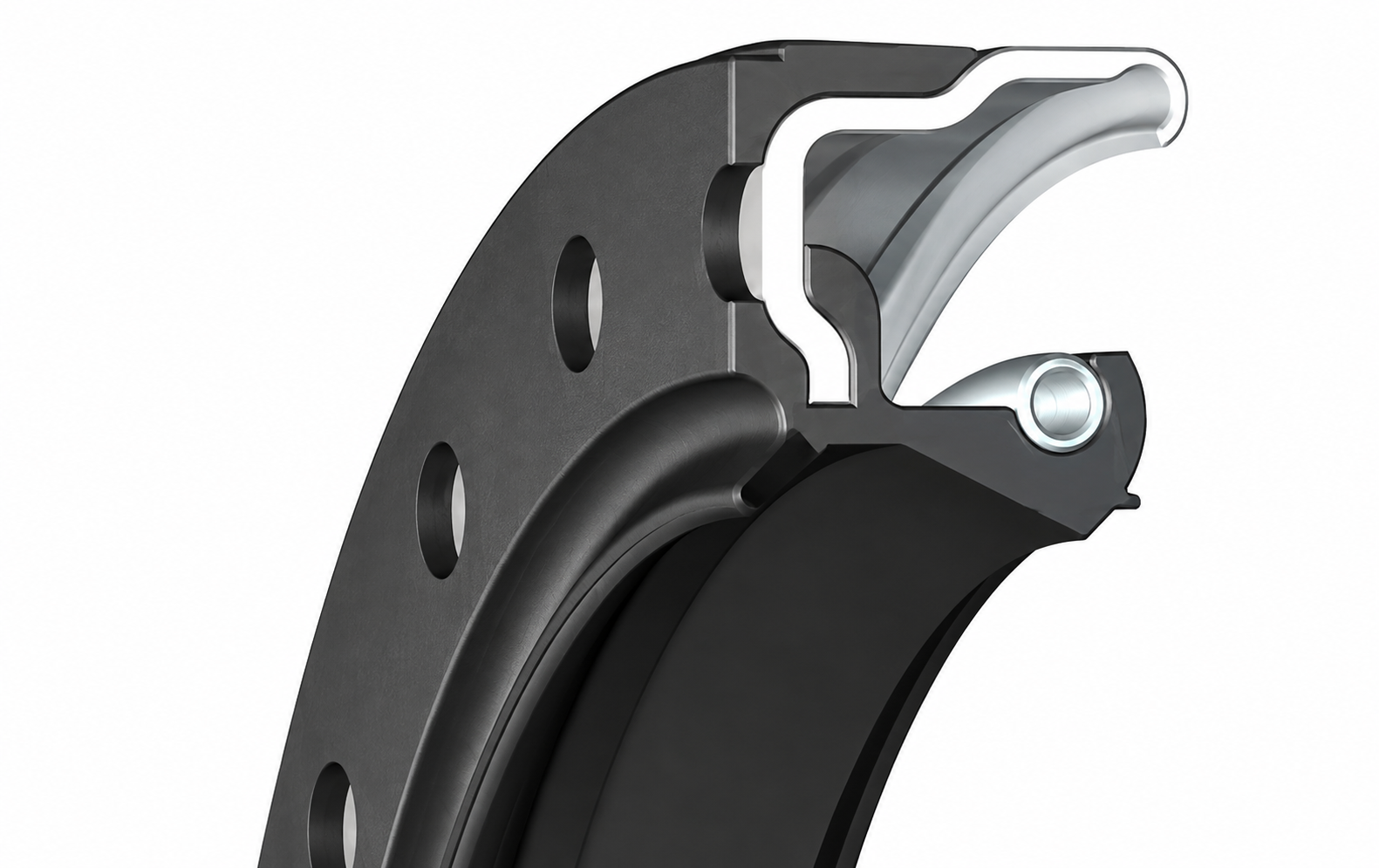
The garter spring, when used, helps maintain lip contact as the material ages and the running surface experiences minor wear. The seal geometry and material elasticity also allow the lip to follow limited shaft movement.
A thin lubricant film is required at the contact area. The seal should not run completely dry. The film reduces friction and protects both the lip and the shaft surface, while the lip geometry works to keep the lubricant on the oil side of the assembly.
This balance is important. A driveline seal is not simply a tight barrier pressed against a shaft. It is a controlled tribological interface between the seal lip, lubricant, and rotating surface.
Where Driveline Seals Are Used
Although driveline seals share the same general purpose, operating conditions vary considerably by location.
Transmission Input and Output Shaft Seals
Transmission seals retain transmission fluid where rotating shafts enter or leave the housing.
Input shaft seals may operate near the clutch, torque converter, or motor interface. Output shaft seals may be exposed to driveline movement, changing shaft angles, external contamination, and vibration from the connected driveshaft or coupling.
A leak in either location can reduce lubricant volume and contaminate nearby components. It may also indicate shaft movement, worn bearings, a damaged sealing surface, or excessive housing pressure.
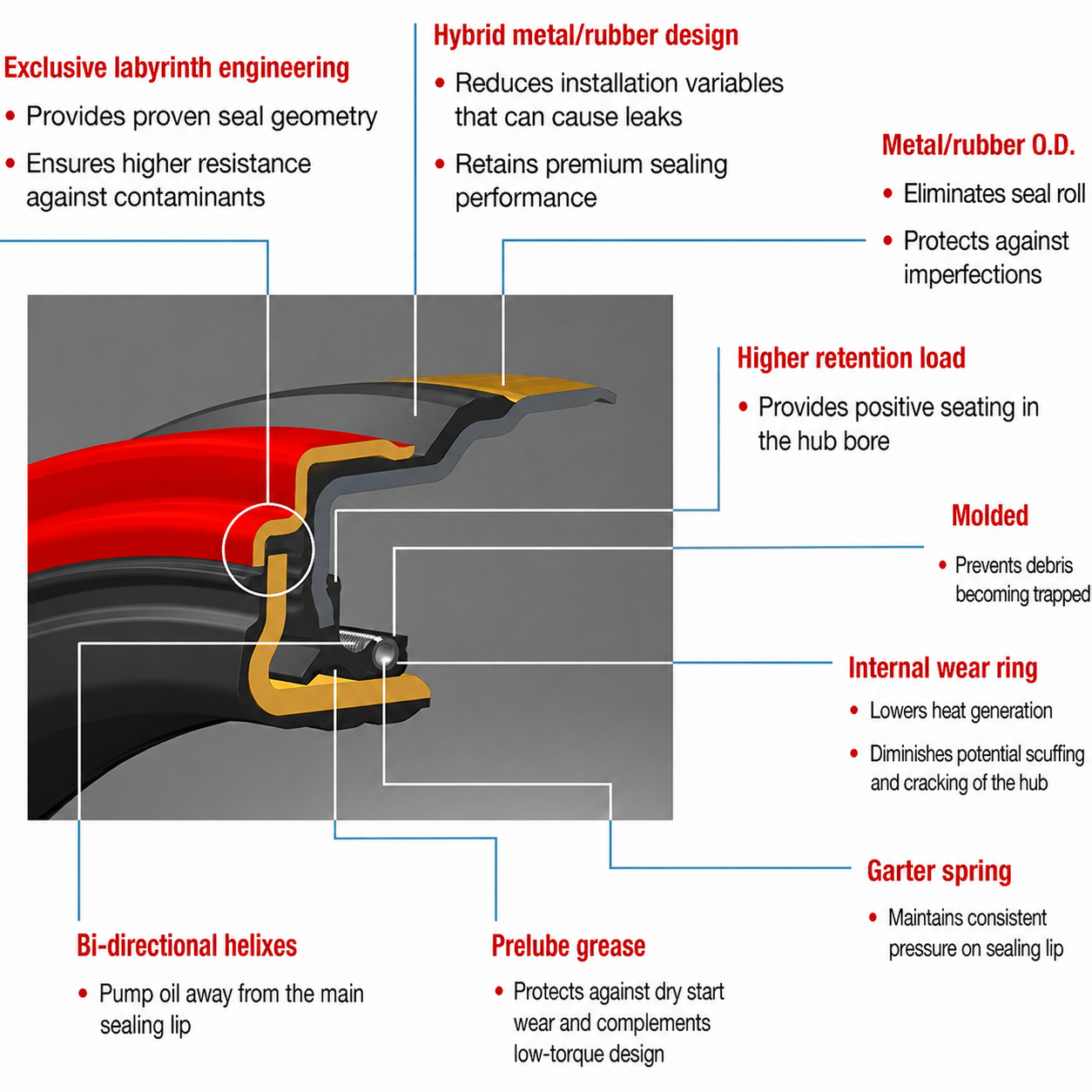
Differential Pinion Seals
The pinion seal operates where the driveshaft flange or yoke connects to the differential pinion shaft.
This location combines shaft rotation, gear lubricant, torque changes, vibration, and exposure to road debris and moisture. The seal must also tolerate the condition of the flange or yoke surface on which it runs.
A new pinion seal installed over a worn groove may begin leaking again because the underlying running surface was not corrected.
Axle Shaft Seals
Axle seals retain lubricant where the axle shaft passes through the differential or axle housing.
Depending on the design, the seal may be located close to the differential, near the wheel end, or within a hub assembly. Shaft deflection, bearing condition, contamination, and installation alignment can all affect seal performance.
An axle seal leak can allow lubricant to reach brake components or leave the differential with an inadequate lubricant level.
Transfer-Case Seals
Transfer cases use seals around input, output, and selector shafts. These seals may experience changing torque distribution, vibration, shaft movement, and contamination from off-road or severe-duty operation.
The correct seal must be compatible with the specified fluid and capable of maintaining contact throughout the expected speed and temperature range.
Wheel-End and Hub Seals
Wheel-end seals operate near bearings that may carry substantial radial and axial loads. These seals must retain bearing lubricant while excluding water, dust, road salt, and abrasive debris.
In heavy equipment, agricultural machinery, and commercial vehicles, a wheel-end seal may face severe contamination and long operating periods. Unitized or multi-lip designs are often used where a basic single-lip seal would not provide enough environmental protection.
Electric Driveline Seals
Electric-drive units may combine motors, reduction gears, bearings, and power electronics within a compact assembly.
These systems can operate at high rotational speeds and may use specialized lubricants. Low friction, thermal stability, controlled leakage, and compatibility with the lubricant remain important.
The absence of a conventional engine does not remove the need for effective driveline sealing. It changes the speed, temperature, packaging, and fluid conditions the seal must handle.
Driveline Seal Types
Selecting a driveline seal begins with understanding how each design manages lubricant, contamination, friction, and shaft movement.
Conventional Radial Lip Seals
A conventional radial lip seal typically uses a molded elastomeric lip bonded to or assembled with a metal case. A garter spring may maintain contact pressure around the shaft.
These seals are widely used because they are compact and can provide effective lubricant retention when the shaft, housing, and operating conditions are suitable.
Dual-Lip Seals
Dual-lip seals add an auxiliary lip on the air side of the primary seal.
The additional lip helps reduce the entry of dust and splash contamination. It does not automatically make the seal suitable for severe mud, water immersion, or high concentrations of abrasive debris. The contamination level and lip lubrication still need to be considered.
Unitized and Cassette Seals
A unitized seal combines the sealing element with its own running surface or wear sleeve. The rotating and stationary elements are supplied as a matched assembly.
This can reduce dependence on the condition of the original shaft or hub surface. Unitized designs may also incorporate multiple exclusion features for demanding wheel-end, axle, and off-highway applications.
Correct installation depth and orientation remain important because the rotating and stationary sections must not be damaged or separated during assembly.
PTFE Lip Seals
PTFE-based seals are used where low friction, chemical resistance, high speed, or a broad temperature capability is required.
Unlike many elastomer seals, a PTFE lip may be formed or installed with a specific orientation against the shaft. Some designs do not use a garter spring.
PTFE seals can perform well, but they are less forgiving of incorrect handling. The lip can be damaged by folding, scratching, or installing it dry when the design requires a particular preparation procedure.
Exclusion and Auxiliary Seals
In highly contaminated environments, the primary oil seal may be supported by additional exclusion features, including dust lips, labyrinths, flingers, shields, or external deflectors.
These components reduce the amount of contamination that reaches the main sealing lip. Keeping debris away from the contact zone is usually more effective than asking the primary seal to handle abrasive material continuously.
Seal Material Selection
The seal material must remain stable in contact with the lubricant and throughout the driveline’s operating temperature range.
A material that works well with one gear oil or transmission fluid may not perform the same way with another formulation. Additives, synthetic base oils, temperature, and exposure time can change the way an elastomer behaves.
Nitrile Rubber
Nitrile rubber is widely used for general oil-sealing applications. It offers useful oil resistance and practical performance in many moderate-temperature environments.
It may not be the best choice for sustained high temperatures, aggressive fluids, or applications requiring extended resistance to heat and oxidation.
Hydrogenated Nitrile Rubber
Hydrogenated nitrile generally provides better heat, oxidation, and wear resistance than conventional nitrile.
It may be considered where the driveline operates at higher temperatures or under more demanding duty cycles, provided it is compatible with the lubricant and surrounding environment.
Polyacrylate Elastomers
Polyacrylate materials are used in applications involving hot oils and transmission fluids. They can provide useful resistance to heat and oil aging.
Their behavior at low temperatures and in contact with water or certain chemicals must be evaluated for the actual application.
Fluoroelastomers
Fluoroelastomer seals are often used where higher temperatures and demanding lubricant or chemical exposure are present.
They are not automatically the best choice for every driveline. Low-temperature flexibility, shaft speed, friction, cost, and fluid compatibility still need to be considered.
PTFE-Based Materials
PTFE-based sealing lips offer low friction and broad chemical resistance. They may be useful in high-speed or temperature-sensitive applications.
Performance depends on the seal design, lip preparation, shaft finish, alignment, and installation procedure. Material capability cannot compensate for damaged hardware or incorrect assembly.
Shaft Condition Controls Seal Performance
The seal lip runs directly against the shaft, yoke, flange, or sleeve. That running surface is part of the sealing system.
Installing a new seal without inspecting the surface can result in a repeat leak even when the replacement seal is correct.
Wear Grooves
A seal lip can gradually wear a groove into the running surface. Once that groove becomes pronounced, the new lip may not establish uniform contact.
The repair may require a replacement flange, yoke, or shaft, or an approved wear sleeve that provides a new running surface.
Simply pushing the new seal deeper or shallower to move the lip to another position may work in some assemblies, but only when the housing and seal design allow it. Installation depth should not be changed without confirming the intended position.
Scratches and Corrosion
Circumferential wear patterns are less likely to create a direct leakage path than scratches running along the shaft axis. Axial scratches can carry lubricant beneath the lip.
Corrosion pits create similar interruptions in the sealing line. A surface that feels rough, catches a fingernail, or shows coating damage should be examined before a new seal is installed.
Surface Finish
The shaft must be smooth enough to avoid cutting the lip while retaining the microscopic lubricant film required for operation.
A surface that is too rough increases wear. An unsuitable machining pattern may pump fluid across the lip rather than keeping it inside the housing.
The surface should also be free from burrs, sharp edges, and directional lead that could interfere with sealing.
Shaft Runout
Runout causes the shaft surface to move toward and away from the seal lip during each revolution. The lip must follow that movement while maintaining contact.
Excessive runout can produce uneven wear, localized heat, and leakage. Replacing the seal does not correct a bent shaft, damaged flange, improper assembly, or bearing-related movement.
Bearing Condition and Driveline Seal Life
A driveline seal may be the first component to show a problem that began elsewhere.
Bearings control the position of transmission shafts, pinion shafts, axle shafts, and wheel hubs. When a bearing develops excessive internal clearance, wear, damage, or loss of preload, the shaft can move beyond the seal’s ability to follow it.
The sequence is common:
- Bearing condition allows increased radial or axial shaft movement.
- The seal lip no longer maintains uniform contact.
- Friction and wear become concentrated on part of the lip.
- Lubricant begins to pass the sealing interface.
- Contamination may enter as lubricant leaves.
- Bearing and gear damage accelerates as lubrication conditions deteriorate.
In this situation, replacing only the seal treats the visible symptom.
Before the repair, the assembly leaked because the shaft was moving excessively. After the correct bearing, shaft, and seal conditions are restored, the lip can remain centered on its intended running surface and control lubricant more consistently.
This is why repeated seal leakage should trigger an inspection of shaft play, bearing condition, mounting surfaces, and related driveline components.
Pressure Can Push Lubricant Past the Seal
Many radial shaft seals are intended to operate with limited internal pressure. They should not be treated as general-purpose high-pressure seals unless the design specifically supports that condition.
Pressure can develop inside a transmission, axle, or differential because of:
- Restricted or blocked breathers
- Thermal expansion of the lubricant and internal air
- Excessive lubricant fill
- Lubricant foaming
- High-speed component movement
- Incorrect vent routing
- External contamination obstructing the vent
When housing pressure rises, it increases the force acting against the sealing lip. Lubricant may be pushed beneath the lip even when the seal and shaft appear to be in acceptable condition.
A replacement seal may leak again if the breather remains blocked.
Checking vent operation is a practical part of diagnosing a driveline leak, especially when several seals begin leaking in the same assembly.
Contamination Changes the Failure Pattern
Driveline seals often operate close to the road, wheels, underbody, or exposed machine structure. Dirt, water, salt, fibers, crop material, and metal particles can collect around the seal.
Abrasive debris can wear the exclusion lip, score the running surface, and eventually reach the primary sealing lip.
Water can damage the lubricant, promote corrosion, and shorten bearing life. In applications with repeated washdown or water immersion, a basic dust lip may not provide adequate protection.
The seal arrangement should reflect the real environment. A clean indoor gearbox and an off-highway axle may use similar lubricant-retention principles, but they do not face the same contamination load.
Heat, Speed, and Friction
Seal lip friction generates heat at the shaft interface. As rotational speed increases, the lip travels across more shaft surface in a given time and generates more heat.
The surrounding lubricant removes some of that heat, but the actual lip temperature may be higher than the bulk lubricant or housing temperature.
Excessive heat can:
- Harden or soften the seal material
- Accelerate material aging
- Reduce lip elasticity
- Degrade the lubricant film
- Form deposits near the sealing contact
- Increase shaft wear
- Shorten seal life
High shaft speed does not necessarily mean that a seal will fail. It means the seal material, lip design, shaft diameter, surface finish, lubrication, and temperature conditions must be appropriate for the speed.
A seal selected only because it fits the housing may not be designed for the actual surface speed or thermal conditions.
What Happens When the Wrong Driveline Seal Is Used?
An incorrect seal may fit into the housing and still be unsuitable for the application.
Problems can result from the wrong lip material, spring design, pressure capability, contamination protection, case construction, or running-surface arrangement.
Before the correction, the assembly may show:
- Repeated lubricant leakage
- High seal temperature
- Rapid lip wear
- A worn shaft groove
- Lubricant reaching brakes or clutches
- Dirt or water entering the housing
- Reduced bearing and gear life
- Increasing maintenance frequency
- Unexpected downtime
After the seal is matched to the lubricant, speed, temperature, shaft condition, pressure, and contamination level, the improvement is more than the absence of an oil spot.
The driveline retains the correct lubricant volume, bearings and gears operate in a cleaner environment, friction becomes more predictable, and maintenance intervals are less likely to be interrupted by another repeat leak.
Common Causes of Driveline Seal Failure
Most driveline seal failures involve one or more of the following conditions.
Installation Damage
A seal lip can be cut by splines, keyways, threads, sharp shaft edges, or an incorrect installation tool.
The outside diameter can also be distorted if the seal is driven unevenly or struck directly. A seal that enters the housing crooked may not establish a reliable static or dynamic sealing line.
Incorrect Installation Direction
The primary lip must face the lubricant or pressure side specified by the design.
Installing the seal backward can reduce lubricant retention and expose the wrong side of the lip to the operating environment.
Dry Start-Up
A sealing lip that requires lubrication can be damaged during the first shaft rotations if it is installed dry.
Lubrication practices depend on the seal type. Some elastomer seals require the lip to be lubricated, while certain PTFE designs have different installation requirements. The procedure should follow the seal design rather than a universal assumption.
Damaged Running Surface
A worn groove, corrosion pit, scratch, burr, or rough sleeve can damage the new lip and create a leakage path.
Excessive Shaft Movement
Bearing wear, incorrect preload, shaft deflection, misalignment, or runout can move the surface beyond the seal’s tracking capability.
Blocked Breather
Internal pressure can push lubricant past a properly installed seal.
Incorrect Lubricant Level
Overfilling increases churning, heat, and pressure. Underfilling may leave bearings and gears without adequate lubrication.
Material Incompatibility
The seal may swell, shrink, harden, soften, or crack after exposure to an unsuitable fluid or additive package.
Excessive Temperature
High temperature accelerates material aging and can reduce the stability of the lubricant film at the lip.
Contamination
Abrasive particles can damage the lip and running surface. Water can affect the lubricant and promote corrosion inside the assembly.
Diagnosing a Driveline Leak
Replacing a seal without confirming the leak source can lead to unnecessary work.
Oil may travel along a housing, driveshaft, axle tube, or rotating flange before it becomes visible. Airflow beneath a vehicle can spread lubricant across a wide area.
Start by cleaning the assembly and identifying the highest point where fresh lubricant appears.
Then inspect:
- The seal contact area
- The shaft, yoke, flange, or sleeve
- Bearing play and shaft movement
- Housing condition
- Breather operation
- Lubricant level
- Lubricant type
- Fastener and flange condition
- Nearby gaskets and housing joints
- Installation depth and seal orientation
The fluid itself can provide useful information. Gear oil, transmission fluid, grease, engine oil, and hydraulic fluid may have different color, viscosity, and odor characteristics.
A leaking seal should not automatically be blamed until the fluid source is confirmed.
Installation Practices That Improve Reliability
Good installation does not correct an unsuitable seal, but poor installation can ruin the correct seal before the assembly returns to service.
Practical installation steps include:
- Confirm the seal part and construction before removing it from its packaging.
- Inspect the housing bore for corrosion, burrs, and previous installation damage.
- Inspect the complete running surface under good lighting.
- Protect the lip from splines, threads, and sharp shoulders.
- Use an installation tool that applies force to the correct part of the seal.
- Drive the seal squarely into the housing.
- Install it to the specified depth.
- Follow the correct lubrication procedure for the seal design.
- Avoid hammering directly on the sealing element.
- Verify that garter springs and auxiliary lips remain in position.
- Check the breather and lubricant level before operation.
- Rotate the shaft carefully after assembly when the design permits it.
Cleanliness matters throughout the process. Dirt introduced during installation begins circulating with the lubricant as soon as the driveline operates.
Reducing the Total Cost of Driveline Seal Problems
The price of the seal itself is often small compared with the cost of the repair.
Accessing an output shaft, pinion, axle, or wheel-end seal may require significant disassembly. A leak can also damage brake linings, clutches, bearings, gears, electrical components, or surrounding equipment.
The real cost may include:
- Labor and disassembly
- Replacement lubricant
- Cleaning and disposal
- Related component replacement
- Equipment or vehicle downtime
- Repeat repair work
- Lost production or service time
The lowest-cost approach is not necessarily the least expensive seal. It is the repair that addresses the complete cause of leakage and avoids doing the same work twice.
That means checking the running surface, bearings, pressure, lubricant, contamination protection, and installation conditions before the assembly is closed.
Improving Driveline Seal Service Life
Reliable sealing comes from keeping the operating conditions within the range the seal was designed to handle.
The most effective practices are straightforward:
- Use the lubricant specified for the assembly.
- Maintain the correct lubricant level.
- Keep breathers clean and functional.
- Correct bearing wear and excessive shaft movement.
- Repair or replace worn running surfaces.
- Use appropriate exclusion features in contaminated environments.
- Protect seals from damage during installation.
- Confirm material compatibility with the lubricant and temperature.
- Avoid changing installation depth without verifying the design.
- Investigate recurring leaks instead of repeatedly replacing the seal.
- Inspect related components whenever lubricant reaches brakes or clutches.
These steps support more than seal life. They help protect bearings, gears, splines, and other driveline components that depend on clean, stable lubrication.
Frequently Asked Questions About Driveline Seals
What is the main purpose of a driveline seal?
A driveline seal retains lubricant around a rotating shaft while helping exclude dirt, moisture, and other contamination. It protects the lubrication conditions needed by bearings, gears, and related power-transmission components.
Where are driveline seals commonly installed?
They are commonly used at transmission input and output shafts, differential pinions, axle shafts, transfer cases, wheel hubs, power take-off units, and electric-drive assemblies.
Why does a new driveline seal sometimes begin leaking quickly?
A repeat leak may be caused by a worn shaft groove, excessive bearing play, shaft runout, incorrect installation, a blocked breather, material incompatibility, or an incorrectly identified leak source.
Replacing the seal alone does not correct these conditions.
Can bearing wear cause a driveline seal leak?
Yes. Worn or incorrectly adjusted bearings can allow radial or axial shaft movement. If that movement exceeds the seal lip’s ability to follow the shaft, the contact pattern becomes uneven and lubricant may escape.
Should a seal be replaced if there is a groove in the shaft?
The groove should be evaluated before the new seal is installed. Depending on the assembly, the correct repair may involve replacing the shaft, flange, or yoke, or installing a suitable wear sleeve.
A new lip running in the same damaged groove may not seal reliably.
Can a blocked differential or transmission breather cause leakage?
Yes. Heat causes the fluid and internal air to expand. If the breather cannot release pressure, lubricant may be forced past shaft seals, gaskets, or other housing joints.
Is a small oil film around a seal normal?
Some seals operate with a microscopic lubricant film at the lip, but visible wetness, droplets, or lubricant spreading across the housing should be investigated.
The assembly should be cleaned and monitored to confirm the source and rate of leakage.
Why is seal orientation important?
The primary sealing lip is designed to face the lubricant or pressure side. Reversing the seal can reduce its ability to retain fluid and may expose the lip geometry incorrectly.
Can any seal material be used with synthetic oil?
No. Synthetic oil is a broad category, and compatibility depends on the base fluid, additive package, operating temperature, and specific seal compound.
Compatibility should be confirmed for the actual lubricant rather than assumed from the word “synthetic.”
Are dual-lip seals always better than single-lip seals?
Not necessarily. An auxiliary lip can improve contamination exclusion, but it also adds contact and may generate additional friction or heat.
The appropriate design depends on the contamination level, speed, lubrication, and available space.
What should be checked when the same driveline seal fails repeatedly?
Inspect the shaft or flange surface, bearing condition, runout, alignment, breather, lubricant level, seal orientation, housing bore, installation method, temperature, and contamination exposure.
A repeated leak usually means the underlying operating condition has not been corrected.
Final Considerations
Driveline seals are small components positioned at critical boundaries. They separate lubricated bearings and gears from an environment that may contain water, dirt, road debris, and abrasive particles.
Reliable performance depends on more than installing a seal with the correct basic fit. The material, lip design, shaft surface, lubricant, temperature, speed, pressure, bearing condition, and contamination protection all influence the result.
When the wrong seal or an incomplete repair is used, leakage often returns and related driveline components remain at risk. When the complete system is evaluated, the seal can retain lubricant more consistently, protect the bearings and gears, and reduce the likelihood of repeated downtime.
The PIB online catalog is a practical place to review available bearings and power-transmission components, compare product details, and prepare a quote request. For driveline applications involving recurring leaks, unusual operating conditions, or bearing-related shaft movement, PIB can help review the application and identify an appropriate component and sourcing approach.
For help matching the seal to the job, call PIB at (800) 228-8895.