Your cart is empty
 Short Rigid Couplings
 Controlflex Couplings
 Jaw Couplings
 Oldham Couplings
 Bearing Locknuts – TCN
 Double Wide Shaft Collars
 Heavy Duty Shaft Collars
 International Series Shaft Collars
 Keyed Shaft Collars
 Mountable Shaft Collars
 Quick Clamping Shaft Collars
 Set Screw Shaft Collars
 Thin Line Shaft Collars
 Threaded Shaft Collars – Pacific International Bearing Products
 Two-Piece Shaft Collars
 Friction Bearing Universal Joints
 Needle Bearing Universal Joints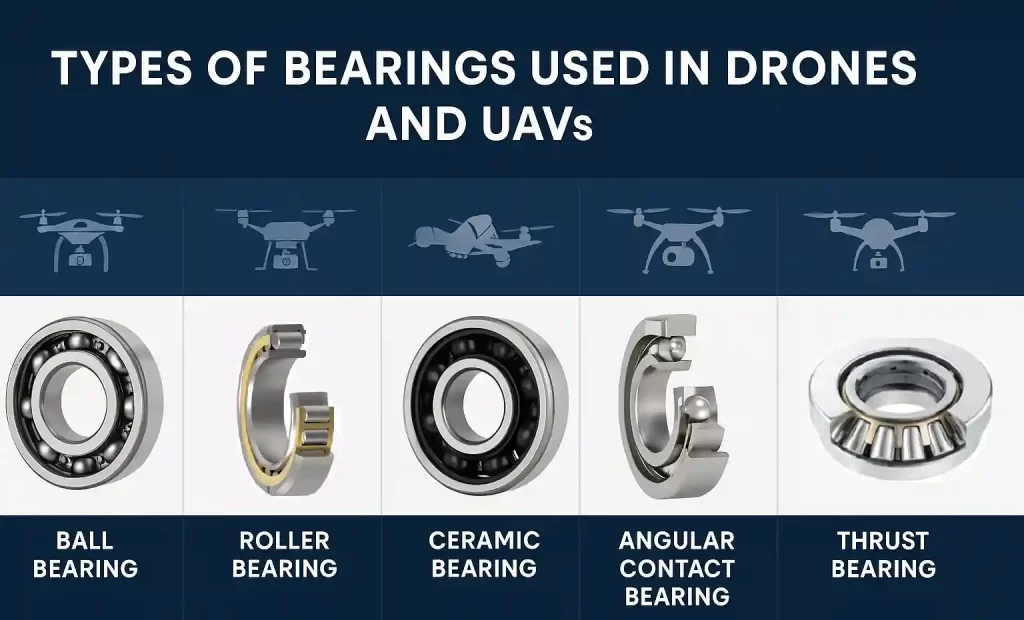
Bearings
Drone motor bearings
10 August, 2026
39 min read
Drone motor bearings operate in a small package, but they have a direct effect on propulsion efficiency, vibration, noise, motor temperature, and service life.
A typical drone motor changes speed constantly. It accelerates rapidly during takeoff, adjusts torque repeatedly to stabilize the aircraft, and may decelerate hard during maneuvering or landing. At the same time, its bearings must support the rotating assembly, carry propeller thrust, resist vibration, and maintain accurate alignment between the rotor and stator.
When the bearing system is working correctly, the motor runs smoothly and produces repeatable thrust. When the bearing is worn, contaminated, overloaded, or incorrectly specified, the first signs may be increased noise, rotor movement, heat, or higher current draw. If the condition continues, the motor can lose efficiency and become less predictable in flight.
Pacific International Bearing Sales supplies miniature and precision bearings for electric motors, UAVs, robotics, and other compact rotating equipment. For drone motors, PIB looks beyond the basic bearing size to factors such as speed, load direction, internal clearance, lubrication, closure type, shaft condition, and operating environment.
What Do Drone Motor Bearings Do?
Drone motor bearings support the shaft and rotating motor assembly while allowing the rotor to turn with low friction.
In an electric motor, bearing accuracy helps maintain the position of the rotor relative to the stator. This is important because the air gap between the magnets and stator must remain controlled while the motor is running.
The bearing system performs several jobs:
- Supports the rotor and propeller assembly
- Maintains shaft alignment
- Carries radial and axial loads
- Controls rotor runout
- Limits unwanted shaft movement
- Reduces friction
- Helps control vibration and mechanical noise
- Maintains stable operation through rapid speed changes
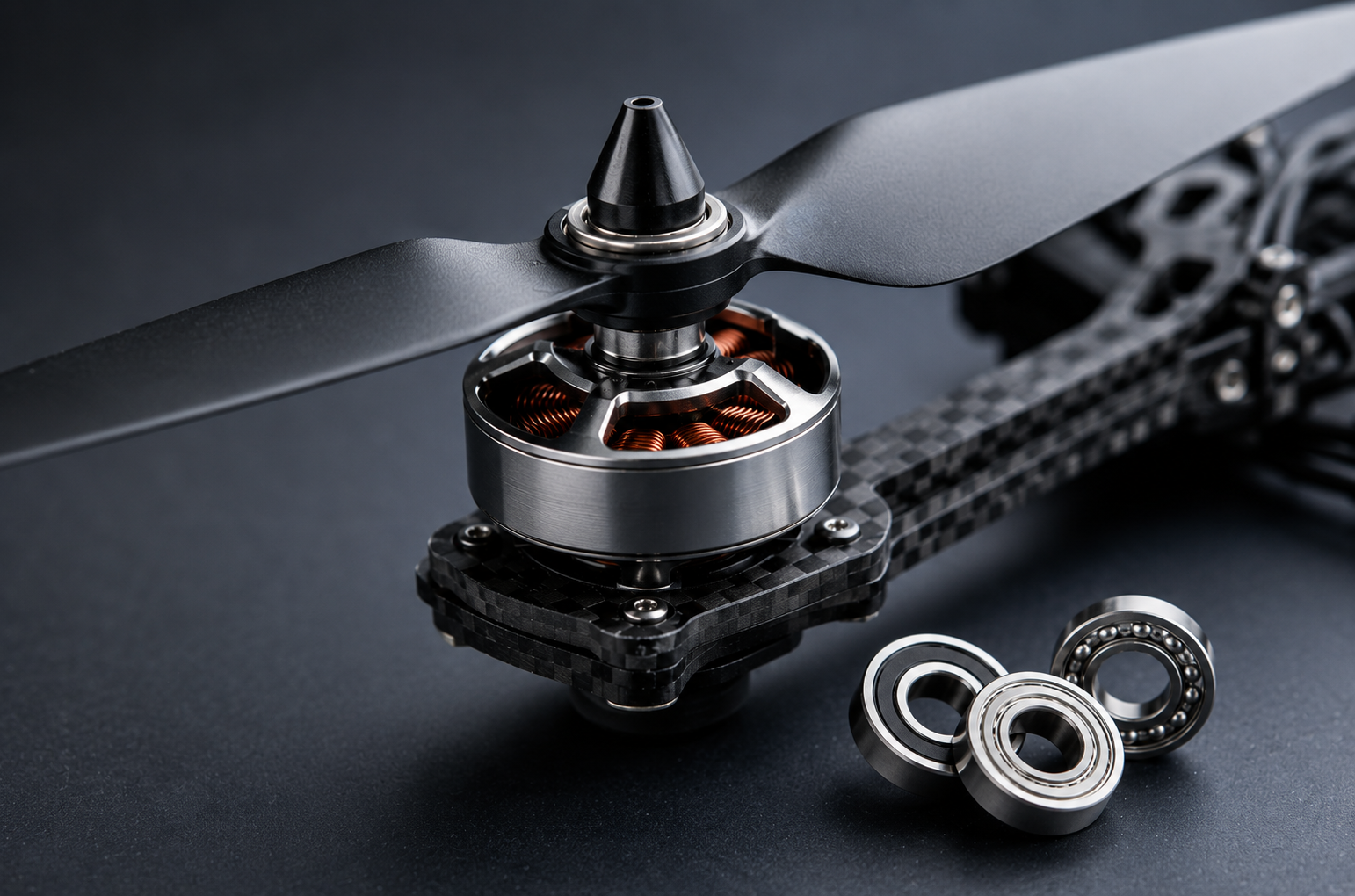
The exact bearing arrangement depends on the motor design. Many brushless drone motors use two miniature deep-groove ball bearings separated along the shaft. The spacing between the bearings helps support the rotating assembly and resist the moment created by an overhung propeller.
Other motor architectures may use different bearing positions, sizes, or configurations. Larger propulsion motors, geared systems, and specialized UAV designs may require bearing arrangements that differ significantly from compact outrunner motors.
Where the Bearings Are Located in a Drone Motor
Most small multirotor drones use brushless permanent-magnet motors. Outrunner motors are common because they can produce useful torque in a compact package.
In an outrunner motor, the outer bell carries the magnets and rotates around the stationary stator. The shaft and bell assembly are supported by bearings mounted in the stator base or bearing tube.
A common arrangement uses:
- One bearing close to the propeller side
- A second bearing lower in the motor housing
- A shaft passing through both bearings
- A retaining feature such as a clip, collar, screw, or shoulder
The upper bearing often sees a larger share of the propeller-related moment because it is closer to the propeller. The lower bearing helps maintain shaft alignment and supports the opposite end of the rotating assembly.
Bearing spacing matters. Wider spacing generally gives the assembly more leverage to resist shaft tilt, although motor size, housing stiffness, shaft diameter, and weight limitations still control the final design.
A bearing cannot correct a flexible shaft, distorted housing, or badly balanced rotor. It performs best when the entire motor structure holds the bearing rings in their intended position.
Loads Acting on Drone Motor Bearings
Drone motor bearings do not carry only one steady radial load. They operate under a changing combination of forces.
Radial load
Radial load acts perpendicular to the motor shaft.
It can come from:
- Rotor and propeller imbalance
- Shaft deflection
- Magnetic forces
- Maneuvering
- Motor or arm vibration
- Misalignment
- External impact
Even a small propeller imbalance can become significant at high rotational speed. The resulting force repeats with every shaft revolution and is transmitted through the bearings into the motor mount and drone frame.
Axial load
Axial load acts along the motor shaft.
Propeller thrust creates a continuing axial force while the drone is producing lift. The magnitude and direction depend on the motor orientation, propeller arrangement, and aircraft design.
Axial loads may also change during rapid throttle adjustments, aggressive maneuvering, motor braking, or impact.
Deep-groove ball bearings can support moderate axial load in addition to radial load, which is one reason they are frequently used in compact drone motors. Higher-thrust applications may require a more carefully controlled bearing arrangement.
Moment load
A propeller is usually positioned outside the bearing span. This creates an overhung load that tends to tilt the shaft.
The bearing pair resists this bending moment. Bearing spacing, shaft stiffness, housing rigidity, and internal clearance all influence how much the rotor moves under load.
If the assembly is not stiff enough, the motor may develop:
- Bell wobble
- Uneven air gap
- Additional bearing load
- Rotor-to-stator contact
- Increased vibration
- Irregular noise
Shock load
Hard landings, propeller strikes, collisions, and sudden stops can generate short-duration loads much higher than normal flight loads.
The bearing may survive the impact and still develop internal damage. Small indentations in the raceways can later produce noise and vibration every time a rolling element passes over the damaged area.
A motor that sounds rough after a propeller strike should be inspected even if it still reaches full speed.
Common Bearing Types Used in Drone Motors
Miniature deep-groove ball bearings
Miniature deep-groove ball bearings are the most common starting point for compact drone motors.
They provide:
- Low friction
- High-speed capability
- Compact dimensions
- Radial-load support
- Moderate axial-load capacity in both directions
- Availability with shields, seals, flanges, and different lubricants
The bearing can be supplied open, shielded, or sealed. Flanged versions may be used where the motor housing requires a positive axial locating surface.
The correct configuration depends on the motor rather than the bearing series alone.
Angular-contact ball bearings
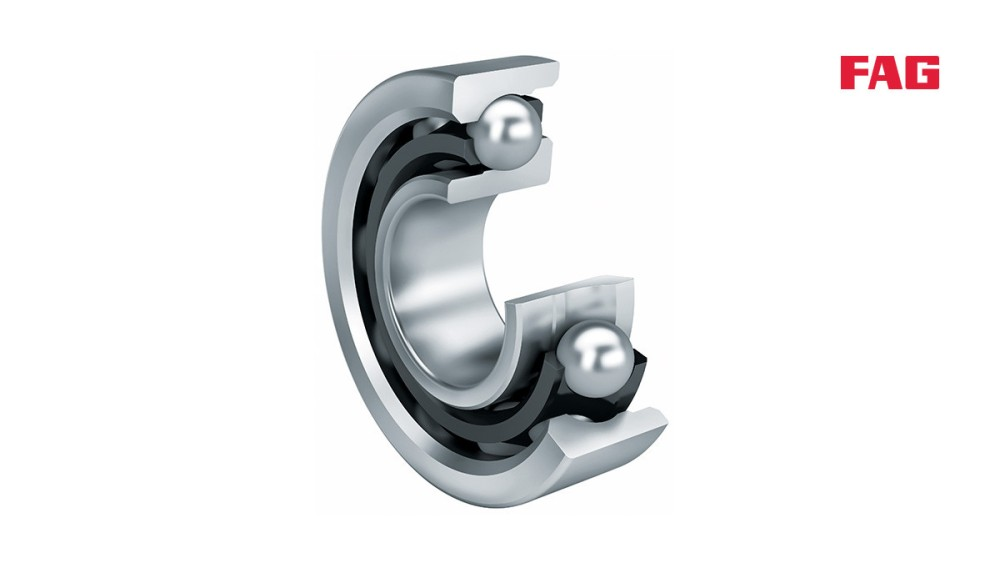
Angular-contact bearings are designed to support combined radial and axial loading with greater axial stiffness in a defined direction.
They may be considered in larger, higher-thrust, or specialized drone propulsion systems where shaft positioning and axial-load control are more demanding.
They can be used individually or as a pair, depending on thrust direction and preload requirements.
Angular-contact bearings are not automatically an improvement for every drone motor. They require correct orientation, preload, fit, and assembly control. In a very small motor, the added complexity may not be justified.
Hybrid ceramic ball bearings
Hybrid bearings typically use steel rings with ceramic rolling elements.
The lower mass of the ceramic balls may provide benefits in certain high-speed applications. Hybrid designs can also behave differently under acceleration and generate different friction and thermal characteristics.
They should not be selected only because they are marketed as ceramic bearings.
A hybrid bearing still depends on:
- Raceway quality
- Internal clearance
- Cage design
- Lubrication
- Shaft and housing accuracy
- Contamination control
- Proper installation
A poorly manufactured hybrid bearing will not necessarily perform better than a high-quality all-steel bearing.
Stainless-steel miniature bearings
Stainless-steel bearings may be considered where the motor is exposed to moisture, humidity, washdown, salt, agricultural chemicals, or other corrosive conditions.
Stainless construction improves corrosion resistance, but it does not make the bearing immune to contamination or lubricant failure.
Load capability, hardness, lubricant, closure type, and expected life must still be reviewed.
Speed and Rapid Acceleration
Drone motors frequently operate at high rotational speed, but maximum steady speed is only part of the duty cycle.
The motor also accelerates and decelerates rapidly as the flight controller changes thrust. During aggressive flight, these adjustments happen continuously.
Rapid speed changes affect:
- Cage motion
- Rolling-element movement
- Lubricant distribution
- Friction
- Bearing temperature
- Rotor stability
A bearing that performs acceptably at a constant test speed may behave differently when it is repeatedly cycled through a wide speed range.
The motor controller also matters. Abrupt commutation, unstable control, or mechanical resonance can create vibration that reaches the bearing system.
Bearing speed capability should therefore be evaluated together with acceleration, motor balance, lubricant, temperature, and expected flight profile.
Precision, Runout, and Rotor Stability
Bearing precision influences how accurately the shaft rotates.
In a drone motor, excessive runout can affect:
- Propeller tracking
- Rotor balance
- Air-gap consistency
- Vibration
- Mechanical noise
- Bearing load distribution
- Motor efficiency
Higher bearing precision may reduce dimensional and rotational variation, but precision class alone does not guarantee quiet or reliable operation.
A high-precision bearing installed on a bent shaft or in an out-of-round housing can still run poorly. The motor shaft, bearing seats, rotor bell, and propeller mounting surface must all be accurate enough to preserve the benefit of the bearing.
The propeller should also seat squarely. A damaged hub or mounting surface can create apparent shaft runout even when the motor bearings are in good condition.
Internal Clearance and Preload
Internal clearance is the movement available between the bearing rings and rolling elements before external load is applied.
In a miniature motor, the final operating clearance is influenced by:
- Shaft fit
- Housing fit
- Bearing temperature
- Shaft temperature
- Housing material
- Assembly preload
- Manufacturing tolerances
A tight fit on the shaft can expand the inner ring and reduce internal clearance. A tight housing fit can compress the outer ring. Temperature differences can change the clearance further while the motor is operating.
When clearance is too small
Insufficient operating clearance can cause:
- Increased torque
- Rapid temperature rise
- Lubricant shear
- High current consumption
- Premature raceway wear
- Bearing seizure in severe cases
When clearance is too large
Excessive clearance can cause:
- Radial or axial play
- Bell movement
- Increased vibration
- Irregular mechanical noise
- Less stable propeller tracking
- Changing air gap under load
Some motor designs apply light preload to reduce internal movement and improve rotor stability.
Preload must remain controlled. Too much preload increases friction and heat. Too little may leave enough movement for the rotor to vibrate or shift under propeller thrust.
Lubrication in Drone Motor Bearings
The lubricant inside a drone motor bearing influences torque, noise, heat, wear, and service life.
Most shielded or sealed miniature bearings are supplied with grease. The grease must provide enough oil to protect the raceways without creating excessive drag.
Important lubricant properties include:
- Base-oil viscosity
- Low-temperature behavior
- High-temperature stability
- Oxidation resistance
- Mechanical stability
- Noise performance
- Compatibility with seals and cages
- Resistance to oil separation and leakage
Too much grease
Excess grease can increase churning and running torque.
In a small motor, that additional drag may show up as:
- Higher current draw
- Increased temperature
- Slower acceleration
- Reduced efficiency
- Shorter flight time
Too little grease
Insufficient lubricant can lead to:
- Raceway wear
- Increased noise
- Heat
- Reduced fatigue life
- Corrosion
- Early bearing failure
Adding grease after assembly is not automatically a solution. The wrong grease or an uncontrolled fill quantity can make the motor run worse.
Factory-lubricated miniature bearings should normally be used with their specified lubricant unless the application has been designed around a different lubrication process.
Shields, Seals, and Contamination Control
Drone motors are often open to the surrounding environment. Air moving around the propeller can carry dust, sand, fibers, moisture, and other debris toward the bearings.
The bearing closure must balance contamination protection against friction.
Metal shields
Metal shields provide noncontact or low-contact protection against larger particles and help retain lubricant.
They usually generate less torque than contacting rubber seals, making them useful in high-speed motors where friction is tightly controlled.
Their protection against water and fine contamination is limited.
Noncontact seals
Noncontact seals can provide improved exclusion without the full friction of a contacting lip.
They may be useful where the application needs better contamination control but cannot accept the torque of a heavily contacting seal.
Contact seals
Contact seals provide stronger exclusion against dirt and moisture, but the sealing lip adds friction and generates heat.
This tradeoff can become important in very small motors. The additional seal torque may represent a meaningful share of the motor’s total mechanical loss.
Open bearings
Open bearings offer low drag and direct access to the rolling elements, but they rely on the surrounding motor structure for lubricant retention and contamination protection.
They are generally less forgiving in exposed drone applications.
The closure should match the real environment. A motor used for indoor inspection does not face the same contamination as one used for agricultural spraying, construction surveys, or low-altitude flight over sand.
Shaft and Housing Fits
The bearing rings must remain properly supported without being distorted.
The rotating ring typically requires enough fit to prevent movement between the ring and its seat. The stationary ring must also remain stable while allowing for the assembly and thermal behavior intended by the motor designer.
Problems caused by an incorrect fit include:
- Ring creep
- Fretting
- Sleeve or housing wear
- Reduced internal clearance
- Bearing distortion
- Misalignment
- Heat
- Unstable preload
The shaft and housing seats should be checked for:
- Diameter accuracy
- Roundness
- Surface finish
- Straightness
- Shoulder squareness
- Burrs
- Corrosion
- Damage from previous bearing removal
A retaining adhesive may be used in some motor assemblies, but it must be applied carefully. Adhesive that enters the bearing can contaminate the raceways or interfere with seals and shields.
Installation Practices
Miniature bearings can be damaged by installation force that would appear minor on a larger industrial bearing.
When fitting a bearing onto a shaft, force should be applied to the inner ring. When pressing a bearing into a housing, force should be applied to the outer ring.
Pressing through the balls transfers the installation load across the raceways and can create permanent damage before the motor is operated.
Useful installation practices include:
- Keep the shaft, housing, and bearing clean.
- Remove burrs from shaft shoulders and housing edges.
- Use a tool that contacts the correct bearing ring.
- Press the bearing squarely.
- Avoid striking the bearing directly.
- Do not force the bearing over a damaged shaft.
- Confirm that the bearing seats fully against the intended shoulder.
- Protect shields and seals from tool contact.
- Check shaft rotation after assembly.
- Verify that preload or axial retention has not produced binding.
After assembly, the shaft should rotate smoothly without obvious roughness or irregular resistance.
Propeller Balance and Bearing Life
A drone motor bearing is often blamed for vibration that starts at the propeller.
A chipped, bent, poorly manufactured, or incorrectly mounted propeller creates a rotating imbalance. At speed, the imbalance produces a repeating radial force that loads the shaft and bearings.
The result can include:
- Frame vibration
- Unstable video
- Motor noise
- Bearing fatigue
- Loose fasteners
- Increased current draw
- Reduced flight-controller accuracy
- Cracks in the motor mount or arm
Installing a new bearing without correcting the propeller or shaft condition may provide only a temporary improvement.
Before replacing the bearing, inspect the propeller, hub, shaft, rotor bell, and mounting surface.
Temperature and Bearing Life
Drone motor bearings receive heat from several sources:
- Winding resistance
- Magnetic losses
- Bearing friction
- Seal friction
- Propeller loading
- High ambient temperature
- Limited cooling during hover or ground operation
The bearing temperature may be higher than the surrounding air temperature.
As temperature rises, grease viscosity falls. Oxidation and oil separation may accelerate, and polymer cages or seals may age faster.
If the bearing runs too hot, the lubricant can lose its ability to maintain a protective film. The bearing may then become noisy, rough, or unstable.
Low temperature creates a different problem. Grease becomes more viscous, increasing startup torque and mechanical drag.
A bearing and lubricant that work well during indoor testing may behave differently in winter conditions, direct sun, desert heat, or an enclosed propulsion pod.
What Happens When the Wrong Bearing Is Used?
A dimensionally compatible bearing may allow the motor to run during a brief test while still being unsuitable for the application.
The bearing may have:
- Too much or too little internal clearance
- Excessive seal torque
- An unsuitable lubricant
- Insufficient contamination protection
- Poor raceway finish
- Inadequate precision
- Incorrect fit
- Insufficient axial-load capability
Before the issue is corrected, the motor may show:
- Higher operating current
- Reduced flight time
- Increasing temperature
- Mechanical noise
- Bell wobble
- Inconsistent thrust
- Reduced speed
- Vibration
- Repeated bearing replacement
With the correct bearing, fit, clearance, lubricant, and closure, the rotor remains more stable. Mechanical drag is controlled, vibration is reduced, and motor performance becomes more repeatable.
The improvement is not limited to bearing life. It can also protect propeller tracking, flight stability, battery endurance, and the surrounding motor components.
Common Causes of Drone Motor Bearing Failure
Propeller strike or crash impact
A sudden impact can bend the shaft, damage the raceways, or shift the bearing seats.
The motor may continue running but develop roughness or vibration.
Rotor imbalance
An unbalanced rotor or propeller creates a repeating load that shortens bearing life.
Contamination
Dust, sand, fibers, and moisture can enter around shields or seals and damage the rolling surfaces.
Incorrect installation
Force transferred through the rolling elements can indent the raceways.
Excessive preload
Too much axial compression raises friction and temperature.
Loose bearing fit
A loose ring can move in the shaft or housing seat, creating wear and misalignment.
Distorted motor housing
A damaged or excessively tight bearing bore can deform the outer ring and reduce internal clearance.
Bent shaft
A bent shaft creates runout and cyclic loading even when new bearings are installed.
Lubricant breakdown
Heat, contamination, oxidation, or lubricant loss can reduce the protective film between the balls and raceways.
Corrosion
Moisture can damage the raceways and rolling elements, particularly after storage or operation in humid conditions.
Recognizing a Failing Drone Motor Bearing
Bearing failure is usually progressive.
Common warning signs include:
- New grinding, clicking, or rough mechanical noise
- Increased radial or axial shaft play
- Visible rotor-bell movement
- Motor temperature higher than comparable motors
- Increased current draw
- Reduced free-spinning time
- Vibration that remains after changing the propeller
- Roughness when the shaft is rotated by hand
- Irregular resistance during rotation
- Changes in thrust response
These symptoms can also result from a bent shaft, damaged propeller, loose motor mount, electrical fault, or rotor contact.
For inspection, disconnect the power and remove the propeller before handling the motor. Rotating the shaft slowly by hand can help identify roughness, but it does not reproduce the bearing’s full operating condition at speed and temperature.
Improving Drone Motor Bearing Life
Most bearing-life improvements come from controlling the parts around the bearing.
Practical steps include:
- Keep propellers balanced and undamaged.
- Replace bent shafts and distorted rotor bells.
- Use bearings with suitable clearance and lubricant.
- Match the closure to the contamination level.
- Prevent excessive interference during installation.
- Control preload.
- Keep bearing seats clean and round.
- Avoid transmitting installation force through the balls.
- Inspect motors after significant propeller strikes.
- Keep moisture and cleaning chemicals away from open motors.
- Monitor changes in motor noise, current, and temperature.
- Investigate repeated failures rather than replacing the same bearing again.
For fleet operations, tracking motor hours, impact events, vibration, and current trends can help identify deterioration before it creates an in-flight problem.
Drone Application and Bearing Priorities
Different drone applications place different demands on the motor bearing.
FPV and racing drones
Racing motors experience rapid acceleration, high speed, aggressive maneuvers, and frequent impact.
Low drag is important, but shock resistance, shaft stiffness, propeller balance, and secure bearing retention are equally important.
Mapping and inspection drones
These aircraft often prioritize endurance, stable imaging, and repeatable operation.
Low vibration and consistent bearing torque help protect image quality and flight time.
Agricultural drones
Agricultural environments may expose motors to dust, moisture, fertilizer, and spray chemicals.
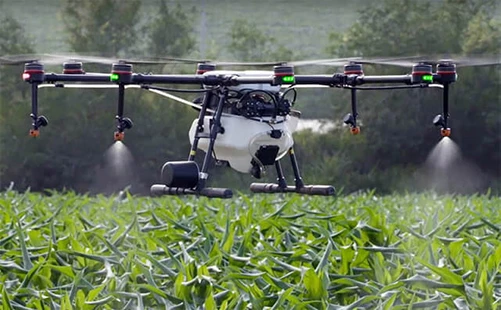
Contamination protection and corrosion resistance become more important, particularly when the motors are difficult to clean without forcing debris toward the bearings.
Heavy-lift and delivery drones
Larger propellers and higher thrust create greater axial and moment loads.
Bearing stiffness, shaft diameter, thermal performance, and bearing spacing require closer review than in a small hobby motor.
Indoor and confined-space drones
These aircraft may operate close to people, sensors, microphones, and structural surfaces.
Low noise, controlled vibration, and reliable startup can be central requirements.
Frequently Asked Questions About Drone Motor Bearings
What type of bearing is commonly used in a drone motor?
Many compact drone motors use miniature deep-groove ball bearings because they can support radial load, moderate axial load, and high-speed operation in a small package.
The exact bearing arrangement depends on the motor architecture and propeller load.
How many bearings are used in a drone motor?
Many brushless drone motors use two bearings, but the number and position vary by motor design.
A two-bearing arrangement provides better shaft support than a single short bearing position and helps resist propeller-related moment loading.
Can I replace a drone motor bearing based on its dimensions?
The dimensions must match, but the closure, internal clearance, precision, material, and lubricant should also be checked.
A dimensionally identical bearing may produce different friction, noise, and temperature.
Are ceramic bearings better for drone motors?
Not automatically.
Hybrid ceramic bearings can be useful in certain high-speed applications, but manufacturing quality, lubricant, clearance, fit, and contamination protection remain critical.
Should drone motor bearings be sealed or shielded?
Metal shields usually create lower drag, while rubber seals provide stronger contamination protection.
The correct choice depends on speed, acceptable friction, and exposure to dust and moisture.
Why does a drone motor bearing become noisy?
Noise may be caused by raceway damage, contamination, lubricant breakdown, excessive clearance, preload, misalignment, a bent shaft, or rotor imbalance.
A damaged propeller can produce similar symptoms.
Can an unbalanced propeller damage the bearings?
Yes. Propeller imbalance creates a rotating radial load that increases with speed and is transmitted directly to the shaft and bearings.
Why is the motor hot after replacing the bearings?
Possible causes include excessive preload, tight shaft or housing fits, incorrect clearance, high seal torque, too much grease, installation damage, or shaft misalignment.
Should both bearings be replaced after a crash?
Both bearings should be inspected because the same impact can load the complete shaft and bearing arrangement.
Whether both require replacement depends on the motor condition, but replacing one bearing will not correct a bent shaft or damaged housing.
Can drone motor bearings be relubricated?
Some open bearings can be serviced under controlled conditions, but most small shielded or sealed bearings are supplied with a specific lubricant quantity.
Uncontrolled relubrication can increase torque or introduce contamination.
What causes rotor-bell wobble?
Possible causes include bearing clearance, worn bearings, a bent shaft, loose bearing fit, a damaged bell, poor assembly, or excessive housing clearance.
How can bearing problems affect flight time?
Increased bearing friction raises the torque and current needed to maintain motor speed. Across several motors, this additional loss can reduce propulsion efficiency and battery endurance.
Final Considerations
Drone motor bearings must support a high-speed rotor while carrying propeller thrust, resisting vibration, and maintaining accurate alignment in a compact motor.
The bearing dimensions establish the required fit, but performance also depends on internal clearance, precision, lubricant, closure, shaft condition, housing accuracy, preload, and environmental exposure.
When an unsuitable bearing is used, the motor may run hotter, draw more current, vibrate, or develop shaft play. When the bearing system is matched correctly, the rotor runs more steadily, thrust remains more consistent, and the motor is less likely to require repeated maintenance.
The PIB online catalog provides a practical starting point for reviewing miniature ball bearings by bore, outside diameter, width, material, closure, precision, clearance, and lubricant. For an OEM drone motor or UAV propulsion application, PIB can also help review operating speed, shaft and housing conditions, propeller loads, contamination exposure, and lubrication requirements.
1
/
1