Your cart is empty
 Short Rigid Couplings
 Controlflex Couplings
 Jaw Couplings
 Oldham Couplings
 Bearing Locknuts – TCN
 Double Wide Shaft Collars
 Heavy Duty Shaft Collars
 International Series Shaft Collars
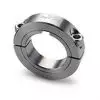 Keyed Shaft Collars
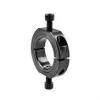 Mountable Shaft Collars
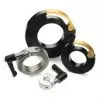 Quick Clamping Shaft Collars
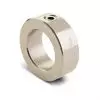 Set Screw Shaft Collars
 Thin Line Shaft Collars
 Threaded Shaft Collars – Pacific International Bearing Products
 Two-Piece Shaft Collars
 Friction Bearing Universal Joints
 Needle Bearing Universal Joints
Bearings
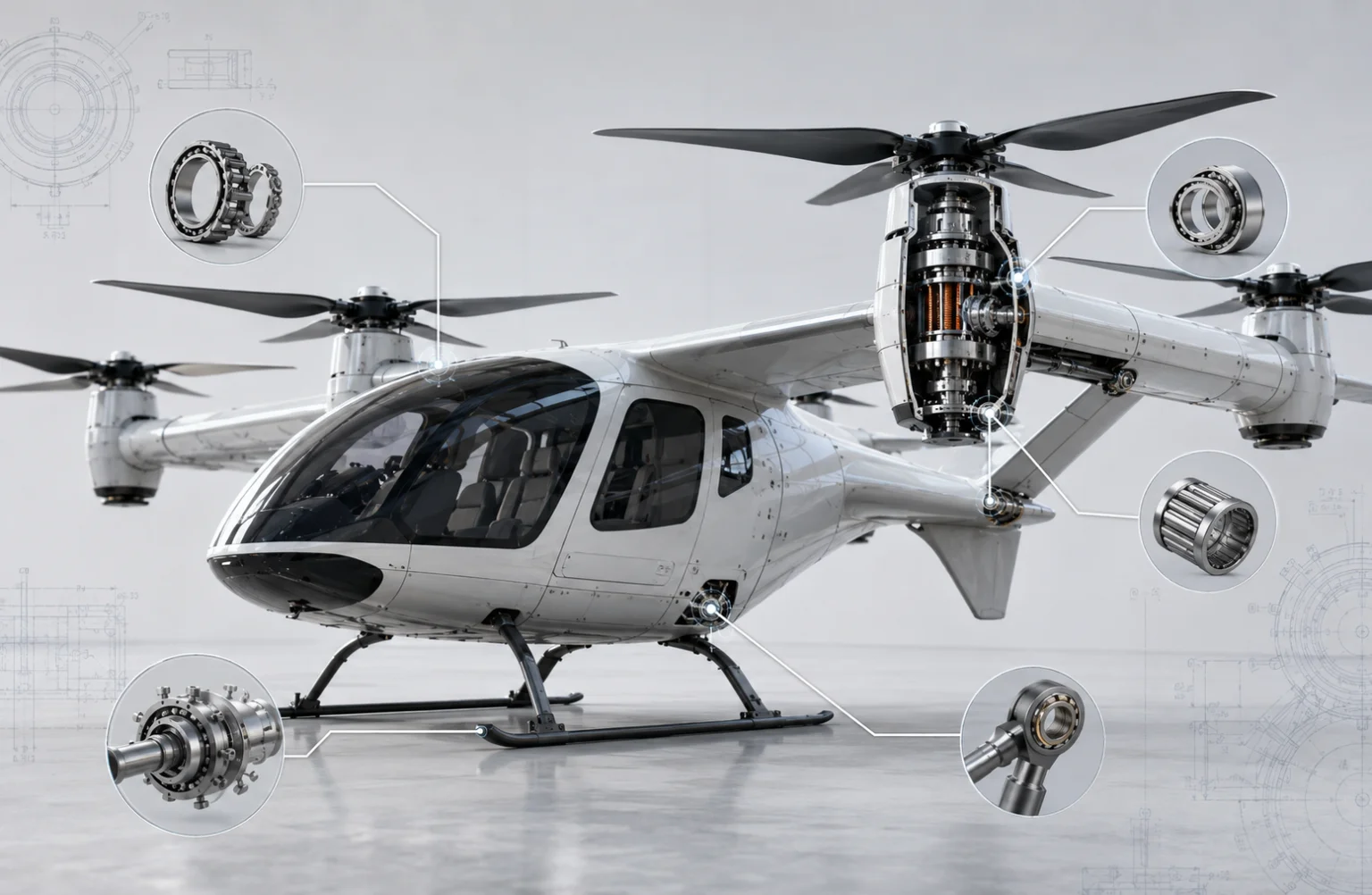
eVTOL Bearings Used in Flaperon Assemblies
07 October, 2026
17 min read
In an eVTOL flaperon assembly, bearings support the hinge line and control linkages while the surface makes repeated, limited-angle movements under changing aerodynamic and actuator loads. The right bearing keeps breakaway torque, free play, friction, and wear predictable. The wrong bearing can add drag, loosen the control path, accelerate fretting or contamination damage, and increase maintenance.
Flaperons combine flap and aileron functions, so the same trailing-edge surface can contribute to lift and roll control. On an eVTOL aircraft, that surface may also operate in a flow field influenced by nearby propulsors and through very different flight conditions from hover or transition to forward flight. The bearing arrangement has to stay smooth and repeatable across that operating envelope without adding unnecessary weight or packaging volume.
Pacific International Bearing Sales (PIB) works with aerospace and motion-control applications. In a flaperon system, motion profile, load direction, torque, misalignment, sealing, corrosion protection, fits, and maintenance strategy all matter. The selected bearing needs to preserve the control surface behavior the actuator and flight-control system were designed to deliver.
What Bearings Do in an eVTOL Flaperon Assembly
A flaperon assembly usually has more than one bearing duty. The hinge line supports the control surface itself, while bellcranks, torque tubes, push-pull links, actuator attachments, and other joints transfer motion into the surface. Each location can see a different combination of oscillation angle, radial load, thrust load, moment load, misalignment, vibration, and environmental exposure.
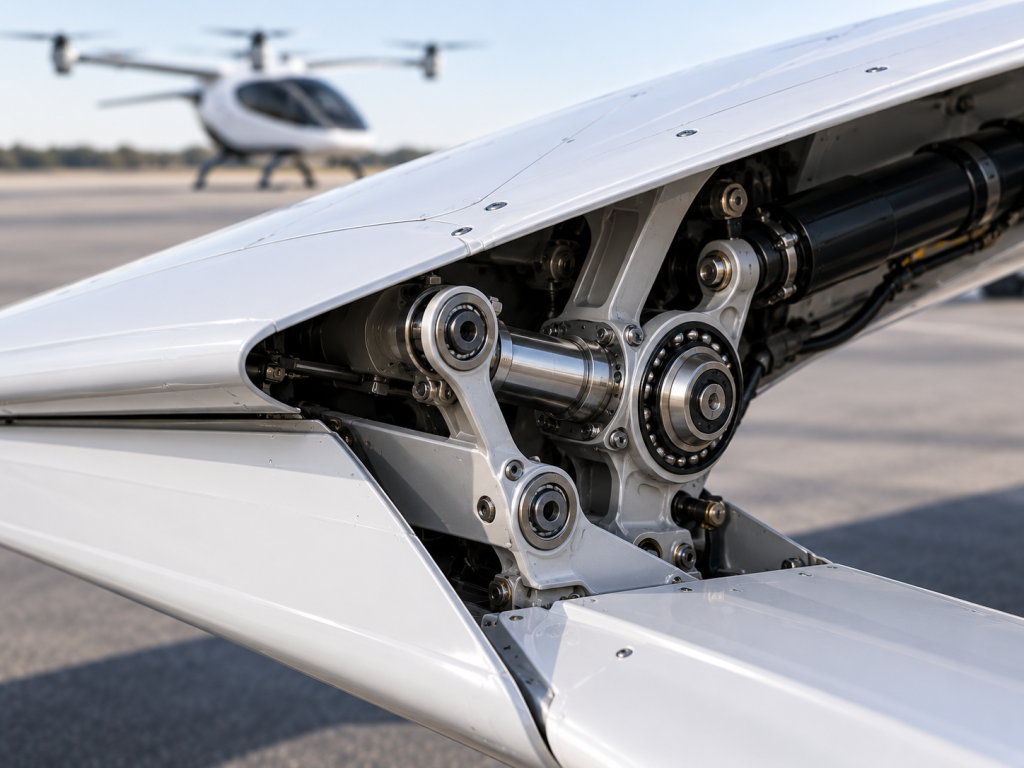
That distinction is important because many flaperon bearings do not make full, continuous revolutions. They spend their service life moving back and forth through a restricted angular range. Airframe control ball bearings were developed specifically for oscillating or limited-rotation applications, where low friction and low torque are key characteristics. Rod ends and spherical bearings are also common candidates where a linkage needs articulation and controlled misalignment.
| Location in the assembly | Typical motion or load | Bearing priorities |
| Flaperon hinge line | Repeated limited-angle oscillation; radial load with possible axial and moment components | Low and stable torque, controlled play, stiffness, corrosion protection, contamination resistance |
| Bellcrank or pivot joint | Oscillating pivot under reversing linkage load | Compact load capacity, low friction, alignment control, wear resistance |
| Actuator or push-pull linkage | Angular articulation with changing alignment | Misalignment capability, predictable breakaway torque, low play, secure attachment |
| Torque tube or compact rotary support | Rotational support in a restricted envelope; architecture-dependent combined loading | Compact cross-section, running accuracy, stiffness, correct internal clearance or preload |
Why Oscillatory Motion Changes Bearing Selection
Continuous rotation and small-angle oscillation do not stress a bearing in the same way. In continuous rotation, rolling elements repeatedly travel around the raceway and lubricant is redistributed through the contact zone. In a flaperon pivot, the motion may repeatedly reverse before the rolling elements complete a full orbit. That changes how wear, lubrication, and surface damage develop.
Small oscillatory movements combined with vibration can promote false brinelling or fretting-type wear in rolling-element bearings. The risk depends on the bearing design, oscillation amplitude, load, vibration level, lubrication, fits, and material condition.
The bearing selection also needs to consider starting behavior. A flight-control surface does not benefit from a bearing that has acceptable average friction but inconsistent breakaway torque. If torque changes with contamination, seal drag, fit distortion, temperature, or wear, the actuator has to overcome that variation before the surface starts moving. Stable low torque helps the mechanical system respond more consistently to small commanded movements.
Bearing Types Commonly Considered for Flaperon Assemblies
There is no single bearing type that belongs in every flaperon design. The correct choice depends on the joint, the available space, the motion profile, and the load path. The following bearing families are commonly relevant to aircraft control-surface mechanisms and compact actuation systems.
Airframe control ball bearings
Airframe control ball bearings are a natural starting point for hinge and pivot locations that see oscillation or slow, intermittent rotation. Their value is not simply that they are ball bearings. Their geometry and construction are intended for control applications where low friction, low torque, compact packaging, and repeatable positioning matter.
Full-complement versions can provide higher load capacity in a compact envelope and are often associated with oscillatory duty rather than high-speed continuous rotation. Designs using ball separators or cages can be preferred when the motion profile includes more rotation. The exact configuration should be matched to the application needs.
Spherical plain bearings and rod ends
Spherical plain bearings and rod ends are useful where a flaperon linkage needs angular misalignment as it transfers load. A rigid joint can bind when brackets, actuator rods, or surrounding structure deflect or when the linkage geometry changes through the stroke. A spherical interface allows the joint to articulate instead of forcing that misalignment into the pin, housing, or actuator.
Self-lubricating lined designs can reduce routine lubrication requirements, while metal-to-metal designs may be appropriate in other load and service conditions. The bearing selection decision depends on load, movement, temperature, contamination, allowable torque, wear limits, and maintenance access.
Roller and roller rod-end bearings
Roller-based control bearings can be useful when the application calls for high load capacity with low starting torque in an oscillating joint. In aircraft control systems, self-aligning roller arrangements and roller rod ends can provide a different balance of load handling, friction, and articulation than a sliding spherical joint. They should be evaluated where the linkage load is high and torque sensitivity is important.
Thin-section and angular contact ball bearings
Thin-section ball bearings or compact angular contact arrangements may be relevant inside actuator supports, torque-tube mechanisms, or other rotary subassemblies where space and weight are tightly constrained. These locations are different from a simple hinge pin. When combined radial, axial, or moment loads must be controlled in a thin package, contact angle, bearing pairing, preload, housing stiffness, and mounting accuracy become part of the design.
| Bearing option | Where it can fit | What goes wrong when mismatched | What improves with the right selection |
| Airframe control ball bearing | Oscillating hinge or pivot | Higher or inconsistent torque, excessive play, premature raceway wear | Smooth limited-angle motion, predictable torque, better control repeatability |
| Spherical plain bearing / rod end | Actuator and linkage joints needing articulation | Binding, edge loading, side load on linkage hardware, faster liner or race wear | Misalignment is accommodated, load transfer is cleaner, joint motion stays consistent |
| Roller control bearing / roller rod end | High-load oscillating control joint where low starting torque is important | Excess friction or insufficient load capacity in a compact joint | Low starting resistance with strong load support, application dependent |
| Thin-section or angular contact bearing | Compact actuator or torque-tube support | Loss of stiffness, excessive axial movement, fit-induced torque, poor load sharing | Compact support with better stiffness and running accuracy when mounted correctly |
The Selection Factors That Matter Most
1. Define the real load path
Start with the loads at the actual bearing location, not only the aerodynamic load on the flaperon. Hinge spacing, actuator geometry, bracket stiffness, control-surface inertia, gust loads, structural deflection, and maneuver loads determine what each bearing sees. A bearing close to an actuator attachment may experience a different load spectrum from a bearing farther along the hinge line.
For rolling bearings, radial, axial, and moment effects have to be translated into the arrangement the bearing can support. For rod ends and spherical bearings, radial load, axial load, misalignment, and any bending introduced by the installation all need to be checked. Shock and limit loads should be treated separately from normal cyclic operating loads.
2. Use the actual motion profile
The number of cycles is only part of the picture. Engineers should define the oscillation angle, frequency, dwell time, reversal behavior, and whether the joint ever makes larger sweeps. A bearing that performs well at one oscillation amplitude may experience a different lubrication and wear condition at a much smaller angle. The duty during ground vibration, rotor operation, taxi, hover, transition, cruise, and control checks may also be different.
3. Control torque, not just load capacity
In a flaperon assembly, friction torque is part of the control system. Breakaway torque, running torque, seal drag, lubricant behavior, and fit-induced distortion can all affect how much actuator force is required to initiate and maintain motion. The bearing should be evaluated as installed, because a good bearing can become a high-torque bearing if a thin ring is squeezed by an incorrect housing fit or if mounting faces distort the races.
4. Manage free play and stiffness
Free play at one joint may seem small, but several joints in the control path can add together. Clearance in hinge bearings, rod ends, pins, splines, and actuator connections can become lost motion at the flaperon. Excessive play can reduce positioning repeatability and can increase impact loading as the load reverses direction.
The opposite extreme is also a problem. Eliminating clearance without considering temperature, fits, and structure can create preload or binding. The goal is controlled internal geometry after installation, at operating temperature, under the expected structural loads.
5. Allow for misalignment without creating edge load
Airframes flex. Brackets move under load. Manufacturing tolerances stack up. If a joint cannot tolerate the resulting angular error, the load can concentrate at an edge instead of remaining where the bearing was designed to carry it. Spherical bearings and rod ends are often used specifically because they can accommodate angular misalignment, but their allowable misalignment still has to be checked against the surrounding hardware.
6. Treat sealing, corrosion, and contamination as design inputs
A control-surface bearing can be exposed to moisture, dust, wash fluids, de-icing chemicals, temperature cycling, and debris from nearby mechanisms. eVTOL packaging can also place hardware near propulsion airflow, which may change how contaminants reach the joint. Seals and shields help control ingress and retain lubricant, but contact seals can add torque. The best sealing strategy is the one that protects the bearing without undermining the torque requirement.
Material and coating choices should be tied to the environment and the mating components. Stainless steels, plated bearing steels, corrosion-resistant coatings, and self-lubricating liners each solve different problems. Galvanic compatibility, coating thickness, surface hardness, and the way a finish changes fit or torque should be reviewed as part of the assembly, not as an afterthought.
7. Match lubrication to oscillation and maintenance access
Lubrication has to work with the motion. Reversing, limited-angle movement may not redistribute grease the same way as continuous rotation, and a lubricant that is acceptable for speed may not be ideal for small oscillations, temperature range, or long dwell periods. For lined spherical bearings, the liner system may provide the intended low-friction interface without periodic greasing. For grease-lubricated rolling bearings, lubricant type, fill, compatibility, and relubrication strategy should be defined for the actual duty.
8. Check fits and installation before blaming the bearing
Many control-bearing problems begin at installation. An interference fit that is too heavy can reduce internal clearance and raise torque. A loose fit can allow creep or fretting at the ring interface. Misaligned housings can distort the bearing. Clamp loads through the wrong surfaces can damage races or liners. The bearing specification and the surrounding tolerances need to be developed together.
A Practical Bearing Selection Process for eVTOL Flaperons
For a new or revised flaperon design, PIB recommends treating bearing selection as part of the initial mechanical design. A practical review usually includes:
- Define each bearing location and its function: hinge, linkage, actuator connection, bellcrank, torque tube, or internal rotary support.
- Document radial, axial, moment, shock, and reversing loads at that location, including how the structure shares those loads.
- Define oscillation angle, cycle profile, dwell time, vibration exposure, and any periods of larger rotation.
- Set limits for breakaway torque, running torque, free play, stiffness, and allowable misalignment.
- Specify the environment: temperature range, moisture, dust, chemicals, wash exposure, corrosion risk, and maintenance access.
- Review material, coating, seal, shield, liner, and lubricant options as a system.
- Check shaft, pin, housing, and mounting tolerances so the installed bearing retains the required clearance and torque.
- Validate the assembly under representative load, temperature, contamination, vibration, and motion conditions before freezing the production configuration.
This process also helps separate locations that truly need an aerospace airframe-control bearing from locations that can use another precision bearing family. That distinction can reduce weight, simplify the assembly, and control cost without relaxing the performance requirement.
Frequently Asked Questions
What bearing is best for an eVTOL flaperon hinge?
There is no universal best bearing. For hinge points with oscillating or limited rotation, an airframe control ball bearing is often a strong candidate because low friction and low torque are central to that bearing family. The final choice depends on load, oscillation angle, required play, corrosion protection, sealing, fits, temperature, and the available envelope.
Why not use a standard deep-groove ball bearing?
A standard deep-groove bearing may work in some locations, but a catalog load rating does not tell the whole story for a small-angle flight-control pivot. Oscillatory motion, breakaway torque, free play, vibration, sealing, corrosion, and installation fits can dominate the application. Airframe control bearing designs exist specifically for limited-rotation control mechanisms.
Where are spherical bearings and rod ends used in flaperon systems?
They are commonly suited to linkage and actuator joints where the connection must transmit load while accommodating angular misalignment. They can prevent a linkage from binding as the structure flexes or the geometry changes through the stroke. The required load capacity, misalignment angle, liner system, torque, and maintenance method must still be verified for the specific joint.
Do flaperon bearings need seals?
Sometimes. Seals or shields can improve contamination control and lubricant retention, but they can also increase friction torque. Open, shielded, sealed, and externally protected arrangements should be compared against the actual environment and torque budget. The right answer is application-dependent.
How does bearing play affect flaperon performance?
Bearing and linkage play contributes to lost motion between the actuator and the control surface. If multiple joints each add clearance, the total can reduce positioning repeatability and increase impact when loads reverse. The design should control cumulative free play without introducing excessive preload or binding.
What information does PIB need to help select a bearing?
The most useful inputs are the bearing location, envelope dimensions, load directions and magnitudes, oscillation or rotation profile, speed if applicable, allowable torque, allowable play or stiffness target, misalignment, temperature, contamination and corrosion exposure, lubrication preference, maintenance access, and any program-specific material, traceability, or documentation requirements.
Final Thoughts
Flaperon bearings are small parts in a control system that depends on smooth, repeatable motion. The right selection starts with the real duty cycle: limited-angle movement, changing loads, vibration, environmental exposure, tight packaging, and the need to keep torque and play under control. When those details are matched to the bearing design, the assembly is easier to keep stable, inspect, and maintain over its service life.
PIB can help review airframe control bearings, spherical bearings, rod ends, roller control bearings, and compact ball-bearing options for eVTOL flaperon and actuator applications. The most productive conversations start with the load path, motion profile, envelope, torque target, and environment so the bearing can be selected around the mechanism instead of forced into it afterward.
Contact us at 1(800) 228-8895