Your cart is empty
 Short Rigid Couplings
 Controlflex Couplings
 Jaw Couplings
 Oldham Couplings
 Bearing Locknuts – TCN
 Double Wide Shaft Collars
 Heavy Duty Shaft Collars
 International Series Shaft Collars
 Keyed Shaft Collars
 Mountable Shaft Collars
 Quick Clamping Shaft Collars
 Set Screw Shaft Collars
 Thin Line Shaft Collars
 Threaded Shaft Collars – Pacific International Bearing Products
 Two-Piece Shaft Collars
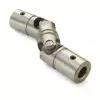 Friction Bearing Universal Joints
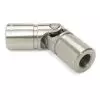 Needle Bearing Universal Joints
Bearings
Miniature Bearings for Robot Finger and Wrist Joints: Ensuring Smooth, Precise Motion
06 January, 2026
14 min read
Bringing robots to life requires more than advanced software – it also requires reliable hardware at every joint. In humanoid robots, smooth and controlled movement in the hands and wrists is essential for lifelike dexterity. Pacific International Bearing Sales (PIB) provides miniature high-precision bearings crucial for the rotation of robotic finger and wrist joints. Bearings significantly reduce friction and support loads in compact spaces, allowing robotic fingers to grasp objects delicately and wrists to pivot smoothly without jarring or hesitation.
Engineers turn to specialized miniature bearings to meet the unique challenges of these joints. The right bearings enable:
- Compact strength: High load capacity even in a small form factor, so tiny joints can handle forces without bulk.
Low friction & quiet operation: Precision-manufactured raceways and balls ensure minimal friction and noise, crucial for smooth, silent robotic motion. - Long-term reliability: Quality steel or stainless steel construction with proper lubrication yields durability for thousands of cycles with minimal wear.
- Precision alignment: Tight tolerances and minimal play allow accurate, repeatable movements, giving robots human-like accuracy in hand and wrist motions.
- Customization: Options for corrosion-resistant materials and shields or seals protect bearings from dust and humidity, tailoring performance to the robot’s environment.
By using PIB-provided purpose-built miniature bearings, robotic designers can create finger and wrist joints that move fluidly and reliably, enhancing the overall realism and functionality of the robot hand. Below, we reveal how bearings are applied in both finger joints and wrist joints, and what specifications matter for each.
Miniature Bearings in Robot Finger Joints
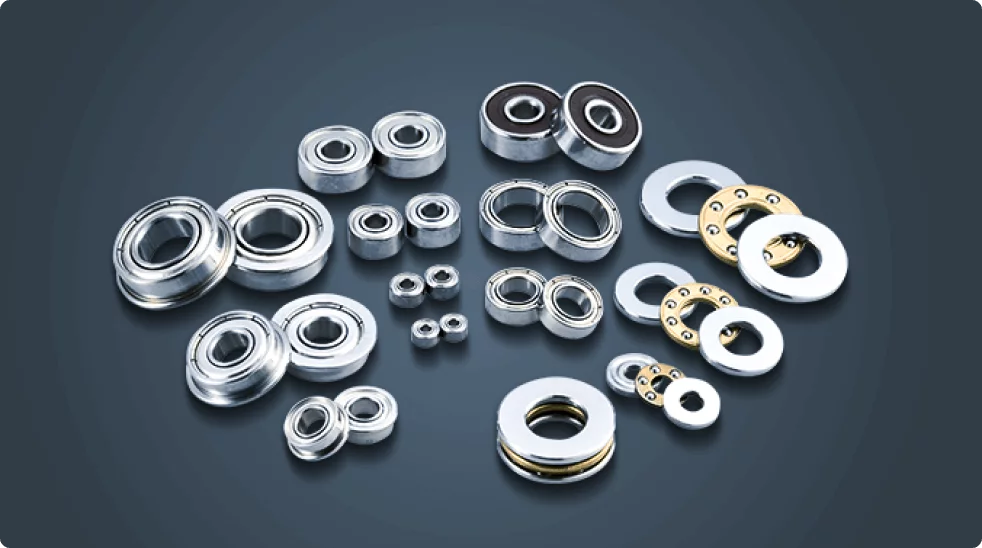
A humanoid robot hand contains dozens of small joints in its fingers and thumb. Each of these joints relies on at least one miniature ball bearing to pivot freely. In order to mimic the dexterity of a human hand, the bearings must fit into very tight spaces while allowing smooth rotation under load. PIB offers ultra-compact deep-groove ball bearings with inner diameters as small as 2 mm – about the size of a pencil lead – enabling engineers to design robotic finger joints that are both robust and compact.
These miniature bearings are typically made from high-grade bearing steel (for maximum hardness and load capacity) or stainless steel (for corrosion resistance in various environments). They come in open designs or with shields/seals. Shielded bearings (suffix “ZZ”) use metal shields to keep dust out while maintaining low friction, ideal for internal finger mechanisms where debris is minimal. Sealed bearings (suffix “2RS” or similar) use rubber seals for better protection against contaminants, though they introduce slightly more friction – these might be chosen if the robot hand will operate in dusty or exposed conditions. In many cases, an open bearing (or one side open) may be used if custom low-friction grease is applied and the joint is enclosed. Engineers balance these factors depending on whether absolute minimum friction or maximum protection is needed for a given finger joint.
Each miniature bearing can handle the forces of finger movement, including the radial loads (from bending motions) and minor axial loads (if the finger is pressed or pulled along its axis). By selecting high-precision miniature bearings, designers ensure each joint moves with minimal play or “wiggle,” so the finger’s motion is precise and repeatable. Additionally, the smooth rolling of quality bearings prevents stick-slip or jerkiness, which is important when a robot grips delicate objects or performs fine manipulations.
Examples of miniature deep-groove bearings for robotic fingers: These sample models illustrate the range of sizes and constructions available for finger joints and other small articulating mechanisms in a robot hand:
| Model | ID (mm) | OD (mm) | Width (mm) | Material | Design |
| DDR-620ZZ | 2 | 6 | 2.5 | Stainless Steel | Shielded |
| DDL-730ZZ | 3 | 7 | 3.0 | Stainless Steel | Shielded |
| DDL-840ZZ | 4 | 8 | 3.0 | Stainless Steel | Shielded |
| L-950ZZ | 5 | 9 | 3.0 | High-Carbon Steel (SUJ2) | Shielded |
| DDL-1280H | 8 | 12 | 3.5 | Stainless Steel | Open |
Table 1: Sample miniature bearings for robot finger joints with their inner diameter (ID), outer diameter (OD), width, material, and design type.
These examples (drawn from the NMB/MinebeaMitsumi series that PIB distributes) demonstrate how small these bearings can be – from an inner diameter of just 2 mm up to about 8 mm, with outer diameters on the order of only 5–12 mm. The tiny form factors allow them to nest inside finger knuckles or joint housings. All the listed models are deep-groove ball bearings, the most common type for such applications due to their versatility in handling both radial and axial loads and their smooth rotation. The use of shielded variants (ZZ) helps keep dust out of the sensitive joints without adding much friction, whereas the open variant (H) like DDL-1280H can be chosen for the lowest friction when environmental contamination is not a concern (or a custom sealing method is in place). Thanks to tight manufacturing tolerances, these bearings exhibit extremely low friction and runout, ensuring each finger joint moves freely and accurately. With PIB’s range of miniature bearings, robot designers can achieve human-like dexterity in robotic hands – each tiny bearing contributing to smooth bends and curls of the fingers.
Thin-Section Bearings in Robot Wrist Joints
While finger joints use very small bearings, wrist joints (and similarly sized joints like certain robot elbows or forearms) often require a different approach. The wrist connects the hand to the arm and typically must support greater loads – for example, the weight of the hand itself and any object the robot grasps – and allow multi-axis movement. The challenge is that a wrist joint has limited space and should remain as lightweight and slim as possible so the robot’s arm can move efficiently. This is where thin-section bearings may be used..
Thin-section bearings have a relatively large diameter compared to the cross section, providing a broad contact area to support the joint while minimizing profile. In humanoid robots, a wrist joint might use a bearing very small in diameter, but only a few millimeters thick. PIB offers thin, light deep-groove bearings in standard metric series like the 6700 and 6800-series and 6900-series that are well-suited for these applications. The 6700- 6800-series bearings have an especially slim cross-section (often around 7 mm thick) relative to their diameter. This slim profile lets engineers integrate the bearing into the wrist assembly without making the joint bulky. The larger diameter gives stability and can handle the moment loads (torques) that occur when the robot’s hand twists or flexes at the wrist, as well as substantial radial loads from carrying objects.
For example, a bearing model 6804 has a 20 mm inner diameter and 32 mm outer diameter, but only a 7 mm width. Such a bearing could sit inside a compact wrist joint, providing smooth rotation for the hand. Even larger thin types like a 6808 (40 mm ID, 52 mm OD, 7 mm width) or 6909 (45 mm ID, 68 mm OD, 12 mm width) might be used for heavier-duty joints like shoulders or a larger robot’s wrist, demonstrating how thin-section options scale up in diameter while keeping the profile lean. Despite the slim form, these bearings are typically made from high-strength chrome steel and maintain high precision and rigidity. That means the robot’s wrist won’t wobble or flex under load – it stays stiff and true, enabling accurate positioning of the hand.
PIB supplies thin-section bearings both in shielded (metal shields, denoted e.g. by “CZZ” suffix) and sealed (rubber seals, “CSS” suffix) versions. A shielded thin-section bearing is often preferred inside a clean, internal wrist mechanism for the lowest rolling resistance. If the wrist joint could be exposed to dust or moisture (for instance, in an industrial or outdoor robot), a sealed version would add protection and keep the lubricant enclosed, at a slight trade-off in friction. Having both options allows the design to be tailored: use sealed bearings for joints in harsher environments or where maintenance access is limited, and shielded for more controlled settings. In all cases, these bearings are pre-lubricated with specialized grease and can operate for long life with minimal maintenance.
Examples of thin-section bearings for a robotic wrist joint (6800/6900 series):
| Model | Inner Diameter (mm) | Outer Diameter (mm) | Width (mm) |
| 6804 | 20 | 32 | 7 |
| 6806 | 30 | 42 | 7 |
| 6808 | 40 | 52 | 7 |
| 6909 | 45 | 68 | 12 |
Table 2: Representative thin-section bearing sizes for robot wrist and arm joints (selected from PIB’s 6800 and 6900 series offerings). All have very slim cross-sections (7 mm for 6800-series, 12 mm for the 6900-series example) to fit in narrow spaces.
The above specifications cover a range from smaller wrists to larger joints. A 20 mm bore (6804) might be found in a compact robotic wrist or perhaps the joint of a robotic gripper turret, while a 45 mm bore bearing (6909) could serve in a bigger humanoid’s wrist or elbow. Even at these sizes, the emphasis is on a low profile – the width is only 7 mm for most of the 6800-series bearings listed, allowing multiple bearings or other components to be stacked in the joint if needed (for example, some wrist designs might use a pair of bearings spaced apart for greater stability). The 6900-series bearing shown has a 12 mm width, which provides extra load capacity for joints that experience higher forces or bending moments. All these bearings support smooth, concentric rotation of the joint, which is vital for coordinating complex movements of the robotic arm and hand. With high precision manufacturing, they minimize vibration and play, so the robot’s wrist movements appear fluid and controlled.
Whether it’s the small knuckle of a robotic finger or the pivot of a wrist, selecting the right bearing is critical. Poor-quality bearings in these joints could lead to jerky motion, increased power draw (due to friction), or premature wear and failures. By contrast, the precision bearings from PIB ensure that each joint operates quietly, efficiently, and reliably. They are the hidden heroes inside robotic limbs – much like cartilage in a human joint – providing the smooth rotation that sophisticated robots demand.
Pacific International Bearing Sales (PIB) works closely with robotics engineers to choose optimal bearing solutions for each joint. This includes advising on bearing geometry, size, clearance or preload, lubrication, and materials based on the robot’s requirements. By leveraging PIB’s extensive catalog of miniature and thin-section bearings, designers can optimize every joint from fingertip to wrist, achieving the perfect balance of strength, agility, and durability. When it comes to creating lifelike robotic motion, using the right bearings in the right places makes all the difference in performance.
Ready to select the perfect bearings for your robotic fingers and wrists? Explore the PIB online catalog to browse a full range of miniature and thin-section bearings designed for robotics applications. Our catalog provides detailed specifications and options, and our engineering team is available to help you find exactly what you need for your design. Empower your next humanoid robot project with the precision of PIB’s bearing solutions and watch it move with human-like grace and confidence.
FAQ
Q: Why are miniature bearings used in robot finger joints?
A: Robot finger joints have very limited space and require components that are extremely small yet capable of smooth rotation. Miniature ball bearings fit into these tight spots and greatly reduce friction between moving parts. Despite their tiny size, they can support the forces of finger movement, allowing the robotic finger to bend and flex freely. In short, miniature bearings enable compact joints to move smoothly without sticking or wearing out quickly.
Q: What type of bearing is used in a robotic wrist joint?
A: Robotic wrists often use thin-section deep groove ball bearings. These bearings may be sized with a larger diameter (to stabilize the wrist and support loads) but a very thin profile. The thin-section design saves space and weight in the wrist. Deep groove ball bearings are chosen because they handle both radial loads (from the hand’s weight or carrying objects) and axial loads (from twisting or bending at the wrist) while providing smooth, low-friction rotation.
Q: How do I choose between shielded and sealed bearings for my robot?
A: It depends on the operating environment and performance needs of your robot’s joints. Shielded bearings have metal shields on either side that block larger particles and retain lubricant, yet they maintain lower friction – good for internal joints or cleaner settings. Sealed bearings have rubber seals that provide better protection against dust, moisture, or other contaminants, which is ideal for robots operating in dirty, outdoor, or unpredictable environments. However, seals add a bit of friction. If your robot’s joints need the absolute lowest resistance and will be in a clean environment, shielded (or even open) bearings are suitable. If you need to keep grease in and dirt out for long-term reliability in harsher conditions, go with sealed bearings. PIB offers many bearings in both shielded and sealed versions so you can make the best choice for each joint.
Q: Can miniature bearings really handle the stress in robotic hands?
A: Yes – high-quality miniature bearings are engineered to handle surprising loads relative to their size. The bearings used in robotic hands are made from strong materials (like high-carbon chromium steel or stainless steel) and are heat-treated for durability. They can withstand the repeated motions and forces of a finger gripping and releasing objects. Each joint typically doesn’t carry a huge load on its own, but even when a finger applies force (for example, pressing on an object or lifting something light), the paired miniature bearings in that joint distribute the load through the metal balls and races, preventing damage. As long as the bearing is properly selected for the expected load and is well-lubricated, it will operate reliably. Engineers also often design the robot hand so that multiple fingers share the load when grasping, keeping individual bearing stress within safe limits.
Q: Where can I find the right bearings for my robot project?
A: You can find a wide range of specialized bearings through Pacific International Bearing Sales (PIB). PIB’s online catalog features numerous miniature and thin-section bearings suitable for robotic applications, along with detailed specifications for each. Whether you need tiny bearings for finger joints or larger slim bearings for wrists and arms, PIB likely has an option in stock or can source it through their partnerships (for example, with manufacturers like MinebeaMitsumi, known for the NMB brand of precision bearings). If you’re unsure what to choose, PIB’s technical support can assist in selecting the best bearing for your robot’s design requirements. Don’t hesitate to reach out or browse the catalog to get started on equipping your robot with the right components for smooth motion.