Your cart is empty
 Short Rigid Couplings
 Controlflex Couplings
 Jaw Couplings
 Oldham Couplings
 Bearing Locknuts – TCN
 Double Wide Shaft Collars
 Heavy Duty Shaft Collars
 International Series Shaft Collars
 Keyed Shaft Collars
 Mountable Shaft Collars
 Quick Clamping Shaft Collars
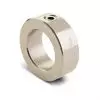 Set Screw Shaft Collars
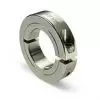 Thin Line Shaft Collars
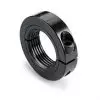 Threaded Shaft Collars – Pacific International Bearing Products
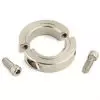 Two-Piece Shaft Collars
 Friction Bearing Universal Joints
 Needle Bearing Universal Joints
Tutorials
Bearing Design Fundamentals: A Complete Guide for Engineers
05 April, 2026
13 min read
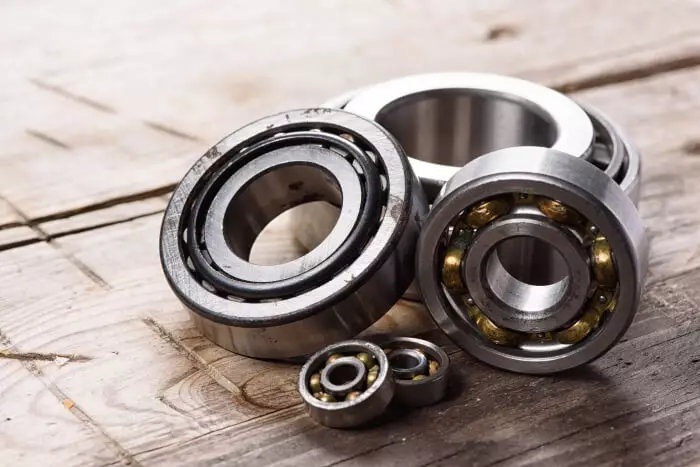
In most applications, engineers are not designing bearings but selecting already designed catalog bearings for a specific load, speed, environment, and service-life requirement. The goal is to choose a bearing that fits the application, meets performance targets, and operates reliably with the right materials, clearance, lubrication, and sealing arrangement.
Major bearing manufacturers such as SKF, Schaeffler, INA, and others develop and validate standard bearing designs for a wide range of applications. Those designs are standardized, and while speed limits, load ratings, and configuration details vary by manufacturer and product line, the bearing industry uses common standards such as ABEC, AFBMA, ISO, DIN, and JIS to maintain dimensional and precision consistency.
As an engineer, you can still influence bearing performance by selecting the right grade, material, ball or roller type, retainer style, lubrication method, seal design, and internal clearance. This guide outlines a practical process for selecting a standard bearing for real applications.
As an engineer, you can affect the performance of a standard bearing by selecting different grades, materials, ball or roller types, retainer type, lubrication, seal design, and clearances. This article will help guide engineers to follow a standard process for selecting bearings for various applications.
Key Takeaways
- Bearing selection starts with the application, operating environment, load type, speed range, space limits, and precision needs.
- Standard bearing material for most applications is AISI 52100 chrome steel, while stainless, M50, and hybrid ceramic options fit harsher or higher-speed conditions.
- Bearing type, size, seals, clearance, cage design, and lubrication all affect speed, load handling, contamination resistance, and service life.
- Manufacturers publish dynamic load rating (C) and static load rating (Co), which engineers use with equivalent dynamic load (P) to size bearings correctly.
- Better bearing performance comes from matching materials, lubrication, internal clearance, and sealing to the real operating conditions.
What Are You Trying to Do?
- To determine steps in selection you must first answer the following basic questions:
- What is the application and operating environment?
- What are the loads? (Axial and radial?)
- What is the rpm range? (Speeds required?)
- Any special considerations for mounting or other? (Space limitations?)
- Any existing parameters that must be met? (Specific shaft or bore requirements?)
- Does this application require extraordinary precision?
Where Do We Go from Here?
First, you must determine the operating environment. Is it caustic, is it outdoors and subject to wind and rain, or is it in an office environment, warehouse, or factory? This information will help us determine whether standard bearing materials or something special might be needed. There are several types of material that you can choose from. Standard bearings are manufactured from AISI 52100 chrome bearing steel, which is used in 90 percent of applications. AISI 52100 is a moderately deep hardening alloy with high-resistance to wear, medium toughness, and low-resistance to softening at elevated temperatures.
Another common bearing material is 440C stainless steel. 440C stainless steel has good corrosion resistance and good resistance to the atmosphere, fresh water, foods, alkalies, and mild acids. Yet another is Cronidur®30, which is a stainless martensitic steel, having greater corrosion resistance than 440C, and is longer wearing. One other is M50 bearing steel, which has high-wear resistance and strength at elevated temperatures.
You can also use combinations of ceramic balls with these materials for the races to create hybrid bearings for use in high-speed, high-precision bearing applications like high-speed spindles.
Spending some time selecting the correct materials can yield rewarding results. Combined with the correct precision, you can affect changes in performance on speeds and loads by 10-20%.
Next Step
So, you have an idea of what materials will be specified and conclude the standard 52100 chrome steel will work.
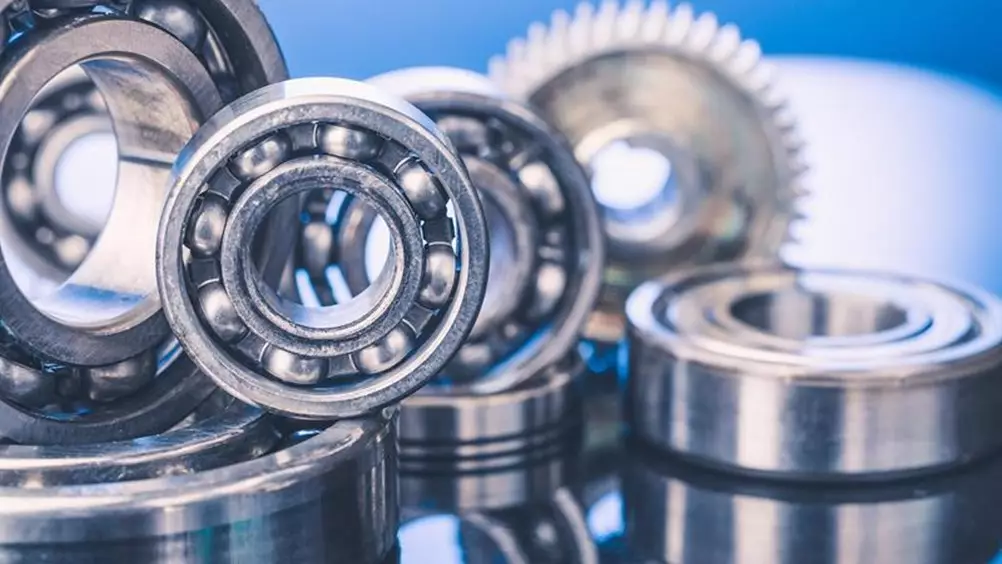
Next is to select the basic bearing type and size. The application will dictate a lot about what bearing type is needed. For demonstration purposes, we will need a bearing that is needed for radial loads with some axial loads. A single row radial ball bearing will be a good starting point. In this example, your requirements are for using a 17 mm shaft, speeds will reach 10,000 rpm, and the environment is dusty.
Any of the bearing manufacturers catalogs will help you identify a 6203-bearing part number. The speed ratings with a greased bearing will be around 18,000 rpm, but with seals it will only reach 12,000 rpm. In this case you need to have seals on this bearing. You will meet your operating speed of 10,000 rpm and you will also be protecting the bearing from the ingress of dirt with the seals. The 6203-bearing is one of the most highly produced and specified bearings sizes in the world.
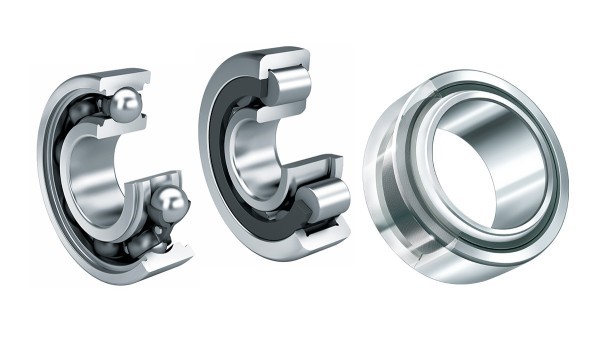
In this second step you are sizing the bearing for fit and function. You can determine the envelope dimensions of the bearing and size according to your parameter requirements. In this step you determine the load ratings and speeds are adequate and that the bearing with grease and seals is correct. If for some reason you need higher speeds or are operating the bearing in caustic conditions, you can simply look at the other options available to you.
Higher speeds can be accomplished with shields, or non-contact seals or no seals at all, which is an open version versus contact seals. You can also change the grease to oil if acceptable in the application. Increasing the tolerance grade of the bearing can result in 10 percent or more capacity increase for speeds. Changing the balls from steel to ceramic can cause an increase in speeds.
Other Considerations
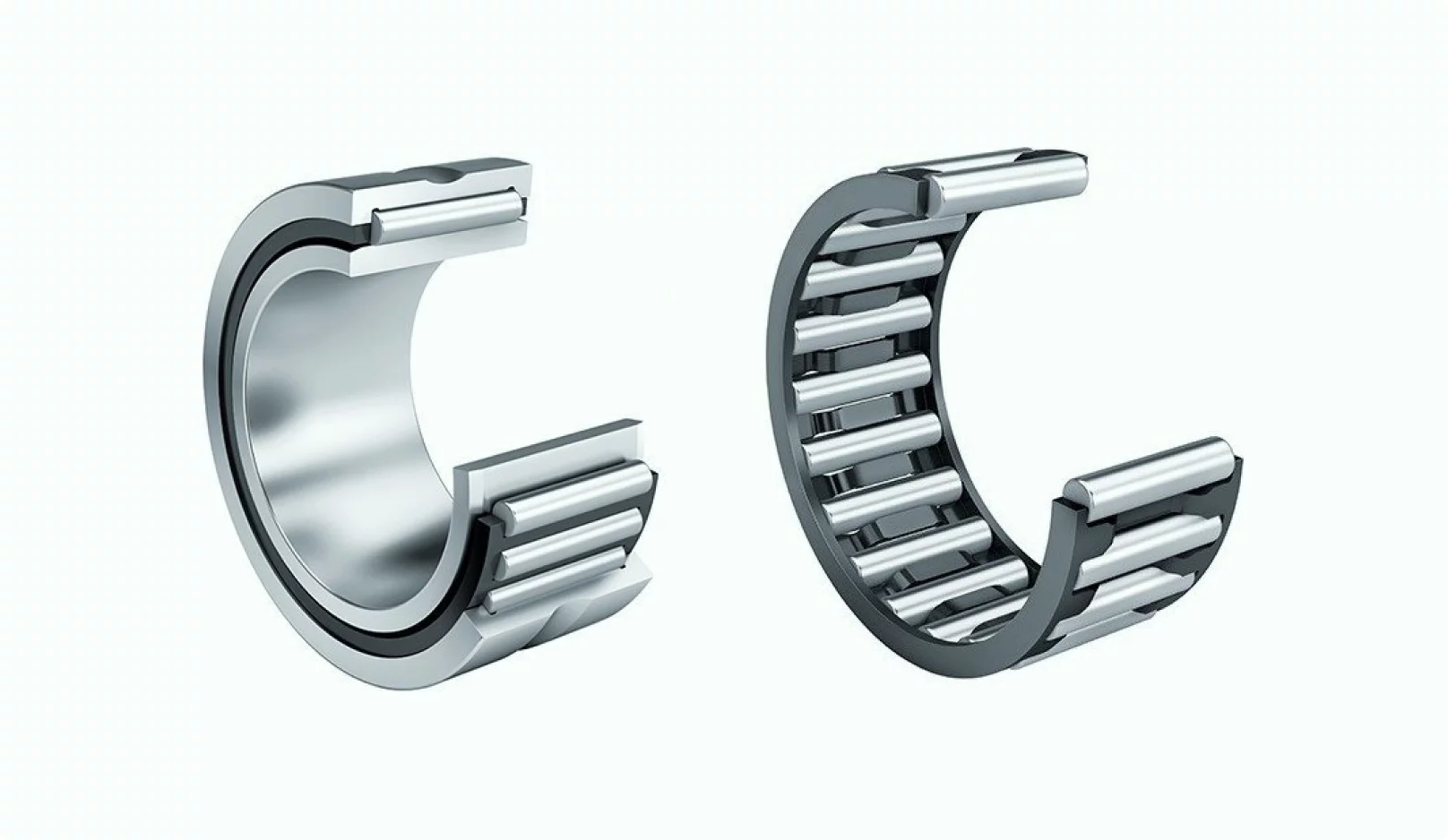
- Cage or Retainer Type and Design
When you are selecting standard bearings, each manufacturer will offer different cages available in various materials, but most are made from steel, brass, or polymide. Other exotic materials like PEEK and Phenolic are also popular options for especially demanding applications. The style of each cage will affect performance and ratings, with some of the more popular types being steel-riveted ribbon, tab type, crown, or solid.
Here is another chance for you to change the functional aspects of a standard bearing by selecting the specific type of retainer and see what benefits each can have in your application.
- Clearance
Internal clearance is particularly important in each bearing application design. Manufacturers sell bearings with a standard range of clearances but most off the shelf bearings have a “normal” clearance referred to as CN. You will have to look in the catalog to see what the CN is for the bearing you selected. The normal clearance range will vary from one size to another. Optimal running of bearings after fitment is zero clearance.
- Lubrication
Selecting the most optimal lubrication is especially important for effective operation. The manufacturers use general purpose grease for off the shelf bearings, and they are often adequate in most applications. However, if your application’s operating environment requires a special grease then you can contact your local distributor or www.pibsales.com for assistance.
There are 4 main types of greases. Sodium/calcium greases are water soluble with a temperature range from 0 to 225°F. Lithium grease is waterproof with a temperature range from 0 to 225°F. Complexes made with Aluminum and lithium have a range from 0 to 400°F. Polyurea is also very popular, Chevron SRI polyurea grease ranges from -20°F to 350°F.
Load Capacity and Fatigue Life: Calculating and Enhancing Bearing Performance
Load Capacity: Determining the load capacity of a bearing is critical to ensuring it can withstand the anticipated forces. The load capacity is listed in the manufacturers catalog as dynamic load rating (C) and static load rating (Co).
Engineers can calculate the equivalent dynamic load (P) based on the actual load and load distribution. This allows for accurate selection and sizing of bearings to avoid premature failures and optimize performance.
Fatigue Life: Fatigue life represents the ability of a bearing to withstand repeated stress cycles without failure. Fatigue failure is a common concern in rotating machinery. Engineers employ various empirical and analytical methods, such as the Lundberg-Palmgren theory and ISO standards, to estimate fatigue life. Improving bearing life involves factors like improving surface finish, reducing stress concentrations, and utilizing advanced bearing designs.
Beyond Basics: Advanced Techniques for Optimizing Bearing Design
Finite Element Analysis (FEA): FEA is a powerful tool used in bearing design to simulate and analyze complex load distributions, stress concentrations, and deformations. It aids in optimizing bearing geometry and material selection. FEA enables engineers to predict the behavior of bearings under different operating conditions, facilitating design improvements and reducing prototyping costs.
Tribology and Surface Engineering: Tribology, the science of friction, lubrication, and wear, is a vital aspect of bearing design. Surface engineering techniques like coatings, platings, and surface texturing enhance the tribological performance of bearings. Innovative surface treatments, such as diamond-like carbon coatings and laser texturing reduce friction, improve wear resistance, and enhance the overall efficiency and reliability of bearings.
Case Studies: Real-World Applications and Success Stories in Bearing Design
Wind Turbine Bearings: The design of large wind turbine bearings have unique challenges such as high-loads, variable wind conditions, and accessibility for maintenance. The use of hybrid ceramic rolling elements have been used to enhance reliability and reduce maintenance requirements in wind turbines.
Automotive Wheel Bearings: Automotive wheel bearings operate under a wide range of loads, speeds, and temperatures. The development of compact and lightweight bearing designs that provide low-friction and high-durability is critical. Advanced technologies, such as magnetic encoders enable accurate monitoring of wheel speed and direction, enhancing safety and stability.
Future Trends: Innovations and Emerging Technologies in Bearing Design
Smart Bearings: The integration of sensors and wireless communication capabilities into bearings enables real-time monitoring of performance for temperature, vibration, and load. Smart bearings enable predictive maintenance strategies and help prevent failures.
Additive Manufacturing: Additive manufacturing, or 3D printing, offers new possibilities in bearing design. It allows the production of intricate geometries, customized bearing designs, and the use of new materials. Additive manufacturing techniques can optimize bearing performance, reduce weight, and enable rapid prototyping.
In conclusion, bearing design and selection requires knowledge about the application and its operating environment. You will need to gather information to determine speeds, loads, and fitments. In addition, it is important to understand the internal clearance required for optimal operation and whether the bearing is going to need seals, grease, or oil. Naturally, there are many types of bearings, and whether rotary or linear, many of these suggestions for finding the correct bearing for your application will apply.
FAQ About Bearing Design Fundamentals
What factors matter most when selecting a bearing?
The main inputs are the operating environment, radial and axial loads, shaft size, speed, mounting limits, and required precision. These factors narrow the bearing type, material, seal style, clearance, and lubricant.
What is the most common material used for standard bearings?
AISI 52100 chrome steel is the standard choice for most applications. The article states that it is used in about 90 percent of applications because it offers strong wear resistance and good general performance.
When should an engineer use stainless steel or hybrid bearings?
Stainless options like 440C or Cronidur®30 fit applications with corrosion exposure or harsher environments. Hybrid bearings, which pair ceramic balls with steel races, fit high-speed and high-precision uses such as spindles.
How do seals and lubrication affect bearing performance?
Seals help block dirt and contamination, but they can reduce top speed compared with open or shielded designs. Lubrication also changes performance, because grease type, oil use, and temperature range all affect service life and operating limits.
What bearing data helps estimate load capacity and life?
Manufacturers list dynamic load rating (C) and static load rating (Co) in their catalogs. Engineers combine that data with the equivalent dynamic load (P) and life methods such as ISO-based calculations to estimate fatigue life and avoid early failure.
For more information, please contact Pacific International Bearing Sales Inc. at [email protected] or call 800-228-8895