Your cart is empty
 Short Rigid Couplings
 Controlflex Couplings
 Jaw Couplings
 Oldham Couplings
 Bearing Locknuts – TCN
 Double Wide Shaft Collars
 Heavy Duty Shaft Collars
 International Series Shaft Collars
 Keyed Shaft Collars
 Mountable Shaft Collars
 Quick Clamping Shaft Collars
 Set Screw Shaft Collars
 Thin Line Shaft Collars
 Threaded Shaft Collars – Pacific International Bearing Products
 Two-Piece Shaft Collars
 Friction Bearing Universal Joints
 Needle Bearing Universal Joints
Bearings
What Bearings Are Used in Drones?
16 November, 2026
25 min read
A practical guide to matching bearing type to drone architecture, motion, and operating environment
Ask what bearing a drone uses and the short answer is usually ‘ball bearings.’ The useful answer is more specific. A 5-inch FPV quadcopter, a stabilized inspection drone, a fixed-wing survey UAV, and a helicopter-style unmanned aircraft can all use very different bearing arrangements because the loads, speeds, motion, and packaging are different.
Pacific International Bearing Sales works with miniature, precision, thin-section, angular-contact, roller, spherical plain, and rod-end bearings across applications where low friction and reliable motion matter. In drones, the best bearing choice starts with the mechanism: propulsion motor, camera gimbal, tilt joint, gearbox, landing gear, wheel hub, actuator, control linkage, or cooling system.
That distinction matters because the bearing that is excellent in a high-speed brushless motor may be a poor choice in a slow, shock-loaded landing-gear pivot. The same is true in reverse: a robust articulation bearing that tolerates misalignment is not what a compact gimbal needs when pointing accuracy and low running torque dominate.
Key Takeaways
• Small FPV and consumer multirotors rely heavily on miniature deep-groove ball bearings in their brushless propulsion motors.
• Camera drones add gimbal bearings: miniature deep-groove bearings, thin-section bearings, angular-contact pairs, and occasionally crossed-roller bearings where stiffness and minimal play are critical.
• Fixed-wing UAVs typically need motor and actuator bearings; wheeled versions can also use wheel bearings and rod-end or spherical plain bearings in control and landing-gear linkages.
• VTOL fixed-wing and tilt-rotor UAVs combine multirotor motor bearings with additional tilt-joint and actuator bearings, so combined load, moment stiffness, and misalignment become more important.
• Larger helicopter/coaxial UAVs can use ball, cylindrical, tapered, and special rotorcraft bearing arrangements in rotor shafts and gearboxes, plus spherical plain bearings and rod ends in controls.
• Hybrid ceramic rolling elements, stainless steel, seals, shields, grease, preload, and internal clearance are configuration choices – not separate bearing types – and they should be selected for the actual duty cycle.
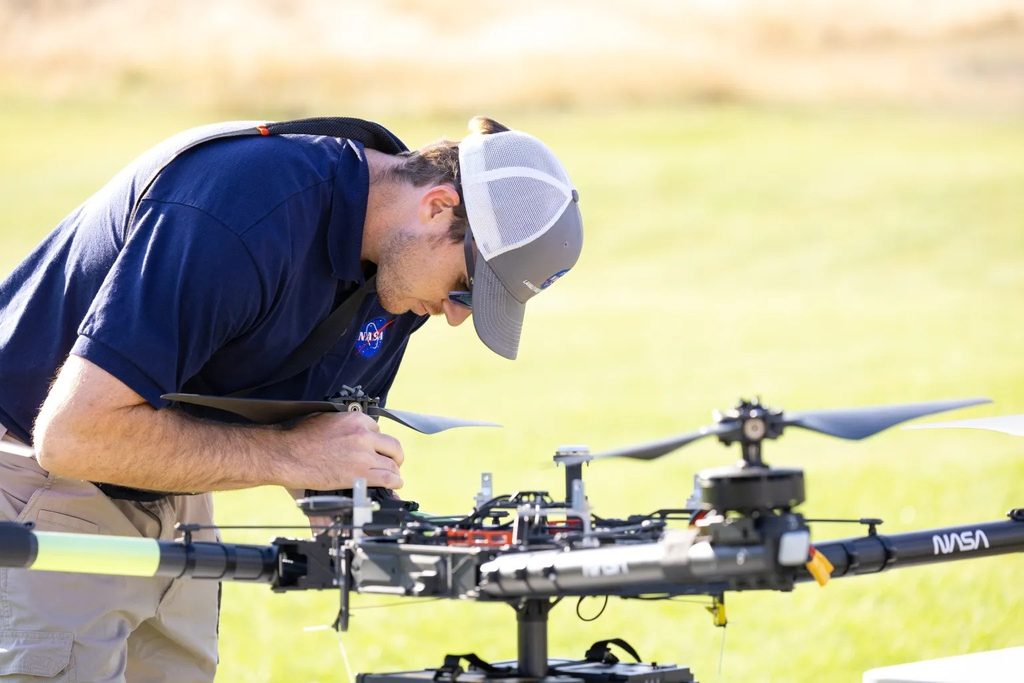
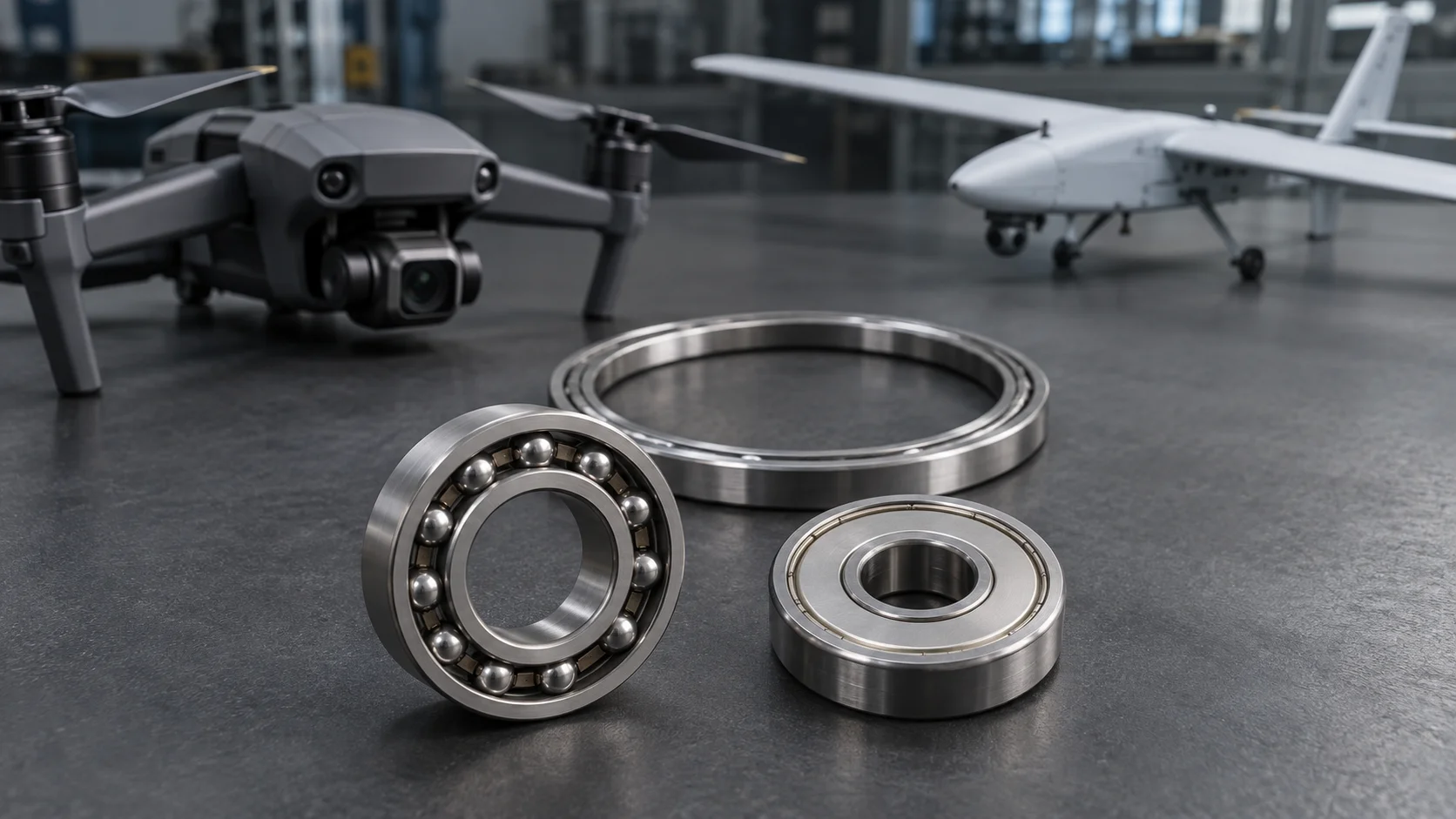
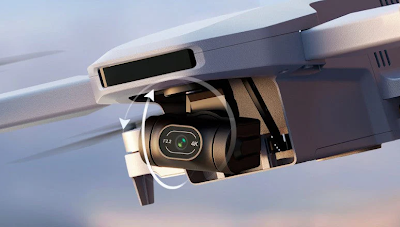
Commercial multirotors concentrate several bearing jobs in a small airframe: high-speed propulsion, payload stabilization, and sometimes actuated landing or sensor mechanisms.
Which Drones Use Which Bearings?
The table below is a practical architecture map, not a universal bill of materials. Individual designs vary, but it shows where each bearing family is most likely to appear and what the designer is trying to accomplish.
| Drone architecture | Common bearing locations | Bearing families commonly encountered | Primary design priority |
| Micro / FPV racing multirotors | Propulsion motors; occasional small pivots | Miniature deep-groove ball bearings; flanged miniature bearings in some mechanisms | Very low friction, high speed, low mass, vibration tolerance |
| Consumer camera drones | Propulsion motors; 2- or 3-axis gimbals; folding mechanisms | Miniature deep-groove; thin-section; angular-contact pairs; small flanged bearings | Low running torque, quiet motion, low play, compact packaging |
| Industrial inspection / mapping multirotors | Larger motors; stabilized payloads; retractable sensors or gear; cooling fans | Precision deep-groove; angular contact; thin-section; needle roller; spherical plain / rod ends where joints articulate | Repeatability, contamination control, payload stiffness, outdoor reliability |
| Agricultural / heavy-lift multirotors | High-power motors; gear reduction if used; landing gear; actuator linkages | Larger deep-groove and angular-contact; cylindrical / tapered roller in geared or heavily loaded positions; rod ends / spherical plain bearings | Load capacity, contamination resistance, corrosion resistance, impact tolerance |
| Fixed-wing electric UAVs | Propeller motor; servos / actuators; control linkages; wheels if fitted | Deep-groove and angular-contact ball bearings; miniature / needle bearings in actuators; rod ends / spherical plain bearings; wheel bearings | Efficiency in cruise, low backlash in controls, reliable articulation, low maintenance |
| VTOL fixed-wing / tilt-rotor UAVs | Lift motors; cruise motor; tilt joints; actuators; gearboxes; control surfaces | Deep-groove; angular-contact; thin-section; crossed-roller; needle roller; spherical plain / rod ends; roller bearings in gearboxes | Combined loads, moment stiffness, repeatable transition motion, compact joints |
| Helicopter / coaxial UAVs | Main rotor shaft; tail / secondary rotor; swashplate or control system; transmission | Ball, angular-contact, cylindrical and tapered roller bearings; special swashplate arrangements; spherical plain / rod ends | Rotor loads, gearbox loads, stiffness, fatigue life, contamination and lubrication control |
Which Bearings Do FPV and Small Multirotor Drones Use?
In small quadcopters and FPV racing drones, propulsion dominates the bearing count. Each brushless motor needs its rotor and shaft to run concentrically at high speed with as little mechanical loss as practical. Miniature deep-groove ball bearings are the usual fit because they are compact, efficient, widely available, and capable of carrying the radial load from the rotating motor plus a useful amount of axial load.
The important detail is not simply the bearing’s diameter. Motor speed, propeller thrust, shaft stiffness, vibration, fit, internal clearance, lubrication, and sealing all change running torque and heat. A low-cost bearing that feels acceptable by hand can become noisy or rough after repeated high-RPM operation if raceway quality, grease, or internal geometry is not suitable.
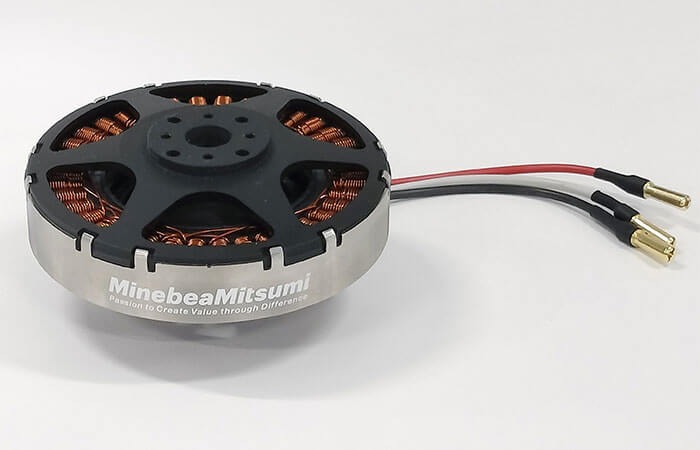
FPV designs usually favor low mass and low drag, so designers may accept less aggressive sealing than they would on a spraying or inspection drone. The right balance depends on whether the aircraft spends its life on a clean racing course, dusty construction sites, salt air, or wet vegetation.
Which Bearings Do Consumer and Professional Camera Drones Use?
Camera drones add a second precision-motion system: the gimbal. The gimbal does not care about high RPM in the same way a propulsion motor does. It cares about smooth reversal, low starting torque, stiffness, and very little free play. Any looseness that lets the camera sag or chatter becomes visible as image motion and increases the amount of correction the gimbal motors must provide.
Small pitch and roll joints often use miniature deep-groove bearings. Larger yaw axes can benefit from thin-section bearings because they provide a larger support diameter without a thick, heavy cross-section. Where an axis carries meaningful thrust or must be preloaded to remove end play, angular-contact bearings can be a better fit. High-stiffness professional gimbals may use crossed-roller bearings when the design needs radial, axial, and moment support in a compact envelope.
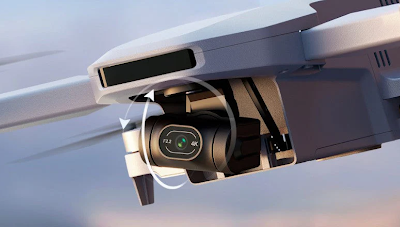
This is a good example of why one drone can use several bearing families. The motor bearing is selected for speed and efficiency; the gimbal bearing is selected for stiffness, low torque, and pointing repeatability.
Which Bearings Do Industrial Inspection and Mapping Drones Use?
Inspection and mapping multirotors often look similar to camera drones, but their payloads can be heavier and their operating environment less forgiving. LiDAR, thermal cameras, multispectral sensors, antennas, and protective housings increase payload inertia and can raise the moment load on gimbal or turret bearings. Retractable sensors and folding structures can add pivots, linear guides, miniature needle bearings, or spherical joints.
For these aircraft, contamination resistance and repeatability become as important as low friction. Dust, moisture, temperature swings, and transport vibration all affect grease, seals, fits, and corrosion. Stainless steel or corrosion-resistant bearing configurations may be justified even when an all-steel bearing would carry the load on paper.
Which Bearings Do Agricultural and Heavy-Lift Multirotors Use?
Agricultural spraying drones and heavy-lift multirotors push propulsion bearings harder because the motors are larger, payloads are heavier, and the aircraft may operate around dust, water, fertilizer, chemicals, and plant debris. The propulsion motor may still use ball bearings, but size, load capacity, sealing, corrosion resistance, and grease selection become more important than they are in a lightweight hobby platform.
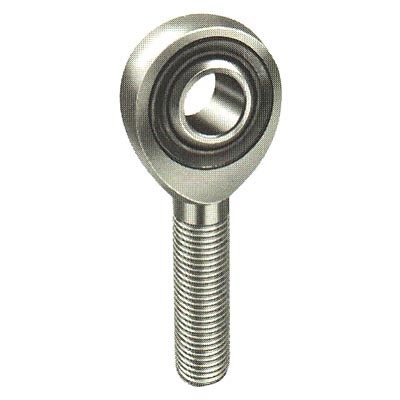
If the aircraft uses geared drives, folding booms, retractable landing gear, payload winches, or heavy actuator linkages, other bearing families can appear. Needle roller bearings offer high radial capacity in compact pivots. Spherical plain bearings and rod ends are useful where a linkage must articulate and tolerate alignment variation. Larger geared positions may use cylindrical, tapered, or angular-contact bearings depending on the mix of radial and axial load.
The before-and-after difference is straightforward. A light-duty pivot bearing in a contaminated, shock-loaded joint can loosen or bind. A joint designed around the real load direction, articulation angle, sealing need, and maintenance interval stays predictable and keeps the surrounding structure from carrying unintended side loads.
Which Bearings Do Fixed-Wing UAVs Use?
A fixed-wing UAV can have fewer high-speed bearings than a multirotor because it may use one propulsion motor instead of four, six, or eight. That does not mean the bearing problem is simpler. The motor still needs efficient shaft support, while control surfaces, servos, flap mechanisms, payload turrets, and landing gear add slower mechanisms with different load patterns.
Small electric fixed-wing UAVs commonly use deep-groove ball bearings in the propulsion motor and miniature bearings inside servos or geared actuators. Control linkages can use spherical plain bearings or rod ends when the joint needs angular freedom and reliable load transfer. Wheeled aircraft add wheel hub bearings; hand-launched and belly-landed designs may eliminate that requirement entirely.
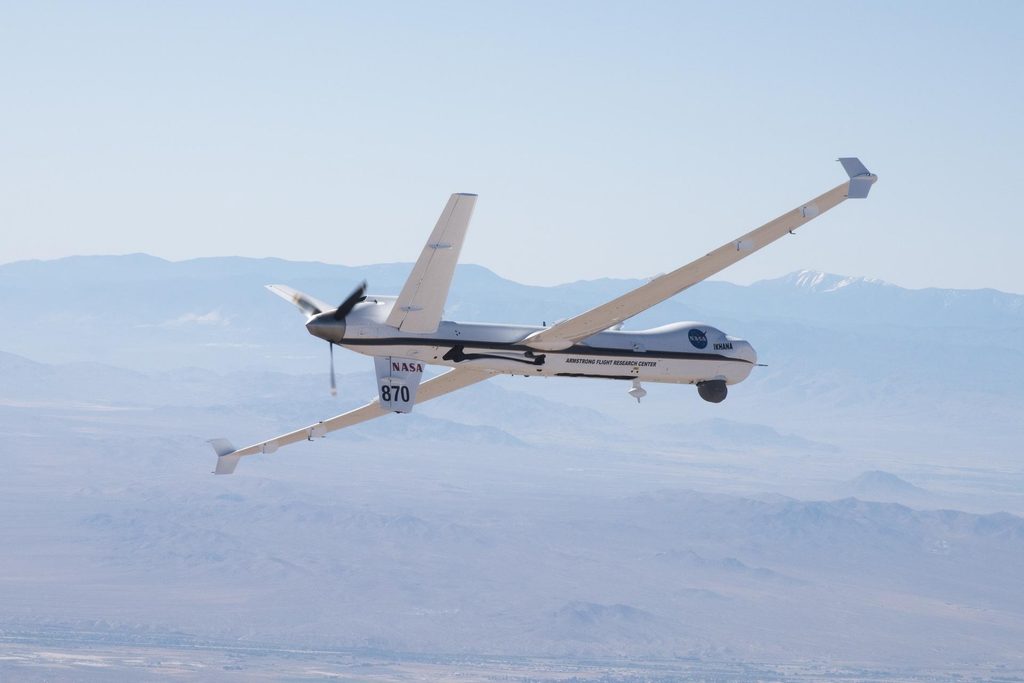
This is why the aircraft configuration matters. Two fixed-wing UAVs with the same wingspan can have very different bearing bills if one is hand-launched with simple control surfaces and the other has retractable landing gear, a stabilized sensor turret, and multiple redundant actuators.
Which Bearings Do VTOL Fixed-Wing and Tilt-Rotor UAVs Use?
Hybrid VTOL aircraft combine two mechanical worlds. They need the high-speed propulsion bearings of a multirotor during vertical flight and the actuator, control-surface, and cruise-drive bearings of a fixed-wing aircraft. If motors or nacelles tilt between hover and cruise, the tilt joint becomes a major bearing application of its own.
A tilt joint can see radial load, axial load, and a significant overturning moment at the same time. Depending on scale and architecture, designers may use paired angular-contact bearings, thin-section bearings, crossed-roller bearings, or a combination of rolling and spherical joints. Actuator ends frequently benefit from rod ends or spherical plain bearings because they can accommodate the small angular changes created as the mechanism moves through its stroke.
The wrong bearing can make a tilt mechanism feel fine during slow bench testing but develop play, high torque, or uneven wear under aerodynamic and inertial loads. The right arrangement keeps the joint stiff enough for repeatable transition geometry without loading the actuator with unnecessary friction.
Which Bearings Do Helicopter and Coaxial UAVs Use?
Helicopter-style and coaxial UAVs are generally more bearing-intensive than simple multicopters because the rotor system and transmission carry concentrated loads through shafts, gears, and control mechanisms. Small electric rotorcraft may still rely heavily on miniature ball bearings, but larger unmanned rotorcraft can use the same bearing types seen in conventional rotorcraft: ball, angular-contact, cylindrical roller, tapered roller, and special bearing arrangements for rotor shafts, gearboxes, swashplates, and control systems.
Spherical plain bearings and rod ends are also common solutions for control linkages where motion is oscillatory and alignment changes through the control cycle. These joints move much more slowly than a motor bearing, but they can carry high alternating loads and must remain tight enough to preserve control geometry.
What Each Bearing Type Actually Does in a Drone
Bearing names can sound interchangeable until the load path is considered. The table below summarizes the real job each family is best suited to perform.
| Bearing family | Typical drone job | What it does well | Selection watch-out |
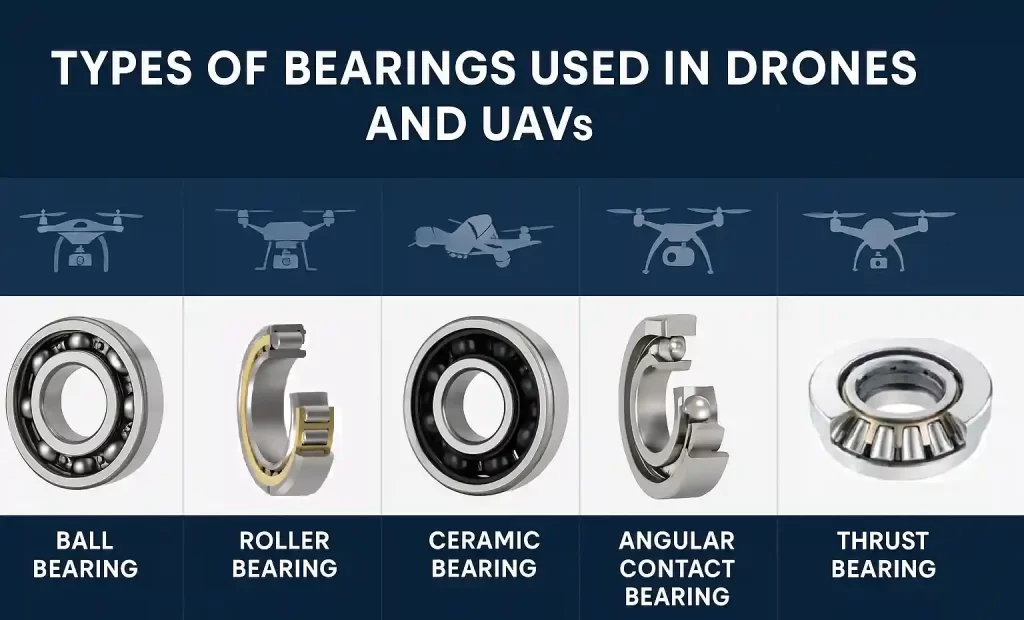
| Miniature deep-groove ball bearing | Propulsion motors, small gimbals, fans, servos | Low-friction radial support with moderate bidirectional axial capability in a compact package | High-speed heat, contamination, clearance, grease torque |
| Angular-contact ball bearing | High-thrust motors, gimbal/tilt axes, gearboxes | Carries combined radial and axial load; pairs can be preloaded for stiffness and low play | Preload, mounting accuracy, direction of thrust load |
| Thin-section ball bearing | Large-diameter gimbal or turret axes, compact rotary joints | Provides a large support diameter with low section height and weight | Ring deflection, housing stiffness, preload and fit |
| Crossed-roller bearing | High-stiffness gimbals, turrets, tilt joints | Carries radial, axial, and moment load with high rotational rigidity | Mounting accuracy, contamination, torque sensitivity |
| Needle roller bearing | Compact pivots, actuator joints, small gear mechanisms | High radial load capacity in a small radial envelope | Requires suitable raceway/hardness; limited axial capacity unless combined |
| Spherical plain bearing / rod end | Control linkages, landing gear, actuator ends | Supports oscillating load while allowing angular misalignment | Liner wear, corrosion, edge loading, joint geometry |
| Cylindrical / tapered roller bearing | Larger rotorcraft shafts, transmissions, geared heavy-duty positions | High radial capacity; tapered designs also manage axial load and stiffness | Mass, preload/endplay, lubrication, alignment |
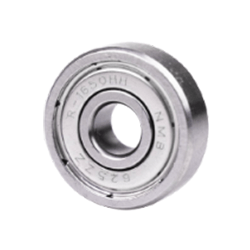
Deep-groove ball bearings deserve special emphasis because they are the workhorse of small UAVs. Their versatility explains why they appear in motors, fans, servos, wheels, and small mechanisms, but versatility does not make every deep-groove bearing interchangeable. Precision grade, cage, grease, internal clearance, shields or seals, material, and fit can change how the bearing behaves in a high-speed drone application.
Configuration Choices Matter as Much as Bearing Type
Hybrid ceramic versus all-steel
Hybrid ceramic bearings use ceramic rolling elements with steel rings. They can reduce rolling-element mass and can offer advantages in high-speed, high-temperature, or electrically challenging applications, but they are not automatically the best choice for every drone. Cost, impact behavior, lubrication, ring material, and actual speed should justify the change.
Stainless and corrosion-resistant configurations
Outdoor drones can see humidity, rain, salt, fertilizer, dust, and repeated condensation. Stainless steel or corrosion-resistant coatings can improve reliability where corrosion is a realistic failure mode. The tradeoff is that material properties and load ratings may differ from standard bearing steel, so material choice belongs in the load calculation rather than being treated as a cosmetic upgrade.
Shields, seals, and contamination control
A metal shield adds low-drag protection from larger particles but is not a positive environmental seal. Contact or low-contact seals improve exclusion but add torque and heat. On a high-speed propulsion motor, the designer may prioritize low drag; on a spraying or inspection drone, stronger contamination exclusion may be worth the friction penalty. The best choice is application-dependent.
Clearance and preload
Motor bearings need enough internal operating clearance to avoid running hot after fits and temperature change are considered. Precision gimbal and tilt joints may need controlled preload to eliminate play and increase stiffness. Too much preload raises torque and temperature; too little leaves backlash. The target is not ‘as tight as possible’ but the correct operating condition for the mechanism.
Lubrication
Small sealed or shielded bearings are often lubricated for life, so grease selection becomes part of the original design. Low-temperature torque, high-speed churning, base-oil compatibility, evaporation, contamination, and storage all matter. More grease is not automatically better in a fast miniature bearing; excess fill can increase drag and heat.
What Happens When the Wrong Bearing Is Used?
Most drone bearing problems do not begin as a dramatic seizure. They start as a small increase in torque, noise, play, temperature, or vibration. Because flight-control systems compensate for mechanical imperfections, a bearing issue can hide until it becomes a maintenance problem or starts affecting payload quality and efficiency.
| Mismatch | What shows up in service | What improves with the correct choice |
| High-speed motor fitted with unsuitable grease or clearance | Rising torque, heat, noise, current draw | High-speed bearing configuration with appropriate internal clearance and lubricant |
| Gimbal axis with excessive internal play | Jitter, drift, control correction, unstable pointing | Preloaded angular-contact, thin-section, or other low-play arrangement matched to the axis |
| Tilt joint using a bearing that cannot carry moment load | Uneven wear, deflection, actuator overload | Bearing arrangement sized for radial + axial + moment load and housing stiffness |
| Outdoor joint with poor contamination protection | Abrasive wear, corrosion, rough motion | Sealing, material, and lubricant matched to dust, water, chemicals, and service access |
| Articulating linkage forced to run misaligned | Edge loading, binding, shortened joint life | Spherical plain bearing or rod end where angular articulation is part of the motion |
| Heavy gearbox using a light-duty bearing arrangement | Deflection, wear, poor gear contact, early failure | Roller or angular-contact arrangement selected from actual gear forces and stiffness requirements |
How to Select Bearings for a Drone or UAV
PIB starts with the mechanical position and duty cycle. Dimensions identify what fits; the rest of the application determines what will continue to work after the aircraft is exposed to speed, load, vibration, weather, and repeated flight cycles.
- Define the motion: continuous high-speed rotation, low-speed oscillation, limited-angle articulation, linear travel, or wheel rotation.
- Resolve the loads: radial, axial, combined, shock, and moment load – including the load direction during takeoff, landing, maneuvering, and transport.
- Check speed and temperature together. Fits, motor heat, ambient temperature, and grease can change the bearing operating condition.
- Decide how much play the mechanism can tolerate. A propulsion motor, camera gimbal, and landing-gear pivot have very different clearance and stiffness targets.
- Account for the environment: dust, moisture, salt, chemicals, washdown, altitude, and temperature cycling influence materials, seals, shields, and lubricant.
- Check the surrounding structure. Thin rings and high-stiffness bearings only perform as intended when the shaft and housing provide adequate support and accuracy.
- Plan maintenance realistically. If the bearing is inaccessible in service, contamination protection and lubricant life deserve more weight during design.
- Evaluate total rotating and moving mass. Lightweight design matters, but reducing bearing size without checking stiffness and load can move the problem into the shaft, housing, or actuator.
Frequently Asked Questions
What bearings are most common in drones?
Miniature deep-groove ball bearings are the most common because they are used extensively in brushless propulsion motors and other compact rotating assemblies. More complex drones add angular-contact, thin-section, crossed-roller, needle roller, spherical plain, rod-end, cylindrical, or tapered bearings where the mechanism requires them.
Do all drones use the same motor bearings?
No. Motor size, shaft diameter, thrust, RPM, propeller load, temperature, sealing, and target life vary widely. Two motors that look similar externally can use different bearing sizes, internal clearances, lubricants, and materials.
What bearings are used in drone camera gimbals?
Common choices include miniature deep-groove bearings for compact axes, thin-section bearings for large-diameter low-profile rotation, and angular-contact pairs where axial load and preload are important. Crossed-roller bearings may be used when a high-end gimbal or turret needs very high stiffness and low play.
What bearings are used in fixed-wing UAV control systems?
Small control actuators can use miniature ball or needle bearings, while control linkages may use spherical plain bearings or rod ends where angular movement is required. The exact arrangement depends on whether the control surface is driven directly, through gears, or through a linkage.
Do heavy-lift drones need roller bearings?
Sometimes. Larger motors can still use ball bearings, but heavy gearboxes, rotorcraft transmissions, wheel hubs, or highly loaded shafts may justify cylindrical or tapered roller bearings. Load direction, speed, package size, lubrication, and stiffness determine whether a roller bearing is appropriate.
Are ceramic bearings better for drones?
Hybrid ceramic bearings can be useful in selected high-speed, temperature-sensitive, low-mass, or electrically demanding positions, but they are a configuration option rather than an automatic upgrade. The complete bearing system – rings, rolling elements, cage, lubricant, fits, and environment – should be evaluated together.
Should drone bearings be sealed?
It depends on the position. A clean, high-speed motor may prioritize low drag, while an agricultural, marine, or construction drone may need stronger protection from dust, water, and chemicals. Sealing improves exclusion but can add torque, so the correct balance is application-specific.
Final Thoughts
There is no single ‘drone bearing.’ The bearing mix follows the aircraft architecture. Small multirotors are dominated by miniature motor bearings. Camera drones add precision gimbal bearings. Fixed-wing UAVs shift more of the bearing work into actuators, control linkages, and landing systems. VTOL hybrids add tilt joints. Helicopter-style UAVs bring rotor and transmission bearings into the picture.
The practical selection process is the same across all of them: identify what the joint actually does, resolve the loads and speed, control play and friction, protect the bearing from the real environment, and make sure the shaft, housing, lubrication, and maintenance plan support the choice. PIB can help narrow the options when a drone program needs a miniature bearing, a precision gimbal arrangement, an articulated aerospace joint, or a heavier-duty rotor and gearbox solution.
Call us (800) 228-8895, email us [email protected], visit us www.pibsales.com.
1
/
1