Your cart is empty
 Short Rigid Couplings
 Controlflex Couplings
 Jaw Couplings
 Oldham Couplings
 Bearing Locknuts – TCN
 Double Wide Shaft Collars
 Heavy Duty Shaft Collars
 International Series Shaft Collars
 Keyed Shaft Collars
 Mountable Shaft Collars
 Quick Clamping Shaft Collars
 Set Screw Shaft Collars
 Thin Line Shaft Collars
 Threaded Shaft Collars – Pacific International Bearing Products
 Two-Piece Shaft Collars
 Friction Bearing Universal Joints
 Needle Bearing Universal Joints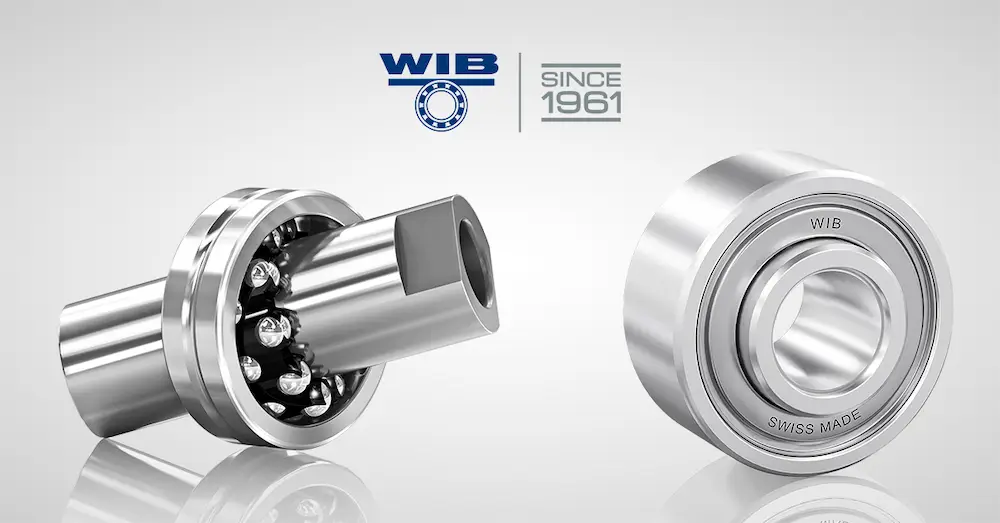
Bearings
SP Series-Stainless Steel Bearings Explained
08 December, 2025
17 min read
WIB SP Series brand stainless steel bearings are engineered for corrosive, high-humidity, and saline environments, making them ideal for applications in food processing equipment, marine and offshore systems, chemical processing plants, and medical devices. In such harsh conditions, conventional bearing steels can suffer accelerated corrosion, leading to premature material degradation and drastically shortened bearing life. By contrast, the WIB SP Series bearings provide a robust solution that resists rust and maintains performance where standard bearings would fail. Designed with an advanced stainless alloy and specialized surface treatment, these bearings help ensure reliability, uptime, and lower maintenance costs for OEMs and end-users.
Corrosion Challenges in Bearing Applications
Corrosion is a major threat to bearing performance and longevity. When moisture, salts, or chemicals attack a bearing’s steel surfaces, surface pitting often occurs – tiny pits or rust spots form on raceways and rolling elements. These imperfections disrupt the smooth rolling contact needed for efficient operation, increasing friction and uneven motion. As friction rises, the bearing runs hotter and wears faster, accelerating fatigue damage like spalling or cracking. Moreover, the pitting and rust act as stress concentrators, which can lead to vibration, excess noise, and ultimately catastrophic failure if not addressed. In addition to mechanical problems, corrosion in bearings can introduce particulate contamination (from flaking rust) into sensitive machines and lead to costly unplanned downtime and replacements. Overall, a corroded bearing means higher maintenance costs and reduced machine reliability.
Certain industries are especially prone to these issues. For example, food processing and pharmaceutical facilities undergo frequent washdowns with water and cleaners, inviting rust on standard bearings. Marine and offshore applications expose bearings to saltwater spray, which rapidly eats away at common steels. Chemical processing environments might subject bearings to aggressive reagents or humidity. In all these cases, using a corrosion-resistant bearing material is essential to avoid the pitfalls of rust. Facilities that switch to specialized stainless bearings often see improved equipment uptime, reduced maintenance intervals, and lower lifecycle costs.
SP Series Alloy and Nitrogen-Diffusion Hardening
To solve corrosion problems, the WIB SP Series employs a proprietary stainless steel alloy combined with a unique surface hardening process. This new treatment is a low-temperature nitrogen diffusion process, in which nitrogen atoms are introduced into the steel’s surface. Nitrogen is a potent interstitial alloying element – being a small atom, it can penetrate the steel surface and occupy sites in the metal lattice. By diffusing nitrogen into the steel, the SP Series achieves a hardened case layer that dramatically boosts surface properties while preserving the stainless steel’s innate corrosion resistance.
Unlike high-temperature carburizing or standard through-hardening, this special process does not introduce carbon (which could form carbides and reduce corrosion resistance). Instead, the nitrogen diffusion hardening creates a hardened, nitrogen-enriched surface without compromising the chromium content that provides stainless steel its corrosion resistance. The result is a bearing material with exceptional surface hardness and strength, yet still highly resistant to rusting.
Notably, the WIB SP Series heat treatment yields a graded hardness profile in each bearing ring. After the proprietary hardening and quenching sequence, the steel achieves maximum hardness at the surface, which gradually decreases toward the core. This means the raceway surfaces – where contact stress and wear are highest – are extremely hard (~730–750 HV on the Vickers scale, about HRC 60). Deeper in the material, the hardness tapers to around ~640 HV (HRC 57) at roughly 1 mm below the surface. This gradient gives the best of both worlds: a very hard, wear-resistant exterior and a tough, ductile core that can absorb shocks and prevent brittle fracture. In practical terms, SP Series bearings have a surface-hardened “shell” for wear and fatigue resistance, coupled with a ductile interior for durability. (By comparison, a standard 440C stainless bearing is uniformly hardened through its section, typically to about 58 HRC; the SP Series achieves similar core hardness with an even harder surface layer.)
Microstructure: Chromium Carbides vs. Chromium Nitrides
The WIB SP Series’s superior properties stem from fundamental differences in microstructure when compared to traditional bearing steels like 100Cr6 (AISI 52100) or AISI 440C. In conventional high-carbon bearing steels, the heat treatment process (hardening and tempering) leads to the formation of coarse chromium-rich carbides (compound types like M_23C_6 or M_7C_3). These carbide particles tend to precipitate along grain boundaries in the steel. The problem is that forming chromium carbides ties up chromium from the steel matrix and creates chromium-depleted zones around grain boundaries – and those zones are much more vulnerable to corrosion. Essentially, the very act of hardening a typical carbon steel can reduce its localized corrosion resistance because of carbide formation.
In contrast, the SP Series alloy is enriched with nitrogen rather than high carbon. During heat treatment, it precipitates fine chromium nitrides (such as CrN and Cr_2N) instead of large carbides. These nitrides are much finer and more uniformly dispersed throughout the steel matrix. There are two big advantages to this: (1) the fine nitrides strengthen the steel without accumulating at grain boundaries, and (2) they do not cause significant chromium depletion in the surrounding metal. The nitrogen-rich matrix retains its corrosion-fighting chromium in solid solution. As a result, the SP Series stainless steel has a much more uniform microstructure with higher localized corrosion resistance than 100Cr6 or 440C. This refined microstructure also contributes to the material’s mechanical strength and stability at high hardness. In summary, WIB SP Series steel avoids the coarse carbide network that plagues standard bearing steels, using stable nitrides to achieve hardness without sacrificing corrosion resistance.
Performance Comparison of SP, 440C, and 100Cr6 Steels
How does the WIB SP Series stack up against traditional bearing materials in overall performance? The key areas to compare are corrosion resistance, wear resistance, and fatigue strength. Table 1 provides a qualitative comparison of WIB SP Series stainless steel to AISI 440C stainless and 100Cr6 (52100) chrome steel, based on data from the manufacturer’s testing:
| Bearing Steel | Corrosion Resistance | Wear Resistance | Fatigue Strength |
| 100Cr6 (52100 chrome steel) | Low | Low | Medium |
| 440C (stainless bearing steel) | Medium | Medium | Medium |
| SP Series high-nitrogen steel | High | Medium | Medium |
In terms of corrosion resistance, standard 100Cr6 is a non-stainless bearing steel that offers virtually no protection in wet or humid conditions (it rusts easily). AISI 440C is a martensitic stainless steel, so it provides moderate corrosion resistance – sufficient for mild moisture or the occasional splash, but it will still corrode over time in marine or washdown settings. The WIB Series, however, delivers high corrosion resistance on par with the best stainless materials, making it well-suited for continuous exposure to water, salt spray, or aggressive chemicals. Wear resistance of the SP Series is rated medium, comparable to 440C. Even though the SP’s surface is harder than 440C, its core is slightly softer, so in total it performs similarly in wear (and both are slightly better than 100Cr6’s low wear resistance). Fatigue strength for both 440C and SP is medium – both are quite capable in sustaining cyclic loads (far better than mild steels or lower-grade materials), and 100Cr6 is also rated medium in fatigue (52100 is known for good rolling contact fatigue life). In short, switching from 440C to SP Series dramatically improves corrosion resistance without any loss in wear or fatigue performance.
It’s also instructive to look at some quantitative results from laboratory tests. As mentioned, hardness testing on SP Series bearing rings revealed a high surface hardness around 730–750 HV1 (Vickers microhardness) that gradually decreases to ~630–640 HV1 at 1 mm depth. This graded hardness profile confirms the effectiveness of the nitrogen-diffusion hardening process – the surface is extremely hard to resist wear, while the inner core remains tough. For reference, 440C stainless typically has a uniform hardness around 600–650 HV (about 58 HRC) through its cross-section when fully hardened. The SP Series can equal or exceed that hardness internally, with an even harder surface “case.” This is a similar concept to case-hardening processes used in other industries, but achieved here through a proprietary stainless alloy treatment.
Another dramatic result comes from corrosion testing. In a neutral salt spray test (per ISO 9227 standards), samples of SP Series steel were tested alongside standard 440C stainless. The test involved 5% sodium chloride mist at 35 °C, with continuous exposure for 120 hours (five days). After the test, the 440C specimens were heavily rusted and showed clear corrosion products. In stark contrast, the SP Series specimens showed no visible corrosion at all. In other words, the SP material completely withstood the salt spray that readily attacked the conventional stainless steel. This result confirms that the SP Series offers vastly superior corrosion resistance in aggressive environments. It’s worth noting that the ISO 9227 salt fog test is a common benchmark for materials used in marine and industrial settings – passing 120 hours with no corrosion is a strong indication of long-term durability in the field.
The developers of the SP alloy have compared it to other high-performance stainless steels and found it holds up extremely well. In fact, the SP Series was designed to achieve corrosion performance comparable to that of expensive high-nitrogen stainless alloys like Cronidur® 30, but at a much more cost-effective price point. Cronidur is a premium aerospace-grade stainless steel known for superb corrosion and fatigue properties (often used in aerospace bearings); SP Series provides similar benefits while being more accessible for industrial use. This balance of high corrosion resistance, good mechanical performance, and reasonable cost makes SP Series very attractive for OEMs looking to upgrade their bearings in corrosive applications.
Industries and Applications for SP Series Bearings
The SP Series stainless steel bearings are especially valuable in industries where standard bearings struggle with corrosion. Key sectors that benefit include:
- Food Processing and Pharmaceuticals: Production lines, conveyors, mixers, and packaging equipment are frequently subject to washdown with water, steam, and sanitizing chemicals. SP Series bearings can handle these food-grade, washdown environments without rusting or leaching, especially when paired with appropriate food-safe lubricants and seals. This ensures compliance with hygiene standards and minimizes downtime for maintenance. Equipment operators gain longer service life and fewer bearing change-outs, even under daily sanitation cycles.
- Marine and Offshore: Marine equipment such as pumps, winches, propeller shafts, and deck machinery operate in salt spray or even submerged conditions. Traditional 440C stainless bearings will start to rust in extended saltwater exposure, leading to seizure or failure. SP Series bearings, with their high corrosion resistance, excel in marine environments – they resist seawater-induced pitting and crevice corrosion, ensuring critical systems remain operational. This extends the maintenance intervals for ships or offshore rigs and improves safety by reducing the risk of saltwater-related bearing failures.
- Chemical Processing: Pumps, agitators, valves, and conveyors in chemical plants often encounter corrosive fluids or vapors. Whether it’s a caustic cleaning agent, acidic solution, or solvent exposure, bearings in these settings need extra protection. The SP Series material’s ability to withstand aggressive chemicals means it can significantly outlast standard steel bearings in chemical industry applications. Users benefit from greater reliability and avoid the frequent replacements that result when chemicals corrode standard bearings.
- Medical Devices and Clean Environments: High-end medical and dental equipment (like surgical handpieces, imaging machines, or lab instruments) demand bearings that won’t corrode or contaminate sensitive environments. The SP Series’ stainless composition and hardened surfaces make it suitable for such uses, as it can endure autoclave sterilization cycles, humidity, or disinfectants far better than ordinary bearings. In medical or semiconductor manufacturing, where any particle generation is a concern, corrosion-resistant SP bearings help maintain the clean environment and precision required.
Across all these industries, the common advantage of SP Series bearings is increased uptime and reduced maintenance. Because these bearings resist rust and degradation, machines can run longer between overhauls. Maintenance teams spend less time swapping out corroded bearings, and OEMs can offer equipment with improved longevity. Over the life of a machine, using SP Series bearings can translate to lower operational costs and a better return on investment. For companies focused on reliability and continuous operation, upgrading to a high-corrosion-resistance bearing like the SP Series is a smart preventive strategy.
PIB Sales: Your Partner for Corrosion-Resistant Bearings
With over 40 years of experience, PIB Sales (Pacific International Bearing) is a global bearing distributor and an OEM-focused partner for advanced solutions like the SP Series. The PIB team has built its business around supporting original equipment manufacturers with comprehensive engineering support and high-quality products. We maintain an extensive online catalog and inventory – featuring everything from miniature ball bearings and precision spindle bearings to large industrial units – and if you don’t find the exact part you need, PIB will leverage a worldwide network to source hard-to-find or custom bearings.
PIB Sales is not just a seller of bearings, but a value-added partner. Our in-house specialists provide design consultation and engineering support to help you select the optimal bearing type and material for your application. For example, if you’re considering an upgrade to SP Series stainless steel bearings, our engineers can review your operating conditions (load, speed, environment) and ensure it’s the right choice, or recommend alternative solutions from our wide product range. This consultative approach saves you time and helps avoid mis-specification.
Quality and service are at the forefront of PIB’s offerings. We operate ISO 9001-certified facilities, including a class 10,000 clean-room for bearing relubrication and assembly services. This means we can provide clean-room relubrication services – repacking bearings with specialty greases (for example, food-grade grease for food processing, or wide-temperature grease for aerospace) under pristine conditions, ensuring no contamination. We also perform bearing inspections and failure analysis in-house, helping customers get to the root cause of any issues and improve their designs.
Logistics and inventory management are another area where PIB excels. We offer custom stocking programs and just-in-time delivery options to align with your production schedules. With a 24,000 sq. ft. warehouse in California and the ability to ship from multiple global stock locations, we ensure that critical bearings like the SP Series are available when and where you need them. Our online platform (built with OEM customers in mind) allows convenient browsing of our catalog, checking real-time inventory, placing orders, and even downloading technical drawings for many items. In short, PIB Sales combines the product breadth of a large distributor with the tailored engineering support and service of a specialty partner.
When you choose PIB Sales as your bearing supplier, you gain a partner committed to quality, innovation, and customer success. Whether you need the latest corrosion-resistant bearings or any other precision bearing solution, our team is ready to assist from selection to delivery.
Frequently Asked Questions about SP Series Bearings
Q: How does WIB SP Series stainless steel compare to 440C in corrosion resistance?
A: The WIB SP Series offers significantly higher corrosion resistance than standard AISI 440C stainless steel. In controlled testing, SP Series steel showed no signs of rust after 120 hours in a 5% salt spray, whereas 440C samples were heavily corroded. In practice, this means WIB SP Series bearings will last much longer than 440C bearings in wet or salty environments. The WIB SP alloy was specifically engineered to outperform 440C’s corrosion resistance, putting it on par with elite stainless alloys (like Cronidur) when it comes to resisting rust and pitting.
Q: Can WIB SP Series bearings be used in food-grade or washdown environments?
A: Yes – WIB SP Series bearings are an excellent choice for food processing and other washdown environments. The stainless steel composition and high corrosion resistance make them well-suited for frequent exposure to water, cleaning agents, and sanitizing chemicals. They won’t rust or pit like ordinary bearings, even with daily washdowns. For food-grade use, PIB can supply WIB SP Series bearings with appropriate food-safe lubricants (NSF H1 certified greases) and seals. Many food and pharmaceutical plants rely on high-nitrogen stainless bearings (similar to SP Series) to ensure reliable, contamination-free operation, so the SP Series fits right in with those requirements.
Q: What information does PIB need to recommend an SP Series bearing?
A: To help you choose the right bearing, PIB’s engineering team will ask for details about your application. It’s best to prepare information on: the operating environment (e.g. presence of water, salt, chemicals, temperature range), the load and speed the bearing must handle, the desired bearing size or type (dimensions or a reference part number, if available), and any industry-specific requirements (for instance, food-grade compliance or vacuum compatibility). With these details, our experts can determine if an SP Series bearing is suitable and identify the correct part number and options. We can then recommend the optimal configuration – including any special grease, seals, or clearance needed – to ensure the bearing meets your performance and longevity needs. The more application data you provide, the more precisely we can tailor our recommendations.
Q: Are WIB SP Series bearings available in standard sizes or custom options?
A: The WIB SP Series stainless steel bearings are available in a range of standard industrial sizes. In most cases, they are dimensionally interchangeable with common bearing types (such as deep groove ball bearings) made from 440C or 52100 steel – so you can upgrade to SP material without needing design changes. PIB Sales’ online shop lists many popular sizes of SP Series bearings, and if you need a size or configuration not in stock, we can leverage our network to source it or arrange a custom solution. In short, both standard catalog bearings and custom-tailored options are available in SP Series. Just let us know your requirements, and we will work to provide the right bearing for the job.
Ready to improve your equipment’s reliability in corrosive environments? Visit the PIB Sales online shop to explore available sizes of WIB SP Series stainless steel bearings, request a quote, or connect with our engineering team for personalized support and guidance. Upgrade to WIB SP Series bearings today and ensure your operations run smoothly with minimal downtime – even under the harshest conditions!